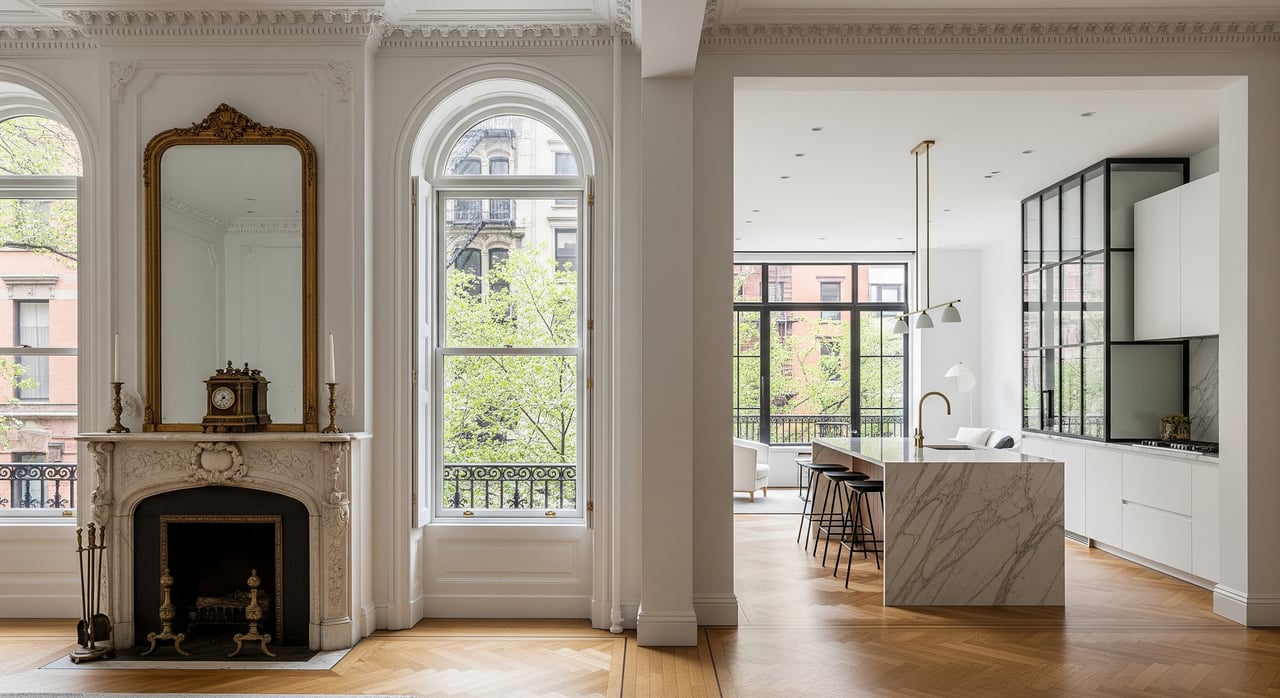
Choosing between a prewar co-op and a modern condo in Greenwich Village can feel like choosing two different versions of New York living. You may love the idea of historic detail on a tree-lined block, yet also want the ease of central air and an in-unit washer/dryer. You are not alone. In this guide, you’ll see how these options differ on architecture, ownership rules, financing and carrying costs, lifestyle, and resale. You’ll also get a focused due-diligence checklist tailored to Village buildings so you can move forward with confidence. Let’s dive in.
Greenwich Village at a glance
Greenwich Village is one of Manhattan’s most historic, low-rise neighborhoods. You’ll find brownstones, walk-ups, and mid-rise elevator buildings alongside select new-construction and design-forward conversions. Many blocks fall within New York City Landmarks Preservation Commission historic districts, which shape what exterior changes are allowed. This preserved character is a major draw if you value a pedestrian scale and proximity to cultural amenities and transit.
Because so much of the area is landmarked, new development tends to appear on larger avenue lots and infill sites. That’s why you often see prewar co-ops on quiet, irregular side streets and modern condos clustered where zoning permitted larger footprints. The result is a real choice between classic architecture and contemporary amenity living.
Prewar vs modern: what defines each
Hallmarks of prewar co-ops and brownstones
- Masonry construction with brick or stone and, often, elegant period detailing.
- Higher ceilings, frequently around 9 to 12 feet, with hardwood floors, plaster, and mouldings.
- More compartmentalized layouts that separate living and dining rooms; storage can be tighter.
- Building systems can be older. Many rely on building-wide steam or hot water heat and may not have central air.
- Governance is typically co-op, with established house rules and an approval process for purchasers and renovations.
Hallmarks of modern condos and recent conversions
- Concrete or steel construction and, in many cases, larger or floor-to-ceiling windows.
- Open-concept layouts, en suite baths, and integrated storage and tech readiness.
- Modern HVAC, updated plumbing and electrical, and often in-unit washers/dryers.
- Amenity sets can include gyms, roof decks, lounges, bike rooms, package rooms, and doormen or concierges.
- Governance is condominium, which typically means fewer restrictions on buying and renting.
Design tradeoffs to consider
- Character vs practicality: Prewar offers unique architectural detail; modern offers predictable systems and finishes.
- Light and exposure: Newer buildings often maximize light with larger windows; some prewar layouts are shaped by narrower lots and party walls.
- Noise and privacy: Thick prewar walls can be quiet, while many modern builds engineer sound isolation. Actual performance varies by building.
Ownership and approvals: co-op vs condo
Co-op basics
- You buy shares in a cooperative corporation and receive a proprietary lease for your unit.
- The board reviews your financials and references and conducts an interview. The board can approve or reject a sale.
- Many co-ops expect strong liquidity and larger down payments. A 20 to 30 percent down payment is common, and conservative buildings may require more.
- Subletting often carries limits, such as minimum owner-occupancy periods or caps on consecutive sublets. Flip taxes and fees may apply.
- You pay a monthly maintenance fee that typically covers your share of building property taxes, staffing, common-area expenses, and sometimes heat and hot water.
Condo basics
- You receive a deed to real property along with an undivided interest in the common elements.
- Boards manage building operations but typically cannot block a sale; rules are generally less restrictive than co-ops.
- Down payments can be as low as 10 percent in some programs, though 20 percent is common for primary residences.
- Rentals are usually more flexible than in co-ops, though condo bylaws may prohibit or regulate short-term rentals.
- Monthly common charges cover building operations and reserves. You pay property taxes directly to the city.
Practical distinctions
- Approval risk: Co-ops add a layer of subjective approval that can delay or stop a deal. Condos usually present fewer hurdles.
- Investor friendliness: Condos are typically preferred by investors and out-of-state buyers due to rental flexibility and financing.
- Renovations: Both require building approval, but co-ops often carry more conservative standards and processes.
Costs and financing: what to expect
Carrying-cost components
- Co-ops: Maintenance covers building-level expenses and typically includes your unit’s share of property taxes. It may also reflect an underlying building mortgage.
- Condos: You pay monthly common charges for operations and reserves, and you pay your property taxes directly.
- Both can levy capital assessments to fund major projects. Frequency depends on reserves and management decisions.
Financing dynamics
- Co-ops: Lenders underwrite both your profile and the building’s financial health. Down payment requirements often reflect board and lender standards.
- Condos: Financing is more standardized and is often treated like single-family property by lenders.
- Taxes: Mortgage interest and local taxes are subject to current tax law, and many Manhattan buyers are affected by the federal SALT cap.
How this plays out in the Village
- Prewar co-ops may keep amenities lean, which can help monthly costs, but older systems can lead to periodic assessments.
- Newer condos often carry higher common charges to fund full-service amenities and modern systems. Near-term capital needs may be lower.
Amenities and lifestyle: day-to-day living
Prewar co-op lifestyle
- Emphasis on historic details and neighborhood-scale living.
- Often fewer building amenities and a quieter common-area experience.
- House rules can be more conservative, with defined quiet and renovation hours.
Modern condo lifestyle
- Amenity-forward living with gyms, lounges, roof decks, and convenience services.
- Social and fitness-minded environments, which can add vibrancy and also increase monthly costs.
- Accessibility features, elevators, and modern entries are widely incorporated.
Everyday tradeoffs
- Storage: Condos typically offer more built-in storage and optional building storage for a fee.
- Comfort: Central HVAC and in-unit laundry are common in newer buildings. Many prewar homes rely on window AC and shared laundry unless a renovation added systems.
- Privacy: Building design, resident mix, and rules influence your experience more than product type alone. Review policies and visit at different times of day.
Resale and liquidity: plan your exit
- Condos generally appeal to a broader buyer pool, including investors and nonresident buyers. That can translate to faster resale and, in some cycles, stronger appreciation.
- Co-ops often show price stability in owner-occupied markets but may take longer to sell due to board approvals and narrower buyer pools.
- Your timeline, flexibility, and tolerance for board processes should factor into your choice.
Landmark and renovation considerations
Large portions of Greenwich Village fall within historic districts overseen by the Landmarks Preservation Commission. Exterior changes such as windows, façades, stoops, and rooftop additions often require approvals and can add time and cost. Interior changes are not regulated unless the interior itself has landmark status. If you plan to reconfigure a prewar layout or upgrade windows, ask about LPC requirements, building alteration agreements, and any prior approvals on file.
In newer condos, renovations are often streamlined, but you still need board approval for material alterations. For conversions, review the offering plan to understand warranties and any remaining obligations from the sponsor.
Due diligence checklist for Village buyers
If you’re considering a prewar co-op
- Request: board package requirements, proprietary lease, house rules, by-laws, offering plan (if applicable), board minutes from the last 12–24 months, full building financials, reserve study, rent roll, details on any underlying mortgage, flip-tax policy, and sublet rules.
- Ask about: recent and upcoming capital projects such as façade work or boiler replacements; assessment history; building staff model; any litigation; and whether landmark restrictions could affect planned exterior or rooftop work.
If you’re considering a modern condo
- Request: offering plan or public offering statement, by-laws, CC&Rs and rules, board minutes, budget and reserve study, assessment history, amenity access policies, certificate of occupancy, and recent DOB permits for construction.
- Ask about: amenity management and costs; storage and bike allocations; parking (if any); pet policies; and remaining structural or mechanical warranties in newer buildings.
Steps that apply to both
- Hire a co-op/condo-savvy attorney early. Co-ops and condos have different documents and timelines.
- Review building financial health: reserves, delinquency, owner-occupancy ratios, and major projects on the horizon.
- Engage inspectors who know older Manhattan buildings to evaluate water infiltration, structural elements, electrical capacity, and plumbing.
- Understand board and neighbor culture. For co-ops especially, preview expectations around interviews and renovations.
Which is right for you?
Consider these decision drivers as you focus your search:
- Your tolerance for board oversight and approval risk.
- Your need for modern systems like central HVAC and in-unit laundry.
- Your lifestyle preference for amenities versus neighborhood-centric living.
- Your financing plan, down payment, and loan program options.
- Your long-term exit strategy and likely buyer for your future resale.
If you prioritize architectural character and are comfortable with a board process, a prewar co-op can deliver enduring charm and scale. If you want turnkey systems, amenity access, and broader resale liquidity, a modern condo may be your best fit. Many buyers explore both, then let building condition, rules, and monthly costs guide the final choice.
Work with a trusted Village advisor
Buying in Greenwich Village rewards careful preparation. From deciphering co-op financials to evaluating a condo’s reserve study and amenity budget, the right guidance can save you time and help you avoid costly surprises. Our team routinely prepares board packages, navigates approvals, and compares carrying costs across prewar and modern buildings so you can choose with clarity.
If you’re ready to refine your strategy or want a second opinion on a specific building, connect with James Weiss NYC for a private consultation.
FAQs
What’s the main difference between co-op and condo ownership?
- In a co-op, you buy shares and receive a proprietary lease with board approval requirements; in a condo, you own real property with generally fewer restrictions on buying and renting.
How do monthly costs differ between co-ops and condos in the Village?
- Co-op maintenance often includes your share of property taxes and building expenses, while condos separate common charges from property taxes you pay directly.
Are prewar buildings harder to renovate in Greenwich Village?
- Exterior changes in landmark districts require Landmarks Preservation Commission approvals, and co-ops may set stricter renovation rules. Interior-only work in non-landmarked interiors is typically simpler but still requires building approval.
Do condos sell faster than co-ops in Greenwich Village?
- Condos often draw a wider buyer pool, including investors and nonresident buyers, which can support faster resale compared with co-ops that require board approval.
What down payment should I expect for a Village co-op?
- Many co-ops expect 20 to 30 percent down for primary residences, and conservative boards may require more depending on building policy and your financial profile.
Can I rent out my Greenwich Village apartment?
- Condos are typically more flexible for rentals, though short-term rentals may be restricted by bylaws; co-ops commonly limit subletting with owner-occupancy requirements and board permissions.