A homeowner on Perry Street once asked New York City's Landmarks Preservation Commission for something modest: permission to bolt a gate across the foot of her own stoop. Tourists retracing Carrie Bradshaw's steps from Sex and the City had turned the address into a photo stop at all hours, and a chain and a no-trespassing sign hadn't slowed anyone down. The Commission said yes. It was still a public review, on the record, for a piece of ironwork most owners would install without a second thought anywhere else in Manhattan.
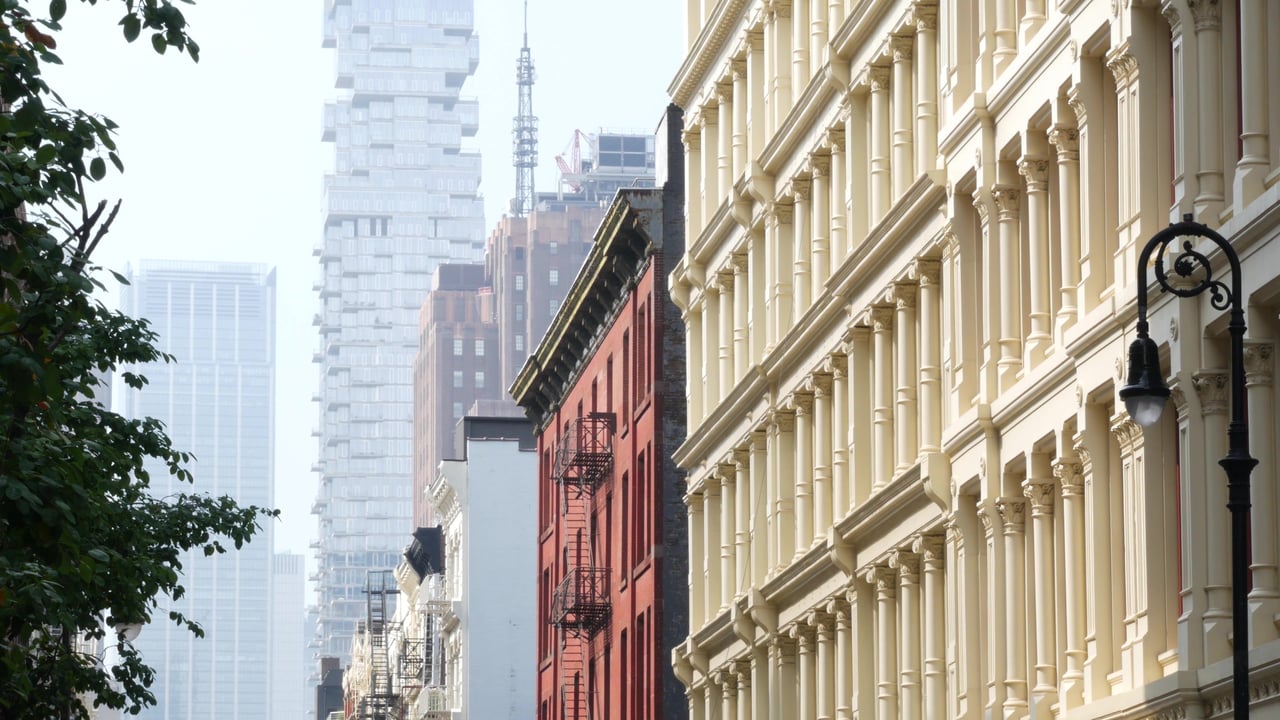
A few blocks north, a different kind of approval has been moving through an entirely different process this year. At 11 West 13th Street, developers Legion Investment Group and EJS Group secured $190 million in construction financing in February 2026 for a 30-story tower designed by Kohn Pedersen Fox. Foundation work was already underway by spring, and in July the developers released renderings for what they're calling the Greenwich Spire, a 538-foot building that will stand roughly 200 feet above anything else in the neighborhood. Village Preservation fought it, calling the design "appallingly out of scale" for the block, and this spring two elected officials, City Council Member Harvey Epstein and Assembly Member Deborah Glick, joined the opposition. But the fight has played out entirely at the Department of Buildings over zoning compliance, not before the Landmarks Preservation Commission. The tower simply isn't inside the district the Commission was created to protect.
Same neighborhood, same year, two completely different approval clocks. That difference is the thing buyers underestimate most when they shop for a townhouse here.
The Line Drawn in 1969
The Greenwich Village Historic District was designated on April 29, 1969, and it covers roughly ninety blocks running from University Place west to the Hudson River, and from Saint Luke's Place north to 13th Street. Everything inside that boundary answers to the Landmarks Preservation Commission for anything visible from the street: facades, stoops, cornices, railings, rooflines, even mechanical equipment mounted where a passerby could see it. Everything outside the line, even a block that still gets called Greenwich Village in casual conversation, answers only to standard zoning and building code.
The Greenwich Spire's site sits on the block between 13th and 14th Streets, just past the district's northern edge. That's not a coincidence. It's the reason a 30-story tower can rise there while a stoop gate three blocks south requires a public hearing. The boundary a commission drew more than half a century ago is still doing more to determine your renovation timeline today than your architect, your contractor, or your budget.
Two Tracks, Two Clocks
Inside the district, every exterior project gets sorted into one of two review tracks, and the difference between them is the single biggest variable in how long you'll wait before you can break ground.
| Scope of work | Review type | Typical timeline |
|---|---|---|
| In-kind repair, no visible change | Certificate of No Effect (staff-level) | 2 to 8 weeks, plus 2 to 8 weeks for DOB permits |
| Visible change: new window profile, railing, stoop element | Certificate of Appropriateness | 3 to 9 months, longer with multiple hearings |
| Rooftop addition, rear extension, major facade work | Certificate of Appropriateness with mock-ups and sightline review | 12 to 18 months of design and review before groundbreaking |
A buyer planning to simply repaint a cornice and replace a broken sash in kind can be done with Landmarks in a matter of weeks. A buyer planning a rooftop addition, the kind of project that shows up in half the aspirational listing photos for Village townhouses, should plan on well over a year of design and review before a single permit gets pulled, and construction costs for landmark-compliant work run roughly 30 to 50 percent above comparable non-landmarked construction, largely because of specialty materials like matched historic window profiles and custom mortar mixes.
Run the math on an actual gut renovation and the premium stops being abstract. A full gut of a 4,000 square foot townhouse, landmark-compliant facade restoration included, typically runs $600 to $1,200 per square foot, or $2.4 million to $4.8 million before you've touched the kitchen finishes. That's a line item most buyers price using a contractor's national average, not a Village-specific one.
Three Houses, Three Timelines
The math plays out differently depending on what you're actually buying.
Pink's $21.5 million purchase at 125 West 11th Street is the restoration case. The six-story Greek Revival mansion was built in 1849, stayed with the same family for seventy years, and needed a three-year renovation before it went back on the market, first asking $25 million before a $3.5 million reduction brought it to its eventual sale price. Three years is not a contractor running behind schedule. Three years is what a landmarked restoration of that scale actually takes when the work is done right.
A short walk away on West 12th Street, a different 1860s townhouse tells the same story from another angle. The architecture firm StudioSC spent three years on a full remodel, returning the facade to its original condition and converting the building from multi-family back into a single-family home, work that required Landmarks approval for the changes visible from the street even as the interior was rebuilt around a private rooftop terrace. Two different properties, two different architects, the same three-year arc.
Then there's Village West at 525 Sixth Avenue, proof the Commission isn't simply an obstacle to new construction inside the district. Designed by BKSK Architects to replace a two-story commercial building, the fourteen-story project won LPC approval in 2024 by leaning into red brick and terracotta detailing that echoes the neighborhood's existing stock rather than working against it. Getting through Landmarks review inside the district isn't about avoiding the Commission. It's about designing for it from the first sketch.
Why the Published Median Won't Help You Underwrite
Overall, Greenwich Village has had a strong year. The median sale price across all home types ran $1.8 million over the three months ending May 2026, up 24.3 percent year over year, with days on market compressing to 55 from 90 the year before and 81 homes changing hands in May alone, up from 76 the prior year.
That number is mostly telling you about co-ops, which make up close to two-thirds of the neighborhood's active inventory as of this summer. Townhouses trade on a much thinner tape. As of June 2026, the market showed just eight active townhouse listings, priced between $5.95 million and $19.995 million, sitting on the market for an average of 95 days, nearly double the compressed pace of the overall neighborhood. The reported median sale price for houses specifically jumped to $21.5 million in April 2026, up 117 percent year over year, a swing large enough that it almost certainly reflects one or two trophy closings, quite possibly Pink's purchase itself, rather than a genuine repricing of the category.
When only a handful of townhouses trade in a given month, a published median is closer to a snapshot of who happened to buy than a reliable benchmark. The number worth pulling before you write an offer isn't the neighborhood median. It's the specific building's permit history at the Department of Buildings and its prior application record with the Landmarks Preservation Commission, both of which tell you what a future renovation will actually require rather than what a headline number implies.
What This Means Before You Write an Offer
Confirm whether the address sits inside the 1969 boundary before you assume anything about timeline. A block that shares a name with the district can sit entirely outside its jurisdiction, as the Greenwich Spire site demonstrates.
Ask for the building's prior LPC applications and any open Department of Buildings permits tied to past exterior work. Unpermitted changes discovered after closing, a rear addition built without sign-off, a window swapped without a certificate, force a retroactive approval process the Commission treats as harder than approving the same work in advance, sometimes with fines attached or a requirement to restore the original condition.
If the property is a co-op rather than a townhouse, and plenty of Village landmarks are pre-war co-ops rather than freestanding houses, budget separately for board approval on top of Landmarks review. Board sign-off on an alteration agreement typically runs another 8 to 12 weeks even after LPC has cleared a project, a second coordination track most buyers only discover once they're already under contract.
None of this argues against buying here. It argues for underwriting the calendar with the same seriousness you'd bring to underwriting the price. A Village townhouse purchased with a realistic renovation timeline built into the plan is a very different asset than the same house bought on the assumption that a permit is a permit anywhere in Manhattan.
Frequently Asked Questions
Does the entire neighborhood fall inside the Greenwich Village Historic District? No. The 1969 designation covers roughly ninety blocks between University Place and the Hudson River, and from Saint Luke's Place north to 13th Street. Addresses just past that boundary, including the block where a 30-story tower is currently rising, fall outside LPC review even though they're still commonly called Greenwich Village.
Can I renovate the inside of a landmarked townhouse without LPC approval? Generally yes. Landmarks review is triggered by anything visible from a public street, not by interior work, so a kitchen or bathroom renovation typically needs only a standard Department of Buildings permit, unless the interior itself carries a separate, individually designated interior landmark status, which is rare in private homes.
What happens if a previous owner made exterior changes without approval? It's worth confirming before you sign a contract. Retroactive approval for unpermitted work is a harder path than approval sought in advance, and the Commission can require the work be modified, fined, or undone entirely to restore the original condition.
A Greenwich Village townhouse rewards patience and punishes assumptions about how quickly the city will let you touch it. The James Weiss Team works with buyers through exactly this kind of coordination, weighing a property's landmark and permit history alongside its price before an offer goes in. If you're evaluating a Village property and want a clear read on what its renovation timeline actually looks like, request a private consultation.