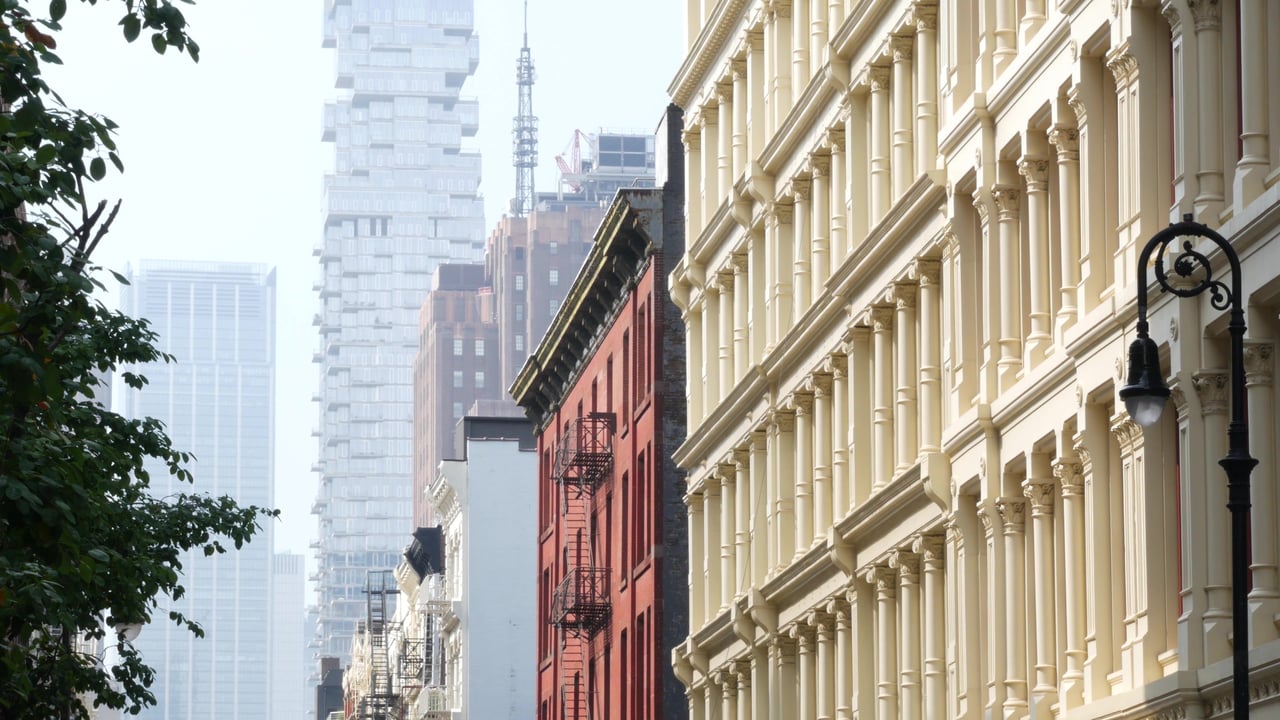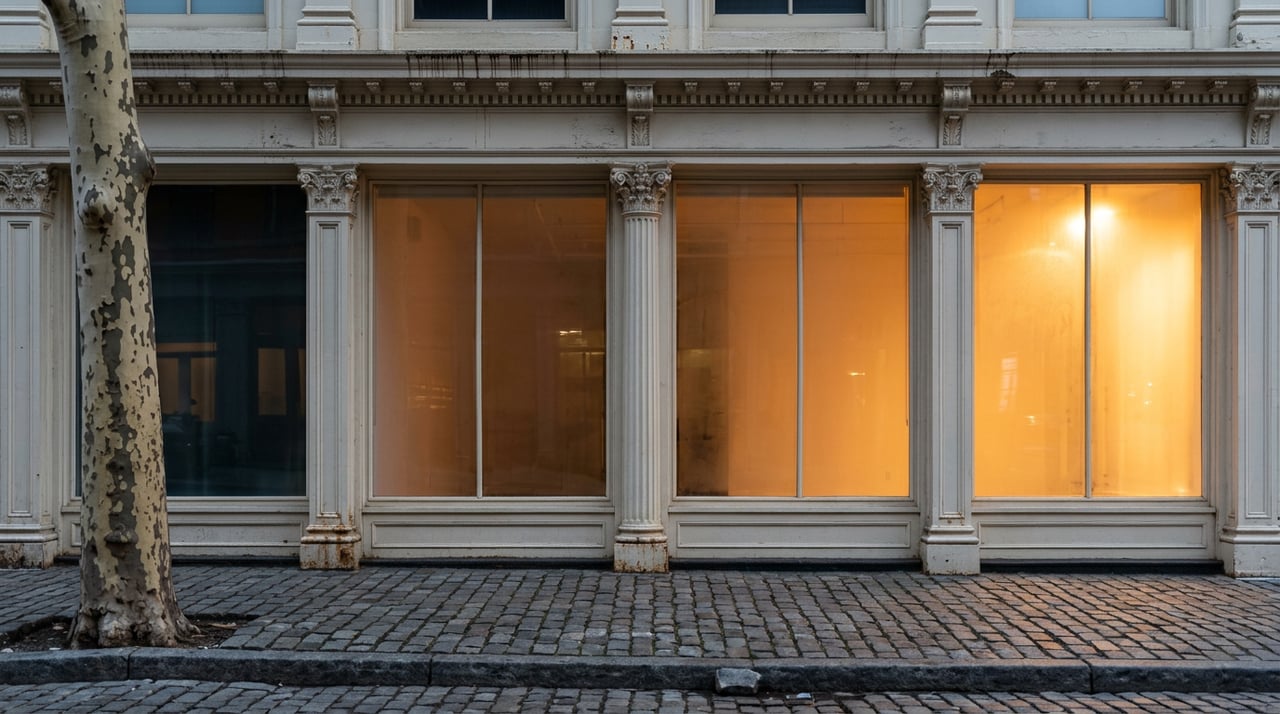
The conventional story about SoHo dining is that it has always played second fiddle to the neighborhood's retail identity. You came here to shop; you went elsewhere to eat. Balthazar on Spring Street earned its institution status partly by being the exception — a room so complete it could anchor a neighborhood that wasn't built around tables. Fanelli's on Prince Street has been absorbing the overflow since 1847, indifferent to whatever was happening outside.
That exception is becoming the rule, and the speed at which it's happening suggests something structural rather than coincidental.
In roughly eighteen months, three restaurants from a single operator group have opened or are opening on adjacent SoHo blocks. The Corner Store arrived in 2024 and quickly became one of the most difficult reservations in the neighborhood. Its followup, The Eighty Six, landed nearby and matched the pace. Now the same group's third project is taking over the old Principe space, directly across the street from The Corner Store. Three concepts, three openings, one tight geography — and that's before you count the London import arriving on Grand Street, the Austrian bakery opening on Lafayette, and the hotel dining room being built around a retractable roof on the western end of the neighborhood.
When an Operator Returns Three Times, That's a Thesis
Restaurant clusters don't happen by accident. When operators keep returning to the same streets, they are pricing in foot traffic patterns, lease rates, demographic density, and the social proof that comes from having an existing hit in the neighborhood. A single successful opening is ambition. Two is confidence. Three consecutive bets on the same SoHo blocks is a public argument that this particular stretch of downtown Manhattan is undervalued as a dining address relative to what it is becoming.
Or'Esh, the group's new Mediterranean concept at 450 West Broadway, is already open and already crowded. Chef Nadav Greenberg, Michelin-trained and backed by Catch Hospitality Group, built the menu around a custom live-fire grill — wood-roasted seafood, vegetable-forward dishes drawn from Israeli and Moroccan cooking traditions, an open kitchen designed to be watched rather than hidden. As of March 2026, Or'Esh had already earned a 4.8 rating and was generating Michelin speculation less than a year into service. Early reviews describe the room as "beautiful and cinematic without feeling formal" — a design posture that lets the cooking hold the attention rather than the décor.
The live-fire commitment runs through this whole wave of openings. It is not a trend borrowed from a trend report. A custom grill requires specific ventilation, specific sourcing relationships, specific kitchen labor. Operators who make that investment are signaling that they expect to be in a space long enough to pay it back.
The Corners That Are About to Change
Grand Street has a vacancy that SoHo residents have been watching since Lucky Strike closed. Thomas Straker, the London chef who built a devoted following at his Notting Hill restaurant through what he describes as a "butter-forward" philosophy, is taking over that corner. The Infatuation reported in February 2026 that his London menu runs to mussels on flatbread and agnolotti bursting with ricotta — precise, ingredient-led cooking in a room that prioritizes the meal over the moment. Lucky Strike was a SoHo gathering point for close to three decades; the block will read differently with a kitchen this focused in its place, and Straker's spring 2026 opening will be the most-watched table debut on that street since Balthazar.
Two blocks north on Lafayette, RYE by MARTIN AUER is preparing to open at 285 Lafayette Street. The Auer family runs one of Austria's most respected bakeries, and the New York concept centers on their 100% rye sourdough — hand-shaped, naturally leavened, fermented for 24 hours, baked on-site daily. The format is a bakery and eatery built around open-faced sandwiches on housemade bread, with a curated retail section featuring European artisan collaborators. In a neighborhood where the all-day café has historically been an afterthought, this is a considered morning-and-afternoon anchor filling a slot that has been empty for years.
British seafood is also multiplying within a five-minute walk. Dame, the Spring Street spot that introduced a certain kind of coastal British cooking to downtown New York when it opened in 2021, is about to gain a neighbor: Dean's, from the King team, is arriving next door with Guinness, cocktails, and a menu built around fish pie, roasted Scottish langoustines, and potted shrimp on hot buttered crumpets. Two serious British seafood restaurants within steps of each other would be unremarkable in London. In SoHo, it marks a micro-cluster within the larger one.
Further west, inside the ModernHaus SoHo hotel, Selene by Kyma is opening in 2026 with a Mediterranean seafood menu and a retractable-roof atrium. The design feature matters more than it sounds: a room that can open to the sky in May and close against a cold snap in March is operationally useful in a city with eight months of marginal dining weather. Selene is already described as one of the most anticipated openings of the year by the hotel hosting it.
What Was Already Here, and Why It Still Matters
These openings land in a neighborhood that already has two of the more durable dining rooms in Manhattan. Balthazar has been the standard-bearer for a certain kind of French brasserie experience since 1997 — steak frites, onion soup, a room that never stops moving. Fanelli's on Prince Street opened in 1847 and has survived every version of SoHo that has come and gone, including the version where every other ground-floor storefront was a luxury fashion boutique. Both places serve the same function: they give the neighborhood a floor. You know they'll be there on a Tuesday in February when everything else has closed for a private event, and long-standing residents know they'll be there in 2036 too.
The gallery circuit adds a second layer to the spring calendar. The Gallery at Soho Grand on West Broadway is currently showing Downtown Lens, a free exhibition curated by Richard Boch featuring work by photographers who documented downtown New York from the mid-1970s through the early 1980s. The show runs Wednesday through Sunday, noon to 6 p.m., and it is an accidental argument for what happens when creative operators start concentrating in a neighborhood that has both foot traffic and available space. The photographs on the walls show a SoHo that was cheaper, rougher, and full of artists. The crowd in the restaurant next door is the downstream result.
Through April, Bortolami is running a Renée Green exhibition; kaufmann repetto at 55 Walker Street carries Billy Sullivan through May. The Drawing Center on Wooster Street, which has shown drawing as a distinct medium since 1977, maintains its own schedule and remains one of the few gallery spaces in the neighborhood that has not been displaced by rising rents or absorbed into a retail concept.
What the Cluster Means for People Who Live Here
For SoHo residents, the practical read on this spring's opening slate is that the neighborhood's dining options are expanding fastest at exactly the slots that have been weakest. Or'Esh fills the serious dinner seat not tied to a hotel. RYE by Martin Auer fills the morning slot with something that doesn't exist anywhere else in the neighborhood. Selene by Kyma covers the long-lunch-into-late-dinner format, with the atrium becoming a genuine summer room. Straker's, on Lucky Strike's old corner on Grand Street, fills the neighborhood-table role: a place you go not because it's the most ambitious room in the city but because it is close, consistent, and done with care.
That combination — a morning anchor, a neighborhood table, a live-fire destination, a hotel dining room with architectural ambition, and two British seafood spots sharing a block — is roughly what a complete dining neighborhood looks like. SoHo has been missing most of those pieces for years, filling the gap with fashion retail that generated foot traffic without building community.
The operators filling those slots now have bet publicly, and in several cases repeatedly, that SoHo residents are ready to stop leaving the neighborhood for dinner. The Corner Store group has made that bet three times on the same streets. That kind of conviction, backed by real capital and real leases, tends to be self-fulfilling.
The James Weiss Team works with buyers and sellers across SoHo and Manhattan's most sought-after addresses. For a private conversation about what this market looks like from the inside, request a consultation.