Welcome to
2,646,247 people live in Brooklyn, where the median age is 38 and the average individual income is $47,250. Data provided by the U.S. Census Bureau.
Total Population
Median Age
Population Density
Average individual Income
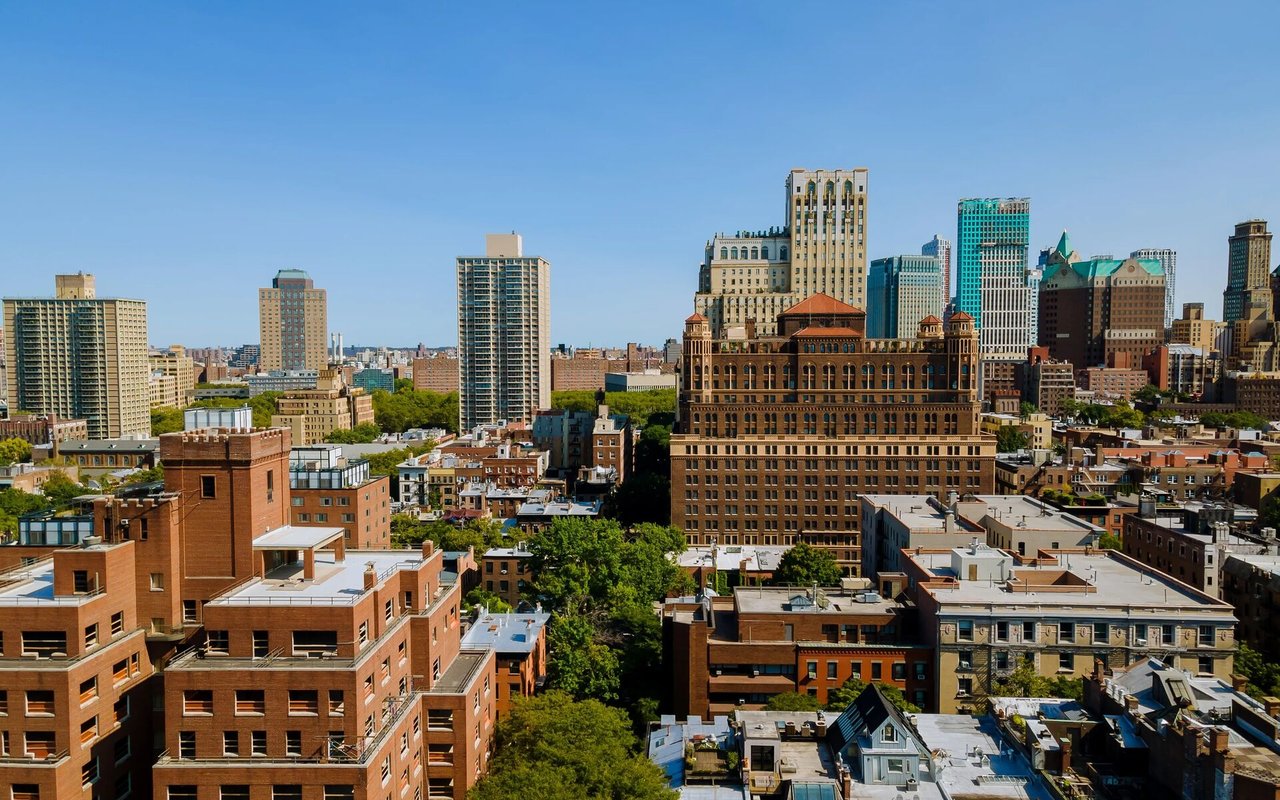
Brooklyn is no longer Manhattan's affordable understudy — it is a destination in its own right, a borough of more than 70 square miles where each micro-neighborhood functions almost like an independent city with its own architecture, pace, and price logic. What ties it together is a particular kind of buyer: someone who wants genuine neighborhood texture — stoops, corner bodegas, independent restaurants, real parks — without surrendering quick access to Manhattan's job centers.
The borough tends to attract three broad profiles. Families gravitate toward the historic brownstone districts for the schools and the slower rhythm. Creative and entrepreneurial residents anchor the value and cultural corridors east and south of Prospect Park. And tech, media, and finance professionals cluster along the waterfront, trading square footage for skyline views and a high-energy lifestyle. Understanding which of these you are is the single most useful filter for navigating Brooklyn, because the borough rewards specificity far more than it rewards a generic "I want to live in Brooklyn" search.
For the past several years, Brooklyn behaved less like a market and more like a standoff. The post-pandemic demand surge pushed inventory to historic lows and sparked bidding wars; then, when mortgage rates spiked, a "rate-lock" effect set in. Homeowners sitting on sub-3% mortgages simply refused to sell, and the result was gridlock — high prices, almost nothing to buy.
That dynamic has finally loosened. With mortgage rates moderating to roughly 6.1%, sellers have started to re-engage and buyers have come back off the sidelines. The borough now sits in a healthier, more negotiable rhythm — what's best described as a two-speed market.
The current picture, at a glance, looks like this: the median sale price is around $850,000, up roughly 3.4% to 4.2% year-over-year. Months of supply has climbed to about 3.8 to 4.5 months — still technically a seller's market (true balance requires six-plus months), but a meaningful loosening from the recent drought. Homes are taking 55 to 68 days to sell depending on neighborhood and price point, and listing discounts are hovering near 3.6%, which means buyers can once again negotiate below asking — something that felt impossible eighteen months ago.
The two speeds are the part worth internalizing. The premium lifestyle sector — established, historic neighborhoods like Park Slope, Brooklyn Heights, and Cobble Hill — remains insulated. Demand for turnkey townhouses and condos there is driven by long-term wealth rather than interest rates, so prices stay firm and competition stays fierce. The value-driven sector — Bushwick, Crown Heights, East New York — is where inventory is building and prices are correcting, and where today's buyers actually hold the leverage. The direction of travel, in short, is toward a more balanced borough, but the balance is arriving unevenly, neighborhood by neighborhood.
Brooklyn remains one of the more durable investment markets in the country, but the right play depends entirely on whether you're chasing immediate cash flow, long-term equity, or a value-add return. These are genuinely different strategies, and conflating them is the most common mistake I see investors make.
For rental yield, the headline number has shifted in investors' favor. New York City is historically a low-cap-rate environment — 2% to 4% for prime residential — but rising rents against stabilizing values have pushed Brooklyn's average multifamily cap rates up closer to 6.9%. The sweet spot is small, free-market 2-to-4 family assets. Beyond the math, there's a structural reason these properties work: smaller buildings often fall under Tax Class 1 (capping annual property-tax increases) and are generally exempt from traditional rent-stabilization rules and portions of the recent Good Cause Eviction regulations, which means you can charge market-rate rents. East New York offers the lowest entry point and the highest initial yields, while Bedford-Stuyvesant continues to lead the borough in overall multifamily transaction volume.
For long-term appreciation, the goal flips from monthly income to equity growth, and the strategy becomes buy-and-hold near the path of cultural and infrastructure expansion. Target resale condos or boutique new developments in transitioning zones adjacent to ultra-prime markets, where the price-per-square-foot still has room to climb. Crown Heights has attracted substantial institutional-grade land plays recently — a strong signal of where smart money sees the next decade — and Greenpoint captures the luxury spillover from Williamsburg while still holding pockets of untapped upside.
For fix-and-flip and value-add, set expectations carefully. The classic fast flip is genuinely hard in Brooklyn because of high carrying costs, slow Department of Buildings permitting, and landmark protections that restrict what you can touch. What thrives instead is the value-add model, and it's powered by a very specific market psychology: renovation fatigue. Buyers are increasingly willing to pay a steep premium for a turnkey, beautifully staged home rather than manage contractors themselves. The fattest margins come from buying an un-renovated estate-sale brownstone or multi-family townhouse, restoring the historic facade, updating the mechanicals, and modernizing the layout. Bushwick is currently full of motivated sellers as inventory spikes and prices soften, while Bay Ridge and Sunset Park combine strong family demand for finished homes with plenty of dated housing stock ripe for updating.
Buying in Brooklyn is highly localized and, frankly, more bureaucratic than almost any other U.S. market. The process changes meaningfully depending on whether you're pursuing a co-op, a condo, or a townhouse, and the rules are unforgiving for buyers who treat it like a transaction in any other city.
On pace and competition, the two-speed market again dictates your experience. A move-in-ready brownstone in Park Slope or Carroll Gardens, or a waterfront condo in DUMBO, will likely draw bidding wars, cash buyers, and offers at or above asking. Step into the mid-tier condo market or look at homes needing cosmetic work, and you'll find room to breathe — space to negotiate concessions or come in slightly under list. Properly priced, turnkey homes generally trade within about 55 days.
The contingency structure is where out-of-market buyers get caught off guard. If you're buying a co-op (and many condos), you face a rigorous board package: co-op boards typically want a debt-to-income ratio below 25%, 20% to 25% down, and one to two years of post-closing liquidity remaining after your down payment and closing costs. Financing contingencies exist on paper, but sellers in prime Brooklyn strongly favor "clean" offers, so winning a competitive property often means waiving the mortgage contingency — putting your deposit at risk if the loan falls through. And critically, an accepted offer in New York is not binding. It only becomes binding when both parties sign a formal contract, which happens after your attorney completes due diligence on the building's financials, board minutes, and offering plan. Until that contract is executed, a higher bidder can swoop in — the dreaded experience of being "gazumped."
The three property types carry genuinely different trade-offs, which is one of the few places a side-by-side view earns its keep:
Property Type | Ownership Structure | Strengths | Drawbacks |
|---|---|---|---|
Co-ops | You own shares in a corporation, not the real property; cheaper per square foot | Lower purchase price; carefully vetted neighbors | Brutal approval process; strict sublet rules; higher down-payment minimums |
Condos | True real-property ownership; dominates newer construction | Easier process; investor-friendly and easy to sublet; lower down-payment requirements | Higher prices; closing costs include the Mansion Tax and title insurance |
Townhouses | Fee-simple ownership of the entire building and land | No board oversight; strong appreciation; potential rental income from multi-family units | All maintenance is yours; landmark rules can restrict exterior changes |
The cleanest way to think about ownership in Brooklyn is the price-to-rent ratio — median home price divided by median annual rent. As of 2026, with a median sale price near $850,000 and median asking rent around $4,000/month ($48,000/year), the borough-wide ratio lands at roughly 17.7.
That number sits squarely in the neutral zone. Historically, a ratio between 16 and 20 means neither renting nor buying wins automatically — the right answer depends on your time horizon and the specific neighborhood.
Renting tends to win in the premium waterfront and brownstone neighborhoods — DUMBO, Brooklyn Heights, Cobble Hill — where the ratio climbs well above 20. There, luxury condos easily run $1.2 million to $2 million while rents, though high, don't fully scale to cover that debt service at current 6.1% mortgage rates. If you expect to stay fewer than five to seven years, renting lets you sidestep New York's punishing transaction costs (mortgage recording tax, title fees) and keep your capital liquid.
Buying tends to win in two specific situations. The first is the multi-family play: a two-to-four family townhouse in a mid-tier or value neighborhood like Bedford-Stuyvesant, Crown Heights, or Bushwick. The median two-family home runs around $1.2 million, but market-rate rental income from the secondary unit can offset much of your mortgage and dramatically accelerate equity. The second is the long-term co-op play: if you plan to put down roots for seven-plus years and can clear a board's financial hurdles, a co-op (median price near $460,000) is often far cheaper month-to-month than renting comparable space — and it shields you from New York's aggressive annual rent increases.
New York City property taxes are structurally unlike almost anywhere else in the country, and they catch nearly every newcomer by surprise. Most municipalities tax a straightforward percentage of your purchase price. NYC instead filters your bill through a matrix of property classes, assessed values, and statutory caps — which is why two nearly identical homes next door to each other can carry wildly different tax burdens.
As a residential buyer or investor, you'll deal almost entirely with two classes: Class 1 covers 1-to-3 family homes and brownstones, while Class 2 covers co-ops, condos, and apartment buildings with four or more units. The bill is never based on what you paid. The city applies an assessment ratio to its own internal valuation to set your "assessed value," then multiplies that by the class-specific rate:
Metric | Tax Class 1 (1–3 Family) | Tax Class 2 (Condos / Co-ops) |
|---|---|---|
Assessment Ratio | 6% of estimated market value | 45% of estimated market value |
Tax Rate (FY 2026) | 19.843% | 12.439% |
Growth Cap | No more than 6%/year or 20% over 5 years | None for large buildings; small Class 2 (under 10 units) capped at 8%/year or 30% over 5 years |
Three "gotchas" matter most. First, the condo-versus-townhouse disparity: because Class 2 uses that 45% assessment ratio, a luxury condo in Williamsburg can carry meaningfully higher taxes than a multi-million-dollar Class 1 brownstone in Park Slope. Second, the rental valuation method: by law, the city values Class 2 condos and co-ops as if they were income-producing rentals rather than basing it on recent sales, which keeps older buildings' assessments artificially low but produces strange results in new construction. Third, and most consequential for buyers, the tax-abatement cliff: many modern Brooklyn condos were built under incentives like the 421-a abatement, which drops taxes to near zero at first and then phases out over 15 to 25 years. Buy mid-abatement without modeling the step-up schedule, and your monthly carrying costs can balloon years down the line.
Moving to Brooklyn from out of town means changing how you frame the search itself — less "what house can I afford" and more "what lifestyle grid do I want." Because the borough is so large and so internally varied, picking the right grid first saves months of frustration.
It helps to think in three broad zones. The Brownstone Belt — Park Slope, Cobble Hill, Carroll Gardens, Fort Greene — is defined by tree-lined historic blocks, strong public schools, architectural preservation, and a life organized around Prospect Park and quiet residential evenings. The Waterfront Grid — Williamsburg, Greenpoint, DUMBO — is converted warehouses and glassy high-rises with skyline views, drawing a high-energy, culinary, and nightlife-forward crowd. The Value and Cultural Arcs — Bedford-Stuyvesant, Crown Heights, Bushwick — offer the most square footage per dollar, rich historic architecture, and a community-driven arts scene that also makes them prime multi-family hunting grounds.
A few practical realities deserve attention before you sign anything. Transit defines your social geography here far more than in other cities — your nearest subway lines effectively determine which parts of the borough and Manhattan feel "close." School zoning is hyper-local, sometimes drawn down to which side of a street you live on, so families should verify the exact zone before committing to a home. Parking is genuinely difficult outside deep southern Brooklyn, thanks to Alternate Side Parking rules; if you can't commit to moving a car twice a week, budget an extra $400 to $700 a month for a garage spot. And don't overlook the NYC Resident Income Tax — living in any of the five boroughs adds 3.078% to 3.876% on top of New York State income tax, a line item that blindsides many transplants.
Brooklyn is, fundamentally, a commuter's borough — a dense web of transit built to move hundreds of thousands of people daily into employment hubs. It's also one of the most walkable places in the country, with average Walk Scores above 90 across its northern and western halves. Daily errands rarely require a car; life is anchored by hyper-local commercial strips full of groceries, pharmacies, and coffee. Cyclists are well served too: the Brooklyn Waterfront Greenway runs from Greenpoint down to Bay Ridge, and Citi Bike stations blanket nearly every neighborhood north of Prospect Park, making cycling a real mode of transit rather than just weekend recreation.
The commute breaks into two directions. Into Manhattan, the easiest lift is Downtown / Wall Street — neighborhoods near Atlantic Avenue-Barclays Center or Downtown Brooklyn reach the Financial District in 15 to 25 minutes on the 2, 3, 4, 5, R, A, or C lines. Midtown is a slightly deeper pull at 30 to 45 minutes, well served by express trains like the Q, B, 4, and 5; the L train from Williamsburg or Bushwick lands you at 14th Street, while the M cuts directly up into Midtown.
Within the borough, Downtown Brooklyn and MetroTech act as the central funnel, reachable from almost anywhere in under 30 minutes. The Tech Triangle — DUMBO, Downtown Brooklyn, and the Brooklyn Navy Yard — concentrates the borough's tech and creative jobs; DUMBO rides the F and A/C, while the Navy Yard leans on shuttles, local buses, and the NYC Ferry that docks right at the Yard. Further south, Industry City in Sunset Park, a massive repurposed waterfront complex of design and manufacturing jobs, sits directly on the D, N, and R at 36th Street. One honest caveat for newcomers: traveling between Brooklyn neighborhoods can sometimes be slower than reaching Manhattan, especially in pockets dependent on the G train or local bus routes.
For families, Brooklyn schooling is a high-stakes puzzle of geographic zoning, citywide lotteries, and specialized testing — and it maps directly onto real estate value. The most sought-after homes often sit inside three standout districts.
District 13 (Brooklyn Heights, Fort Greene, Clinton Hill) routinely tops local performance metrics with a strong mix of historically significant neighborhood schools and progressive early education. District 20 (Bay Ridge, Dyker Heights, Borough Park) is known for traditional, consistently high-ranking elementary and middle schools with some of the borough's best math and reading proficiency. District 15 (Park Slope, Carroll Gardens, Sunset Park) is prized for its collaborative culture and its equity-based middle-school lottery, which replaced traditional screening.
A handful of individual schools function as genuine real-estate drivers. P.S. 321 William Penn in Park Slope is among the most famous elementary schools in the country, and homes zoned specifically for it command a clear pricing premium. P.S. 172 Beacon School of Excellence in Sunset Park consistently ranks among New York State's highest performers in math and reading. At the high-school level, Brooklyn Technical High School in Fort Greene is one of the city's elite specialized schools — admission rests entirely on the competitive SHSAT exam — and Millennium Brooklyn High School in Park Slope is a highly selective, college-prep favorite.
Beyond zoned schools, families lean heavily on charters and gifted programs. The Success Academy network (with campuses in Bed-Stuy, Bensonhurst, and elsewhere) posts top-tier statewide testing results but requires an independent lottery, and the Brooklyn School of Inquiry in Bensonhurst offers a citywide Gifted & Talented K-8 path for students who qualify through specialized testing. The practical takeaway: in Brooklyn, confirm a home's exact zone and your realistic admissions options before you fall in love with the property.
In Brooklyn, green space isn't a nice-to-have — it's a measurable driver of real estate equity. Private backyards are a luxury premium here, so proximity to public parks directly shapes long-term appreciation and resale value.
Two anchors dominate. Prospect Park, the 526-acre Olmsted-and-Vaux masterpiece, centers the entire Brownstone Belt; homes within a three-block radius of its perimeter command a notable premium, and the park itself offers the Long Meadow, the Nethermead, and the borough's only lake. On the water, Brooklyn Bridge Park — 85 acres stretching 1.3 miles along the East River — reinvented DUMBO and Brooklyn Heights with athletic piers, kayak launches, and paths woven directly into luxury condo developments.
Beyond the flagships, smaller parks shape neighborhood demand in their own right. McCarren Park and Bushwick Inlet Park serve as high-energy recreational hubs for Williamsburg and Greenpoint, while Fort Greene Park, a historic hilltop green with tennis courts and a popular weekend greenmarket, anchors its neighborhood's identity. A borough-wide trend worth noting for buyers: an aggressive push to convert underused spaces into pickleball and basketball courts, a small but telling signal of who's moving in.
Brooklyn's food and nightlife scene is one of the clearest lifestyle signals a buyer can read, and it has long outgrown its "Manhattan alternative" label to become a global culinary epicenter — one that favors curated, independent concepts over corporate chains.
The scene splits by character. Neighborhoods like Clinton Hill, Fort Greene, and Carroll Gardens excel at the elevated neighborhood bistro — intimate, chef-driven rooms with tight menus and serious hospitality, where a hard-to-get reservation is a kind of local currency. Williamsburg and Greenpoint form the avant-garde grid: multi-level waterfront rooftops, experimental pop-ups, international fusion like the Peruvian-Chinese Chifa concepts, and nightlife ranging from botanical-cocktail hotel bars to hidden vinyl listening rooms. Bushwick and Bed-Stuy turn industrial warehouses into world-class venues, anchoring the city's underground electronic scene alongside artisanal pizza institutions and natural wine bars.
There's one trend worth watching as a buyer specifically: the rise of the untraditional chef's counter and omakase, scaled well beyond sushi into multi-course pasta tastings, wood-fired theater, and intimate steakhouse formats. When these high-investment, low-seat-count venues start opening on a commercial strip, it's a reliable signal of rising local disposable income and a neighborhood maturing economically.
Retail in Brooklyn works on two levels, and a neighborhood's shopping infrastructure doubles as a lifestyle indicator. For high-volume, functional needs, the borough relies on transit-oriented commercial centers — above all Downtown Brooklyn, where Fulton Street and Atlantic Terminal stack national anchors like Target, Apple, and Sephora into a dense, accessible core. Many of these retailers have leaned into a "phygital" model, blending physical storefronts with community events, rotating designer collaborations, and app-based checkout for a tech-fluent local base.
Outside those hubs, retail becomes a pure lifestyle statement. The North Brooklyn design axis of Williamsburg and Greenpoint functions like an international style lab — luxury houses such as Chanel and Hermès now occupy low-rise brick storefronts alongside high-end vintage curators, concept streetwear, and independent home-goods showrooms. The brownstone main streets — Fifth Avenue in Park Slope, Court Street in Carroll Gardens — offer something more intimate: independent bookstores, artisanal children's boutiques, local jewelry designers, and premium specialty grocers that reinforce the community-first feel of those neighborhoods.
Brooklyn resists a single definition; its culture is a decentralized network of micro-identities, and in recent years it has leaned away from flashy gentrification narratives toward hyper-local, grassroots, experience-first living. Three archetypes capture most of the borough.
The Family Oasis — Park Slope, Windsor Terrace, Carroll Gardens, Cobble Hill — is elegantly paced and deeply historic, organized around brownstone blocks, farmers' markets, stoop culture, and proximity to Prospect Park. The Creative Fuel — Bushwick, Bedford-Stuyvesant, and the Ridgewood border — is raw, expressive, and avant-garde, the epicenter of Brooklyn's contemporary art and nightlife renaissance, defined by pop-up galleries, DIY music spaces, world-class street art, and an entrepreneurial, immigrant-led food culture that prizes authenticity over branding. The Urban Energy — Williamsburg, DUMBO, Downtown Brooklyn — is sleek, fast-paced, and connected, full of glassy waterfront towers and loft conversions, magnetic for tech, media, and finance professionals who want a frictionless luxury lifestyle with skyline views.
Most buyers don't fit neatly into one box, and the most interesting decisions usually happen at the borders — a block in Clinton Hill that touches both family calm and creative energy, or a stretch of Greenpoint that blends waterfront polish with neighborhood grit. Naming the archetype you're drawn to is the fastest way to narrow a borough this large.
Brooklyn rewards local knowledge more than almost any market in the country — the difference between a great purchase and an expensive mistake often comes down to a single zoning line, an abatement schedule, or which side of a two-speed market you're standing on. That's exactly where having the right team matters.
The James Weiss Team, affiliated with Corcoran, operates as a full-service real estate family office built around individualized care and discretion. With over $500 million in completed transactions — a significant share of them off-market — the team specializes in connecting the countless details and people behind every deal, whether you're buying your first co-op, building a multi-family investment portfolio, or relocating to the borough from out of town. The approach is consultative rather than transactional: anticipating challenges, streamlining each step, and treating your goals as the starting point.
If you'd like to talk through a specific neighborhood, budget, or strategy, you can reach the James Weiss Team at (201) 956-8739 or [email protected], or visit the office at 590 Madison Avenue, 8th Floor, New York, NY 10022. Whether you're early in your research or ready to tour, it's a no-pressure place to start the conversation with people who know this borough block by block.
There's plenty to do around Brooklyn, including shopping, dining, nightlife, parks, and more. Data provided by Walk Score and Yelp.
Explore popular things to do in the area, including L & W West Indians Rest, Fresh Green Leaves, and BQ Tea.
| Name | Category | Distance | Reviews |
Ratings by
Yelp
|
|---|---|---|---|---|
| Dining | 0.17 miles | 0 reviews | 0/5 stars | |
| Dining | 0.24 miles | 0 reviews | 0/5 stars | |
| Dining | 0.35 miles | 0 reviews | 0/5 stars | |
| Dining | 0.38 miles | 0 reviews | 0/5 stars | |
| Dining | 0.49 miles | 0 reviews | 0/5 stars | |
| Dining | 0.5 miles | 1 review | 1/5 stars | |
| Dining | 0.54 miles | 0 reviews | 0/5 stars | |
| Shopping | 0.12 miles | 0 reviews | 0/5 stars | |
| Active | 0.5 miles | 0 reviews | 0/5 stars | |
| Active | 0.54 miles | 0 reviews | 0/5 stars | |
| Active | 0.71 miles | 0 reviews | 0/5 stars | |
| Beauty | 0.13 miles | 0 reviews | 0/5 stars | |
| Beauty | 0.43 miles | 0 reviews | 0/5 stars | |
| Beauty | 0.45 miles | 0 reviews | 0/5 stars | |
| Beauty | 0.49 miles | 0 reviews | 0/5 stars | |
| Beauty | 0.49 miles | 0 reviews | 0/5 stars | |
| Beauty | 0.49 miles | 0 reviews | 0/5 stars | |
| Beauty | 0.51 miles | 0 reviews | 0/5 stars | |
| Beauty | 0.61 miles | 0 reviews | 0/5 stars | |
| Beauty | 0.61 miles | 4 reviews | 3.3/5 stars | |
| Beauty | 0.67 miles | 0 reviews | 0/5 stars | |
| Beauty | 0.69 miles | 0 reviews | 0/5 stars | |
| Beauty | 0.71 miles | 0 reviews | 0/5 stars | |
| Beauty | 0.71 miles | 0 reviews | 0/5 stars | |
|
|
||||
|
|
||||
|
|
||||
|
|
||||
|
|
||||
|
|
Brooklyn has 1,009,585 households, with an average household size of 3. Data provided by the U.S. Census Bureau. Here’s what the people living in Brooklyn do for work — and how long it takes them to get there. Data provided by the U.S. Census Bureau. 2,646,247 people call Brooklyn home. The population density is 56,913 and the largest age group is Data provided by the U.S. Census Bureau.
Total Population
Population Density Population Density This is the number of people per square mile in a neighborhood.
Median Age
Men vs Women
Population by Age Group
0-9 Years
10-17 Years
18-24 Years
25-64 Years
65-74 Years
75+ Years
Education Level
Total Households
Average Household Size
Average individual Income
Households with Children
With Children:
Without Children:
Blue vs White Collar Workers
Blue Collar:
White Collar:
Explore Other Neighborhoods
590 Madison Ave 8th Flr New York, NY 10022
590 Madison Ave 8th Flr New York, NY 10022