Welcome to
56,634 people live in Chelsea, where the median age is 42 and the average individual income is $131,882. Data provided by the U.S. Census Bureau.
Total Population
Median Age
Population Density
Average individual Income
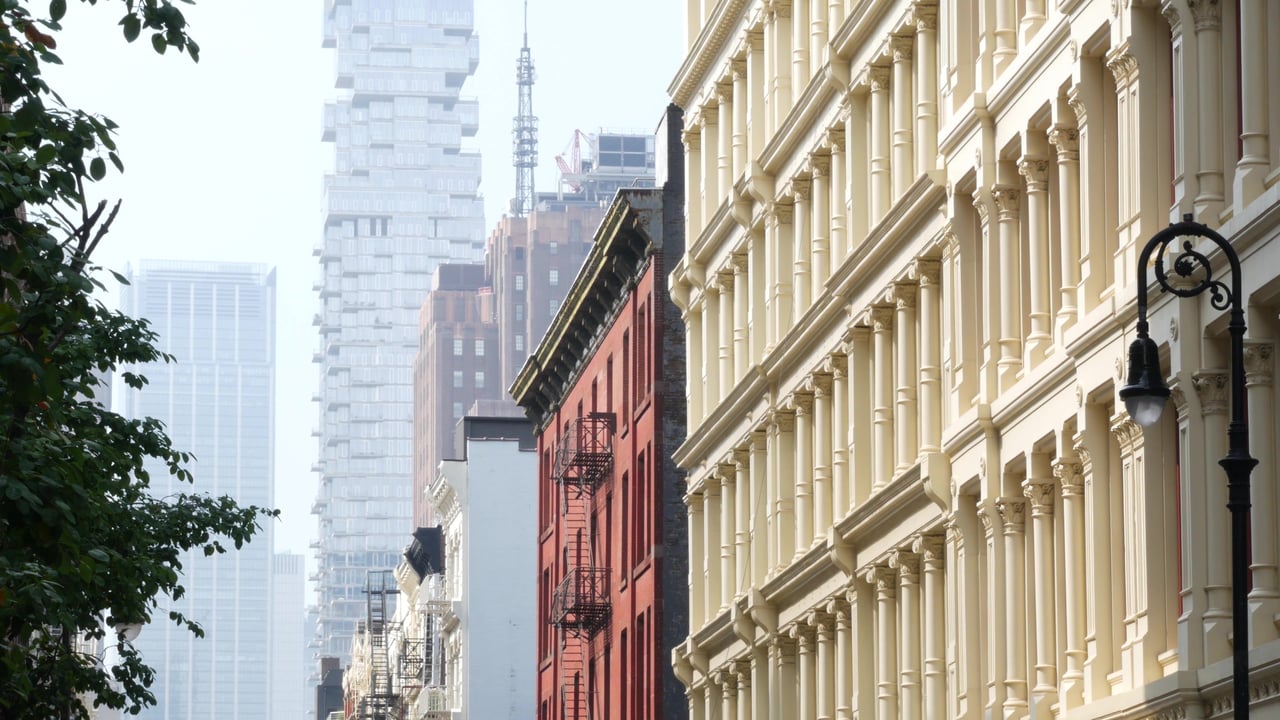
Chelsea is the neighborhood where Manhattan's industrial past and its design-obsessed present sit on the same block. Stretching from roughly 14th Street to 34th Street and from Sixth Avenue west to the Hudson River, it's a place where a landmarked 19th-century Greek Revival brownstone can share a corner with an undulating glass-and-steel tower designed by a Pritzker Prize winner. That tension is the whole point of Chelsea, and it's what tends to attract the people who live here.
The neighborhood pulls in a specific kind of buyer: creative professionals, tech workers orbiting Google's massive East Coast campus at 111 Eighth Avenue, art-world figures, and established households who want a walkable, sophisticated address without the tourist churn of Midtown or the late-night rowdiness of the neighboring Meatpacking District. Chelsea is artsy and urban but genuinely residential, and it carries a deep-rooted history as a foundational sanctuary for New York's LGBTQ+ community—a progressive, expressive spirit that's still woven into the local businesses and community boards even as the neighborhood has gentrified into an affluent enclave. If you value design, contemporary art, and being able to reach almost anything on foot, Chelsea makes an immediate case for itself.
As of mid-2026, Chelsea's market is in a phase of disciplined stabilization rather than the volatile swings of recent years. After the post-pandemic price spikes and the high-interest-rate friction of 2024–2025, the neighborhood has settled into a sophisticated equilibrium: buyers hold measurable leverage, but pricing remains structurally resilient because you simply cannot manufacture new inventory here easily.
Median sale prices currently run between roughly $1.65M and $1.9M, depending on whether you're looking at co-ops or luxury condos. Typical resales trade around $1,700 to $1,850 per square foot, while premium sponsor units and new West Chelsea developments command $2,500+ per square foot. Days on market range widely—from about 53 days for well-priced, desirable units to 120 days for listings that miss on price—and the sale-to-list ratio hovers around 97% to 98%, a sign that sellers have grown more willing to negotiate. That combination technically places Chelsea in a balanced-to-buyer's window.
Where is it heading? With the Federal Reserve adopting a softer stance on rates through 2026, pent-up demand is gradually unlocking. But that demand keeps colliding with a persistent shortage of high-quality, well-priced units. The realistic expectation for the rest of the year is flat to modest single-digit growth in resale prices. The properties driving the most competition share a familiar profile: exceptional light, an optimized floor plan, and reasonable monthly carrying costs.
Chelsea is one of Manhattan's premier investment neighborhoods, but it plays by its own economic rules. Entry costs are steep enough that standard metrics like cash-on-cash return only make sense with context.
On rental yield, the fundamentals are strong on the demand side—the median monthly rent sits near $6,100, up more than 4% year-over-year, and roughly 68% of residents rent. The catch is that high purchase prices compress net cap rates into the 2.5% to 3.5% range. Investors chasing immediate cash flow will find Chelsea difficult; investors treating real estate as a wealth-preservation vehicle will find it excellent. The savviest yield-focused buyers gravitate toward pre-war walk-ups rather than luxury doorman towers, precisely because lower common charges keep monthly expenses from swallowing gross rental profit.
Appreciation is where Chelsea earns its "blue-chip" reputation. The neighborhood is insulated by geographic and regulatory scarcity—there's no easy way to build new stock—and demand is anchored by permanent forces: the local tech corridor, the High Line, and the gallery district. Investors here are explicitly trading near-term yield for long-term capital appreciation.
Fix-and-flip is the trickiest play in Manhattan generally, thanks to co-op board rules, high carrying costs, and slow Department of Buildings permitting. It can still work in Chelsea through two narrow niches: unrenovated pre-war condos in estate condition (avoid co-ops, which restrict subletting and renovation timelines), and artful modernization that updates kitchens and baths while preserving historic architectural character. This is a design-conscious market that heavily penalizes dated aesthetics, so tasteful renovation can command an outsized premium.
Because the strategy genuinely differs by product type, a side-by-side is useful here:
Property Type | Investment Strategy | Pros | Cons |
|---|---|---|---|
West Chelsea Condos | Appreciation / Luxury Rental | Massive international appeal; highly liquid luxury market | Low cap rates; highest price per sq. ft. |
Pre-War Condos | Value-Add / Buy-and-Hold | Best blend of lower price and flexible rental rules | Can require heavy capital expenditure for structural upkeep |
Chelsea Co-ops | Owner-Occupier / Equity Build | Lower entry cost than condos | Restrictive sublet policies make them poor pure investments |
Buying in Chelsea is less a simple transaction than a structural process shaped by New York City's property classifications and stringent co-op boards. Understanding the product types is the first step.
Cooperatives (co-ops) make up a large share of Chelsea's pre-war inventory. When you buy one, you're purchasing shares in a corporation that owns the building and receiving a proprietary lease—not physical real estate. Co-ops typically run 10% to 20% cheaper per square foot than condos, but they come with intensely rigorous financial vetting. Condominiums (condos) dominate the newer architecture near the High Line and in West Chelsea; these are true "fee simple" ownership, offering far more flexibility for renting or renovating, which makes them the default for international buyers and investors. Townhouses—historic brick and brownstone properties lining the Chelsea Historic District, mainly 20th to 24th Streets between Eighth and Tenth Avenues—represent the ultra-luxury tier, often trading from $6M into the $20M+ range.
Even in today's balanced market, correctly priced properties with strong fundamentals still draw immediate competition. Well-appointed one- and two-bedroom condos can attract multiple offers within their first 14 to 21 days, and all-cash offers remain a powerful advantage—buyers competing against cash are routinely pushed toward cleaner terms or higher prices to win.
Manhattan also runs on an "as-is" culture that changes how you structure an offer. Financing contingencies, standard in most of the country, are heavily discouraged in competitive Chelsea deals; many sellers will reject an offer carrying a mortgage contingency unless the buyer pays a premium, so serious buyers lean on fully underwritten pre-commitments. Inspection contingencies are rare for condos and co-ops—buildings handle structural upkeep, and buyers do their due diligence through building financial reviews and board minutes rather than a physical inspection. The exception is a townhouse or a top-floor unit with potential roof or terrace concerns, where an inspection makes real sense.
For anyone weighing an entry point into Chelsea, the decision comes down to time horizon and how you want your capital deployed. On paper, Chelsea is firmly a rent-favoring market for short-to-medium stays, and the math shows why.
With a median sale price around $1.75M and annual rent near $73,000, the price-to-rent ratio lands at roughly 24. In real estate economics, any ratio above 21 signals that renting is meaningfully cheaper on a monthly cash-flow basis than buying. That single number reframes the whole question.
The trade-offs break down cleanly:
Factor | Renting in Chelsea | Buying in Chelsea |
|---|---|---|
Upfront Capital | ~$12,000 (first month + security) | 20–25% down ($350K–$450K) plus closing costs and mansion tax |
Monthly Cash Flow | Fixed; insulated from building cost increases | High carrying costs (mortgage + common charges or maintenance) |
Wealth Generation | No equity; capital must grow elsewhere | Forced savings, long-term equity, and tax deductions |
Flexibility | High; walk away at lease end | Low; high transaction costs require a 7+ year hold |
The honest verdict: rent if your horizon is under seven years, or if you'd rather keep your liquid capital working in higher-yield vehicles than lock it into a compressed-yield asset. Buy if you're planting roots for seven to ten-plus years, you have the reserves to clear a co-op board's post-closing liquidity requirement (often 12 to 24 months of carrying costs held in reserve), and you view the purchase as wealth preservation in one of the world's most resilient micro-markets.
Property taxes are the line item that most surprises out-of-town buyers, because New York City calculates them unlike almost anywhere else in the country—through an opaque system of property classes, assessed values, and abatements.
Nearly all residential apartments in Chelsea—condos and co-ops in buildings with more than four units—are designated Class 2 properties. The city doesn't tax your purchase price or true market value. Instead, the Department of Finance estimates a hypothetical "market value" based on what the building would generate as an income-producing rental, then sets the assessed value at 45% of that figure. The Class 2 tax rate currently hovers around 12.439%, but because the assessed value is so heavily discounted from real-world sale prices, your effective rate usually works out to roughly 0.8% to 1.2% of the actual purchase price per year.
Two factors deserve close attention. The first is the NYC Cooperative and Condominium Tax Abatement: if the home is your primary residence and you buy in your personal name rather than through an LLC, you may qualify for a reduction of up to 17.5% on your annual tax bill—a real affordability lever. The second is the expiring 421-a abatement. Many luxury high-rises built across West Chelsea over the last two decades secured this benefit, which reduced property taxes to nearly nothing for a set term (often 15 to 25 years). If you're eyeing a sleek condo near the High Line, ask for the abatement schedule before you fall in love, because when these phase out, a monthly tax bill can jump from a few hundred dollars to several thousand overnight.
If you're moving to Chelsea from outside the city, a little orientation goes a long way, because where in Chelsea you land shapes your daily life.
The neighborhood divides into distinct sub-districts. West Chelsea, roughly Tenth to Twelfth Avenues, is the architectural vanguard—towering glass condos, more than 200 contemporary art galleries, and direct access to the High Line, all with an industrial-chic, spacious, modern feel. Central Chelsea, from Seventh to Ninth Avenues, is the historic residential heart: quiet, tree-lined blocks of landmarked brownstones and classic co-ops, highly walkable, dense with cafes and bistros. The eastern edge, from Sixth to Seventh Avenues, is the tech corridor, bordering the Flatiron district, dominated by Google's campus, and carrying more commercial energy and foot traffic alongside immediate transit access.
Daily life here is unusually self-contained. Central Chelsea lacks a large traditional park, but residents lean on the High Line for elevated strolls and Hudson River Park on the western edge for running, biking, and sunsets, with Chelsea Piers offering a 28-acre fitness and sports village. For food and essentials, Chelsea Market—housed in the old Nabisco factory where the Oreo was invented—functions as the neighborhood's public square, backed by a large Whole Foods on Seventh Avenue and a Trader Joe's on Sixth. Transit is a genuine strength, with the A, C, E, 1, 2, and 3 lines cutting straight through and putting Wall Street 10–15 minutes away and Midtown about 5.
One piece of relocation logistics tends to catch newcomers off guard: moving into a Manhattan building is a regulated process. Nearly all Chelsea condo and co-op buildings ban weekend moves and require you to reserve the freight elevator weeks ahead for a weekday window, typically 9:00 AM to 4:00 PM, often with a non-refundable move-in fee or damage deposit. Your movers also cannot enter the building without a Certificate of Insurance (COI) naming the building's board as additionally insured—and standard out-of-state movers frequently lack the coverage limits NYC buildings demand. Hiring an NYC-licensed mover experienced with strict property managers will save you a genuinely painful day.
For professionals and urbanites, Chelsea is about as logistically seamless as Manhattan gets. It functions as a true "15-minute city," where work, errands, and recreation rarely require a car. The scores tell the story plainly: a Walk Score of 99, a Transit Score of 100, and a Bike Score of 88, the last helped along by flat terrain and dedicated riverfront greenways.
The neighborhood is anchored by three major subway lines running vertically through it. The Eighth Avenue line (A, C, E) serves the western and central sections via 14th and 23rd Street stations, with quick access to the Financial District and JFK transfers. The Seventh Avenue line (1, 2, 3) runs through the heart of Chelsea at 18th and 23rd Streets, ideal for local Midtown trips or express runs uptown. And the Sixth Avenue and 14th Street corridors (F, M, L, and PATH) handle cross-town travel via the L and direct regional access to New Jersey through the PATH at 23rd Street. Cyclists get Citi Bike docks on nearly every block plus the fully separated Hudson River Greenway along the waterfront.
Chelsea is also a major employment center in its own right, anchored by Google's East Coast headquarters at 111 Eighth Avenue and nearby Pier 57. For those commuting elsewhere, Hudson Yards is a 5-to-15-minute walk north, Midtown is a 7-to-10-minute subway ride or a 20-minute walk, and the Financial District is a direct 12-to-15-minute ride on the 2/3 or A/C express from 14th Street.
For family buyers, school placement often drives the entire home search, and Chelsea sits entirely within New York City Geographic District 2—historically one of the highest-performing and most sought-after public districts in the five boroughs.
One important note for out-of-town buyers: in Manhattan, elementary schools are zoned to your exact residential block, while middle and high schools largely run on a choice-based application system where District 2 residents receive priority but not guaranteed admission. That distinction matters when you're deciding which block to buy on.
On the elementary side, P.S. 11 (William T. Harris School) on West 21st Street is known for progressive teaching, strong arts programming, and an active PTA. P.S. 33 (Chelsea Prep) on Ninth Avenue offers well-regarded Gifted and Talented classrooms alongside general education, with strong math and reading proficiency. P.S. 340 (Sixth Avenue Elementary) on 17th Street brings a tight-knit community feel in a modern facility on the neighborhood's eastern border.
For older students, Chelsea hosts several coveted programs. NYC Lab Middle & High School for Collaborative Studies on West 17th Street is an elite, project-based public option; its middle school is highly competitive for District 2 applicants and its high school routinely ranks among the top open-admissions high schools in the city. The NYC Museum School, sharing that 17th Street campus, partners directly with major cultural institutions to build exhibits into its curriculum. The Clinton School, on the neighborhood's edge, runs a full International Baccalaureate program spanning grades 6 through 12. For families looking beyond the public system, Avenues: The World School in West Chelsea offers an elite nursery-through-12th-grade program with dual-language immersion.
Chelsea trades traditional parkland for a distinctive collection of green spaces, and proximity to them is a real property-value anchor. The High Line—a 1.45-mile elevated park built on a former freight rail line—cuts through West Chelsea and doubles as a neighborhood landmark, with units directly overlooking it often trading at a premium.
Along the western edge, Hudson River Park and Chelsea Waterside Park form a continuous waterfront greenway of running trails and open lawns; Chelsea Waterside is a particular draw for families and pet owners, with a multi-story playground and a well-regarded dog run. For more conventional recreation, Chelsea Park (Ninth to Tenth Avenues) holds the fields and courts, while pocket spaces like Chelsea Green on 20th Street offer quiet, tree-shaded retreats.
Chelsea's food and evening scene is best read as a lifestyle signal rather than a restaurant directory. The neighborhood deliberately sidesteps the raw energy of Meatpacking in favor of something more mature and design-forward. Dining ranges from the artisan stalls inside Chelsea Market to hyper-exclusive omakase counters and high-profile live-fire kitchens, drawing top-tier chefs into intimate, neighborhood-focused rooms.
Nightlife skews the same way: not mainstream bars but subterranean lounges, sleek hotel rooftops around 28th Street, and meticulously designed cocktail bars built around presentation. And the gallery district shapes the social calendar directly—Thursday-night openings turn West Chelsea into an upscale block party where collectors, artists, and locals mingle, a cultural perk that genuinely defines living here.
Shopping in Chelsea splits neatly between everyday convenience and high-concept exploration, which means you rarely have to leave the neighborhood for essentials while living alongside some of the city's most forward-thinking retail. The central and eastern corridors (Sixth to Eighth Avenues) handle daily life, with a large Whole Foods on Seventh Avenue, a sprawling Trader Joe's on Sixth, an H Mart nearby for specialized Asian goods, plus the usual pharmacies, fitness boutiques, and pet care.
Move west toward the High Line and the tone shifts from functional to experiential: architectural flagships like the industrial Comme des Garçons store on 22nd Street, curated independent bookstores such as 192 Books and the legendary nonprofit Printed Matter, and mid-century furniture galleries. Chelsea Market ties it together as an indoor shopping hub, from the rotating designer pop-ups at Artists & Fleas to gourmet specialty goods.
Chelsea's personality is distinct from anywhere else in Manhattan: artsy, urban, and sophisticated, yet approachable and neighborhood-centric. Its identity is arts-first—this is the undisputed global epicenter of contemporary art, with more than 200 galleries, including heavyweights like David Zwirner and Gagosian, tucked into soaring repurposed warehouses. That concentration shapes a resident base that deeply values design, architecture, and visual culture. Layered on top is the neighborhood's long history as a progressive, inclusive sanctuary, and a constant architectural contrast between quiet 19th-century brownstones and hyper-modern towers.
The daily rhythm shifts accordingly: weekdays hum with a fast-paced tech and creative class around the Google campus, while weekends slow into a pedestrian's haven of micro-roaster lattes, gallery strolls, and reading on the steps of the General Theological Seminary.
Chelsea rewards buyers and investors who understand its particular mechanics—the difference between a co-op's proprietary lease and a condo's fee-simple ownership, the timing of an expiring 421-a abatement, the way a building's board minutes matter more than a physical inspection. That local, structural knowledge is exactly what the James Weiss Team brings to the table.
Operating as a full-service real estate family office and affiliated with Corcoran, the James Weiss Team has completed over $500 million in transactions, a significant share of them off-market—a reflection of the discretion and relationships that define how they work. Their approach is built around connecting the many people and details behind every deal and treating each transaction, regardless of size, with individualized care rather than a one-size-fits-all playbook.
If you're weighing a move to Chelsea, exploring an investment here, or simply want a clear read on where this market is heading, they're a genuine resource worth reaching out to. You can contact the James Weiss Team at (201) 956-8739 or [email protected], or visit their office at 590 Madison Avenue, 8th Floor, New York, NY 10022. More on the team and current listings is available at jamesweissteam.com.
There's plenty to do around Chelsea, including shopping, dining, nightlife, parks, and more. Data provided by Walk Score and Yelp.
Explore popular things to do in the area, including Wine Merchants By Ana, International Terminal Operation Co, and 765 Sixth Avenue Market.
| Name | Category | Distance | Reviews |
Ratings by
Yelp
|
|---|---|---|---|---|
| Dining | 0.38 miles | 0 reviews | 0/5 stars | |
| Dining | 0.43 miles | 0 reviews | 0/5 stars | |
| Dining | 0.53 miles | 0 reviews | 0/5 stars | |
| Dining | 0.57 miles | 1 review | 1/5 stars | |
| Shopping | 0.2 miles | 0 reviews | 0/5 stars | |
| Shopping | 0.43 miles | 0 reviews | 0/5 stars | |
| Shopping | 0.46 miles | 0 reviews | 0/5 stars | |
| Shopping | 0.46 miles | 0 reviews | 0/5 stars | |
| Shopping | 0.49 miles | 0 reviews | 0/5 stars | |
| Shopping | 0.5 miles | 0 reviews | 0/5 stars | |
| Active | 0.4 miles | 0 reviews | 0/5 stars | |
| Active | 0.43 miles | 0 reviews | 0/5 stars | |
| Active | 0.43 miles | 0 reviews | 0/5 stars | |
| Active | 0.49 miles | 0 reviews | 0/5 stars | |
| Active | 0.5 miles | 3 reviews | 3.3/5 stars | |
| Active | 0.54 miles | 0 reviews | 0/5 stars | |
| Beauty | 0.3 miles | 0 reviews | 0/5 stars | |
| Beauty | 0.39 miles | 0 reviews | 0/5 stars | |
| Beauty | 0.42 miles | 0 reviews | 0/5 stars | |
| Beauty | 0.43 miles | 3 reviews | 5/5 stars | |
| Beauty | 0.43 miles | 0 reviews | 0/5 stars | |
| Beauty | 0.43 miles | 0 reviews | 0/5 stars | |
| Beauty | 0.54 miles | 0 reviews | 0/5 stars | |
|
|
||||
|
|
||||
|
|
||||
|
|
||||
|
|
||||
|
|
Chelsea has 31,717 households, with an average household size of 2. Data provided by the U.S. Census Bureau. Here’s what the people living in Chelsea do for work — and how long it takes them to get there. Data provided by the U.S. Census Bureau. 56,634 people call Chelsea home. The population density is 93,376 and the largest age group is Data provided by the U.S. Census Bureau.
Total Population
Population Density Population Density This is the number of people per square mile in a neighborhood.
Median Age
Men vs Women
Population by Age Group
0-9 Years
10-17 Years
18-24 Years
25-64 Years
65-74 Years
75+ Years
Education Level
Total Households
Average Household Size
Average individual Income
Households with Children
With Children:
Without Children:
Blue vs White Collar Workers
Blue Collar:
White Collar:
Explore Other Neighborhoods
590 Madison Ave 8th Flr New York, NY 10022
590 Madison Ave 8th Flr New York, NY 10022