Welcome to
393,743 people live in Lower Manhattan, where the median age is 39 and the average individual income is $109,695. Data provided by the U.S. Census Bureau.
Total Population
Median Age
Population Density
Average individual Income
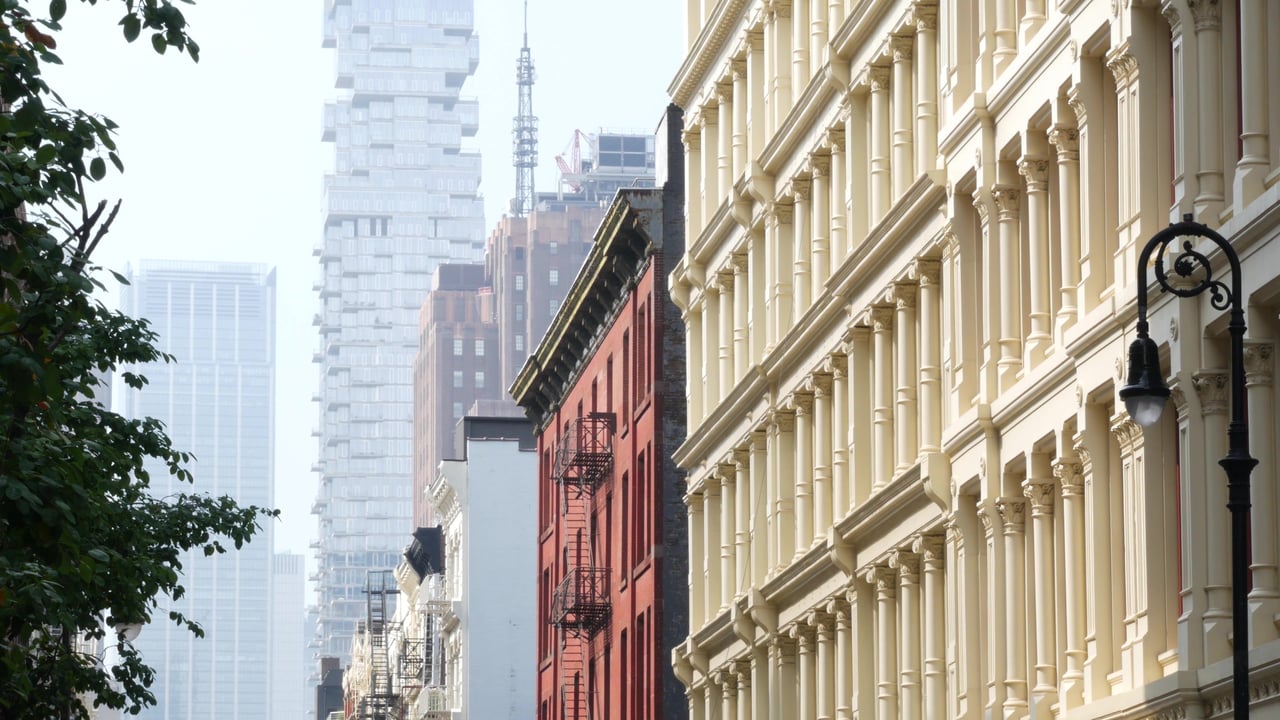
Lower Manhattan isn't one neighborhood — it's a cluster of distinct micro-worlds packed into the oldest corner of New York City, where the character can change completely in the span of three blocks. Cobblestoned TriBeCa gives way to the glass-and-steel canyons of the Financial District; the cast-iron flagships of SoHo sit a short walk from the tenement-turned-nightlife energy of the Lower East Side; and Greenwich Village holds its tree-lined, low-rise calm against all of it. What unites them is density, walkability, and a depth of history that no other American market can replicate.
The buyers this area attracts tend to fall into a few camps: finance and legal professionals who want to live near where they work, international and out-of-state buyers treating Manhattan real estate as a durable store of wealth, and families drawn specifically to the downtown school zones. It's a market that rewards people who understand its rules — because those rules are unlike anywhere else in the country.
For most of the stretch between 2017 and 2024, the broader Manhattan condo market moved sideways rather than up. It was digesting an enormous wave of luxury inventory and adjusting to the macroeconomic aftershocks of the pandemic era. That consolidation phase has ended. The market has entered a defined recovery cycle, propelled by historically large Wall Street bonus pools — approaching $50 billion — and a steady inflow of domestic and international wealth that keeps demand for large-format condos and luxury units firm.
Pricing today is climbing on a steady rather than explosive trajectory, with resale condo averages pushing past $2,400 per square foot. The most important thing to understand is the widening split between the two dominant ownership structures. Condominiums are drawing cash-heavy buyers who value ownership flexibility and liquidity, and in the most active segments condo prices are rising more than 10% annually. Co-ops, by contrast, are largely flat or slightly softer — hemmed in by rigid board restrictions and far more sensitive to the financing environment.
Looking ahead, premium assets are drifting toward a controlled seller's market. Available inventory sits roughly 5% tighter than in prior cycles, and as financing terms stabilize, a backlog of mid-market and first-time buyers who were priced out by high borrowing costs is expected to re-enter — adding pressure from below.
If you're evaluating Lower Manhattan through an investor's lens, the honest framing is this: it is a capital-preservation and appreciation play, not a cash-flow vehicle. Net rental yields on standard condominiums typically sit between 2% and 3%, which looks thin on paper. But the absolute dollar figures are substantial. Median Manhattan rents are at record highs above $5,200 a month, prime one-bedrooms command roughly $6,500 to $9,000, and two-bedrooms in elite developments pull $11,000 to well over $20,000 monthly. The deeper value for investors lies in tenant credit quality and a vacancy rate that stays under 2% — the kind of occupancy insulation you simply don't get in secondary U.S. markets.
On appreciation, Manhattan condominiums have historically averaged about 6% annually over multi-decade horizons. Because these assets are usually acquired with structural leverage, a disciplined investor can compound equity at two to three times that baseline depending on down payment and financing. The geographic confinement of the island guarantees a permanent supply ceiling, which is what makes long-horizon appreciation here so durable.
Traditional fix-and-flips barely exist downtown. Entry costs are enormous, Department of Buildings permitting is onerous, and landmarking protections across SoHo and Greenwich Village restrict what can be altered. Sophisticated capital instead targets two things: value-add condo renovations — buying dated pre-war inventory and executing high-end cosmetic overhauls to force immediate equity — and, at the institutional level, office-to-residential conversions. With the downtown office vacancy rate leveling off around 22%, converting older Class B and C office space into luxury residential is a live and city-incentivized opportunity.
Before committing capital, it's worth clarifying three things: whether you're targeting an ultra-premium enclave like TriBeCa or a higher-density rental zone like FiDi; whether you're financing or paying all cash to lock in that 3% cap rate; and whether your horizon is short-term forced equity or multi-generational wealth preservation. Those three answers change the entire strategy.
Buying here is fundamentally different from buying almost anywhere else in the country, and the differences start with what you're actually buying. The housing stock splits cleanly by structure and era:
Property Type | What You Own | Where You'll Find It | Practical Notes |
|---|---|---|---|
Condominium | Real property, held by deed | New developments, FiDi conversions, modern builds | Straightforward financing; minimal leasing restrictions; the default for investors and international buyers |
Co-op | Shares in a corporation plus a proprietary lease | Greenwich Village, parts of the Lower East Side | Trades at a 20–30% discount per square foot versus condos, but comes with heavy financial and lifestyle scrutiny |
Townhouse / Loft | Full building or ultra-luxury loft | SoHo cast-iron lofts (often under JLWQA artist-zoning rules); Village 19th-century townhouses | The ultra-luxury tier; unique and often multi-million-dollar |
The purchase process itself follows a strict downtown sequence. Sellers rarely entertain an offer without a completed REBNY Financial Statement, which lays bare your assets, liabilities, income, and post-closing liquidity. From there comes the board package — the true gatekeeper — requiring tax returns, bank statements, and personal and professional references. Co-op boards go further still, conducting an in-person or virtual interview and reserving the absolute right to reject a buyer for any non-discriminatory reason, without explanation. Condos require an application too, but they hold only a "Right of First Refusal," which makes their process meaningfully smoother.
On contingencies, expect an aggressive, cash-heavy market. Financing contingencies are hard to secure; sellers heavily favor all-cash offers or offers that waive financing (meaning your 10% deposit is at risk if the loan falls through). When a financing contingency is accepted, the building itself has to be lender-approved — a real complication in newer developments or in co-ops with thin reserves. Inspection contingencies are rare in condo and co-op deals, since the building's structure and core systems are the HOA's or corporation's responsibility; they only become standard when you're buying an entire standalone townhouse.
The rent-versus-buy decision downtown comes down to math and time horizon. The key indicator is the price-to-rent ratio — the median purchase price divided by annualized median rent. In prime areas like TriBeCa and SoHo, where condos routinely run $2.5M to $3M+ and luxury one- and two-bedroom rentals cost between $75,000 and $110,000 a year, that ratio frequently lands between 30 and 40. Nationally, anything above 20 favors renting on pure monthly cost. So on a straight carrying-cost basis, buying an equivalent prime unit will almost always cost more per month than renting it.
That said, the math has started tilting toward ownership for long-term residents. Record rents above $5,200 a month mean tenants are absorbing 100% wealth consumption with zero equity and exposure to annual increases, while mortgage rates have eased into the low-6% range. In the co-op sector especially — where prices have stabilized and entry points sit near $850,000 — the all-in monthly cost of principal, interest, and maintenance often matches or undercuts a comparable luxury rental.
A simple way to sort where you land:
Lean Toward Renting If… | Lean Toward Buying If… |
|---|---|
Your NYC horizon is under 5 years — closing costs, including the NY State Mansion Tax, take time to amortize | You plan to hold the property 5–10+ years |
You'd rather keep capital liquid in equities or alternatives than tied up in illiquid real estate | You can use tax advantages: primary-residence gains exclusion, mortgage interest deductions, pass-through building deductions |
You want a fixed monthly ceiling with no exposure to assessments, capital levies, or rising common charges | You want an inflation hedge — locking in baseline housing costs while renters face volatile renewals |
NYC property taxes are notoriously opaque, and they deviate sharply from how the rest of the country does it. The city does not tax you on what you paid. Instead, residential real estate falls into classes — Class 1 for one-to-three-family townhouses, Class 2 for co-ops and condominiums — and the Department of Finance applies a statutory 45% assessment ratio to its own conservative estimate of a property's "market value" to reach an assessed value. The annual Class 2 rate of 12.439% is then applied to that assessed value, not your purchase price.
There's a further quirk that works in owners' favor: state law requires Class 2 condos and co-ops to be valued as if they were rental buildings rather than individual luxury homes. Because rental-building cap rates compress the perceived value, the assessed figure is often a fraction of the real sale price. The practical upshot is that a standard Lower Manhattan condo carries an effective tax rate of roughly 0.8% to 1.2% of the true purchase price per year.
Two adjustments matter most. If the unit is your primary residence, the NYC Coop/Condo Tax Abatement can cut your bill by 17.5%. But if you're buying a second home, pied-à-terre, or corporate investment vehicle, a New York State surcharge applies to non-primary Class 2 properties valued at $1 million or more, scaling from 4% up to 6.5% by valuation tier — a significant operating cost that non-resident investors need to price in from the start.
Moving to Lower Manhattan from out of town means adapting to a dense, vertical environment where owning a car is a liability rather than a convenience, and where each neighborhood carries its own personality. TriBeCa and SoHo are built on low-rise historic cast-iron lofts — TriBeCa quiet, cobblestoned, and family-oriented around top public schools like PS 234; SoHo far more commercial, with global retail flagships and heavy weekend foot traffic. Greenwich Village runs to tree-lined streets, brick townhouses, and an artistic legacy anchored by Washington Square Park, notably free of glass towers. The Financial District is the high-rise epicenter, offering strong per-square-foot value through office-to-residential conversions and enormous transit access, though it reads more corporate and dense. The Lower East Side is grittier and higher-energy, heavy on nightlife, galleries, and food, with a housing stock of pre-war walk-up co-ops and select modern towers.
A few sunk costs to plan for. Residential parking runs $600 to $1,200+ a month, and street parking rules are punishing — most relocators shed their cars entirely and lean on the subway and ride-shares. If you rent before buying, be ready for NYC's leasing structure: broker fees routinely run 12% to 15% of the total annual lease, paid upfront on top of security deposits. And logistics vary by building — modern doorman towers manage packages and deliveries seamlessly through building apps, while pre-war walk-ups and lofts require you to map out access rules or coordinate neighborhood drop-off points.
Lower Manhattan sits on what's widely considered the most robust transit infrastructure in the Western Hemisphere, and the region functions as a hyper-connected nexus that removes any need for a car. Walk Scores here run between 98 and 100 — a genuine "Walker's Paradise" where groceries, pharmacies, dining, and retail are three to five minutes from almost any doorstep. Bike Scores average 88 to 92, supported by the continuous Hudson River and East River Greenways and Citi Bike docks on roughly every third block.
The crown jewel is the transit layout. Two multi-billion-dollar hubs — the Fulton Transit Center and the WTC Oculus — sit less than a quarter-mile apart and provide weather-protected indoor access to 12 subway lines (1, 2, 3, 4, 5, A, C, E, J, N, R, W). A trip from downtown to Midtown reliably takes 12 to 18 minutes on express service. The PATH train runs directly from the WTC hub to Hoboken, Jersey City, and Newark, and NYC Ferry terminals at Wall Street/Pier 11 and Brookfield Place offer traffic-free links to Brooklyn, Queens, Staten Island, and the Bronx.
For family buyers, downtown's public education is one of the strongest demand drivers in the market. The area sits squarely within NYC Geographic School District 2 — one of the highest-performing and best-funded districts in the city — and early education runs on a zoned admission model, meaning your address dictates placement priority.
The elementary options are genuinely coveted. PS 234, the Independence School in TriBeCa, is among the most sought-after public elementaries in the city, known for its inquiry-based curriculum and deep community backing. PS 150, the Tribeca Learning Center, is a small, selective K–5 recently moved into a state-of-the-art facility. PS 89, the Liberty School in Battery Park City, leans into technology and early science, and the Spruce Street School (PS 397) in FiDi offers continuous K–8 education at the base of the Gehry tower.
At the high school level, Lower Manhattan is home to Stuyvesant High School in Battery Park City — consistently ranked the #1 public high school in New York, admitting strictly by the SHSAT and functioning as an elite STEM pipeline with Nobel laureates among its alumni. For families opting out of the public track, the neighborhood offers the Blue School in the Seaport, the full-IB Leman Manhattan Preparatory School in FiDi, and dedicated bus service to established uptown independents like Trinity and Collegiate.
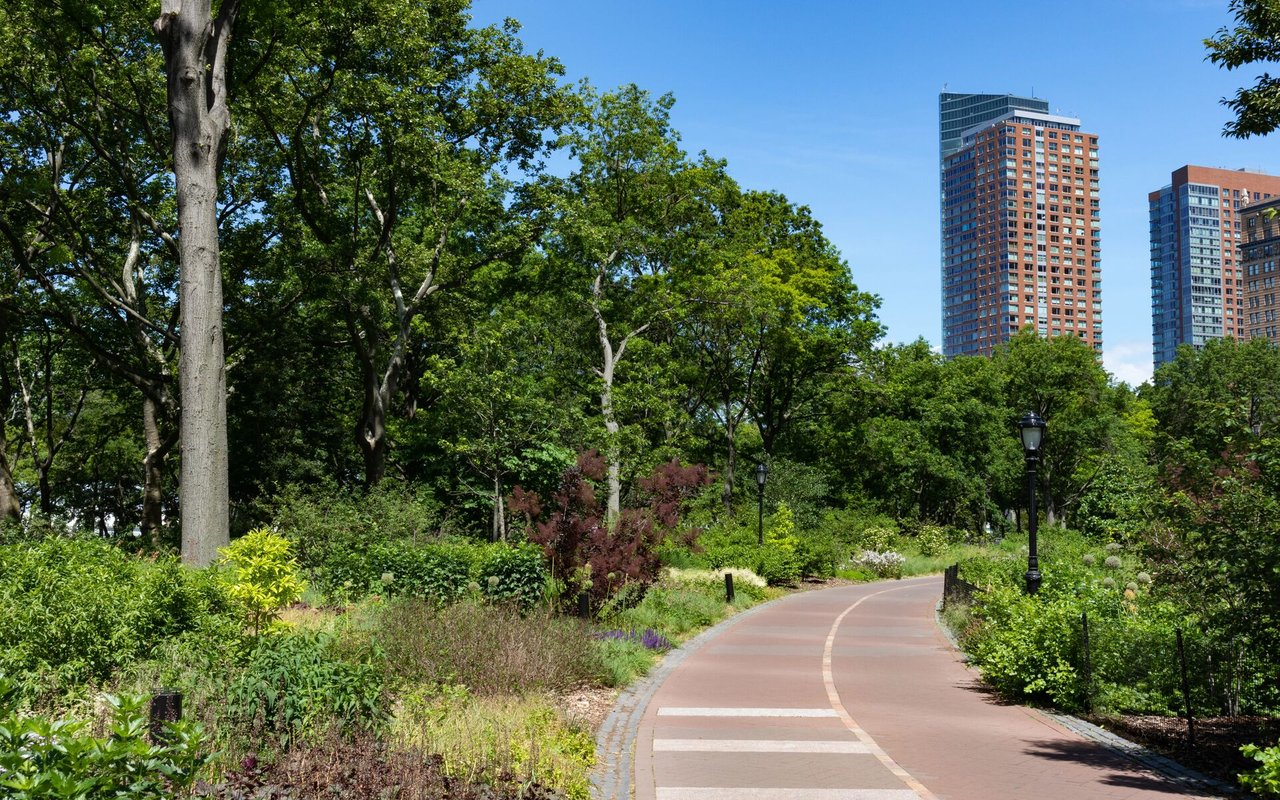
For a district known for density, Lower Manhattan is remarkably well-served by green space — and from a buyer's standpoint, these areas function as extended backyards that reinforce property values. The neighborhood is effectively wrapped in a continuous recreational loop by the Hudson River and East River Greenways, offering miles of car-free paths for running, cycling, and walking.
The standout hubs: Battery Park City, a 92-acre master-planned neighborhood where over a third of the land is preserved open space, including Rockefeller Park's sweeping lawns and the newly elevated, climate-resilient Wagner Park. The Battery, a historic 25-acre park at the island's southern tip, has been upgraded with an elevated promenade, perennial gardens, and the SeaGlass Carousel. And along the eastern flank, East River Park's first completed resiliency phases have delivered new ballfields, tennis courts, and amphitheaters engineered to double as storm protection.
The food and entertainment scene here reads as a lifestyle signal more than anything — a marker of the culture waiting just outside the door. Lower Manhattan is a genuine epicenter of global dining, dense with Michelin recognition. Long-standing institutions anchor it: Jungsik in TriBeCa for boundary-pushing Korean tasting menus, Crown Shy and Saga in FiDi for sky-high contemporary fine dining, and Le Coucou and L'Appart in SoHo for refined French technique. The trendsetting edge runs through open-fire concepts and micro-bistros — from Torrisi's peak Italian-American cooking in Nolita to Corima's hyper-creative Mexican fare in Chinatown.
Nightlife downtown skews away from the club-heavy formats of the outer boroughs toward curated, intimate experiences. This is the birthplace of the modern craft cocktail revival, and hidden lounges, subterranean mezcal bars, and historic taverns anchor the evenings across the Lower East Side and Chinatown. In SoHo and TriBeCa, the social centers are the drawing rooms and courtyards of luxury boutique hotels — the Greenwich, the Beekman, the Crosby Street — which function as the neighborhood's private living rooms.
Shopping downtown bridges everyday convenience with world-class retail, and it does so without a single suburban strip mall. On the high-design end, the Calatrava-designed WTC Oculus houses a multi-level complex with more than 50 modern brands — Apple, Sephora, Zara — all weather-protected for commuters, while Brookfield Place on the Battery Park City waterfront pairs luxury staples like Louis Vuitton and Gucci with expansive dining and public art for the affluent local base.
The open-air side is where the neighborhood earns its global reputation. The SoHo Cast-Iron District is the epicenter of street-level fashion, its cobblestoned avenues lined with flagship houses like Prada, Moncler, and Saint Laurent alongside streetwear incubators and galleries. The Seaport offers a more curated, artisanal alternative among old shipping piers, and the Lower East Side remains a haven for vintage boutiques, custom jewelry, and rare sneaker outposts. For essentials, full-scale Whole Foods markets anchor both TriBeCa and FiDi, backed by gourmet grocers and full-service fitness hubs like Equinox.
The defining personality of Lower Manhattan is deeply historic, intensely urban, and endlessly walkable — a region that changes its cultural identity block by block. This is where the city's oldest history collides with its most progressive future: you can walk the winding Dutch colonial grid of the Financial District, pass the 17th-century footprint of Trinity Church, and step into a soaring glass-and-steel community within minutes.
The personalities sort roughly into three moods. TriBeCa and the West Village are sophisticated, understated, and protective of their privacy — clean, quiet, family-oriented, defined by strollers on cobblestone corners and calm waterfront parks. FiDi is energetic and corporate by day but surprisingly relaxed on weekends, transforming into an open waterfront sanctuary once the Wall Street crowd clears out. And SoHo, Chinatown, and the Lower East Side carry the high-sensory, creative pulse — a gritty artistic heritage fused with global energy, from Chinatown's dim sum parlors and food stalls to the LES's late-night music venues and gallery openings. Together they form the authentic beating heart of Manhattan culture.
Downtown Manhattan is one of the most rewarding markets in the world to own in — and one of the most unforgiving to navigate without local guidance. Board packages, REBNY financials, the condo-versus-co-op calculus, the tax-class quirks, the neighborhood-by-neighborhood shifts in value and character: these are the details that separate a smooth transaction from a costly misstep, and they're exactly where local expertise earns its keep.
That's the role the James Weiss Team plays. Operating as a full-service real estate family office, the team has closed over $500 million in transactions — a meaningful share of it off-market — by treating every deal, regardless of size, with individualized care and precision. The approach is built on connecting the many people and moving parts behind each transaction into a single coherent story, with discretion and a genuinely elevated standard of service. Whether you're weighing an investment position, relocating from out of town, or simply trying to understand what your goals look like in this market, the team is a resource worth having in your corner.
You can reach the James Weiss Team at (201) 956-8739 or [email protected], or visit the office at 590 Madison Avenue, 8th Floor, New York, NY 10022. More at jamesweissteam.com.
There's plenty to do around Lower Manhattan, including shopping, dining, nightlife, parks, and more. Data provided by Walk Score and Yelp.
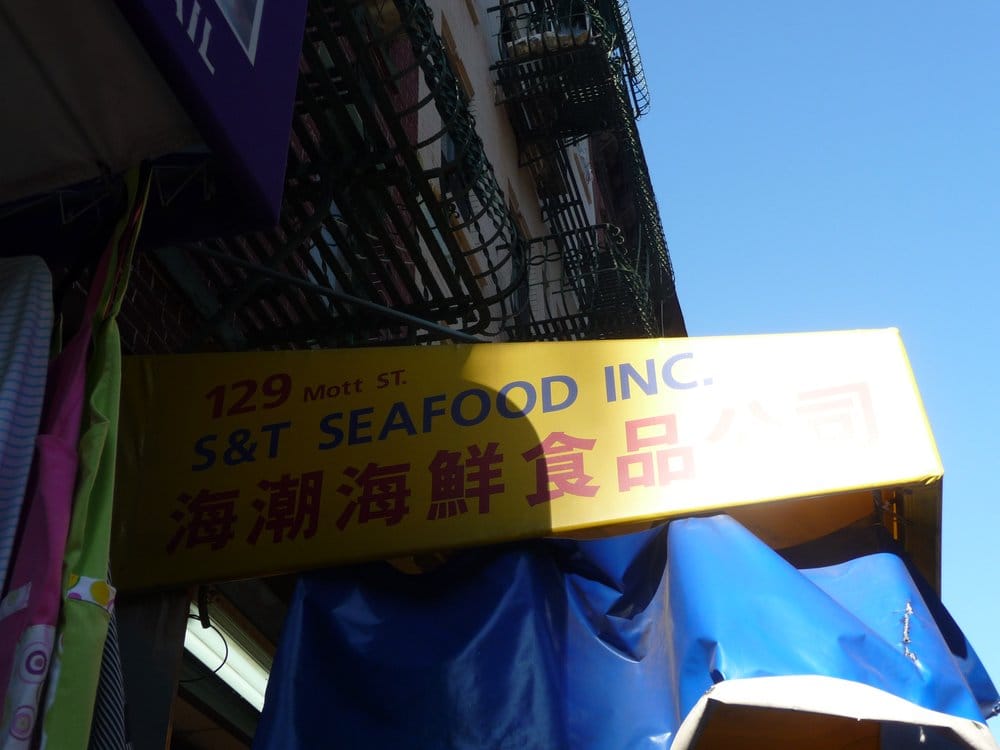
Explore popular things to do in the area, including Food Cart On Spring And Broadway, Fiasconaro USA, and S & T Seafood Company.
| Name | Category | Distance | Reviews |
Ratings by
Yelp
|
|---|---|---|---|---|
| Dining | 0.13 miles | 0 reviews | 0/5 stars | |
| Dining | 0.25 miles | 0 reviews | 0/5 stars | |
| Dining | 0.42 miles | 0 reviews | 0/5 stars | |
| Dining | 0.48 miles | 0 reviews | 0/5 stars | |
| Shopping | 0.14 miles | 9 reviews | 1.7/5 stars | |
| Shopping | 0.15 miles | 0 reviews | 0/5 stars | |
| Shopping | 0.21 miles | 4 reviews | 1/5 stars | |
| Shopping | 0.25 miles | 1 review | 1/5 stars | |
| Shopping | 0.25 miles | 0 reviews | 0/5 stars | |
| Shopping | 0.34 miles | 0 reviews | 0/5 stars | |
| Shopping | 0.36 miles | 0 reviews | 0/5 stars | |
| Shopping | 0.45 miles | 0 reviews | 0/5 stars | |
| Active | 0.06 miles | 0 reviews | 0/5 stars | |
| Active | 0.06 miles | 0 reviews | 0/5 stars | |
| Active | 0.14 miles | 1 review | 5/5 stars | |
| Active | 0.37 miles | 0 reviews | 0/5 stars | |
| Active | 0.44 miles | 0 reviews | 0/5 stars | |
| Active | 0.49 miles | 0 reviews | 0/5 stars | |
| Beauty | 0.15 miles | 0 reviews | 0/5 stars | |
| Beauty | 0.3 miles | 0 reviews | 0/5 stars | |
| Beauty | 0.42 miles | 0 reviews | 0/5 stars | |
| Beauty | 0.46 miles | 0 reviews | 0/5 stars | |
| Beauty | 0.47 miles | 0 reviews | 0/5 stars | |
| Beauty | 0.49 miles | 0 reviews | 0/5 stars | |
|
|
||||
|
|
||||
|
|
||||
|
|
||||
|
|
||||
|
|
Lower Manhattan has 198,673 households, with an average household size of 2. Data provided by the U.S. Census Bureau. Here’s what the people living in Lower Manhattan do for work — and how long it takes them to get there. Data provided by the U.S. Census Bureau. 393,743 people call Lower Manhattan home. The population density is 100,008 and the largest age group is Data provided by the U.S. Census Bureau.
Total Population
Population Density Population Density This is the number of people per square mile in a neighborhood.
Median Age
Men vs Women
Population by Age Group
0-9 Years
10-17 Years
18-24 Years
25-64 Years
65-74 Years
75+ Years
Education Level
Total Households
Average Household Size
Average individual Income
Households with Children
With Children:
Without Children:
Blue vs White Collar Workers
Blue Collar:
White Collar:
Explore Other Neighborhoods
590 Madison Ave 8th Flr New York, NY 10022
590 Madison Ave 8th Flr New York, NY 10022