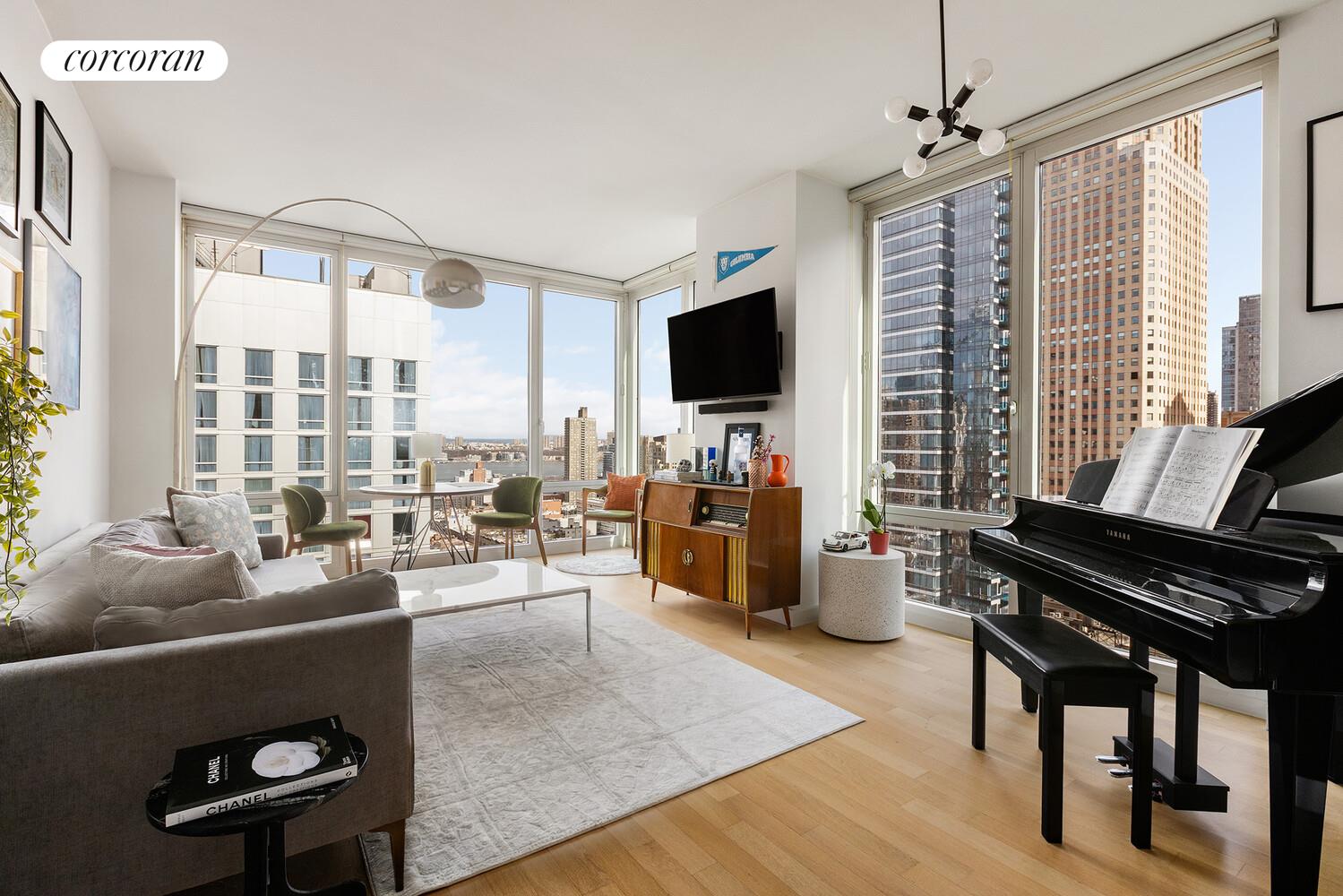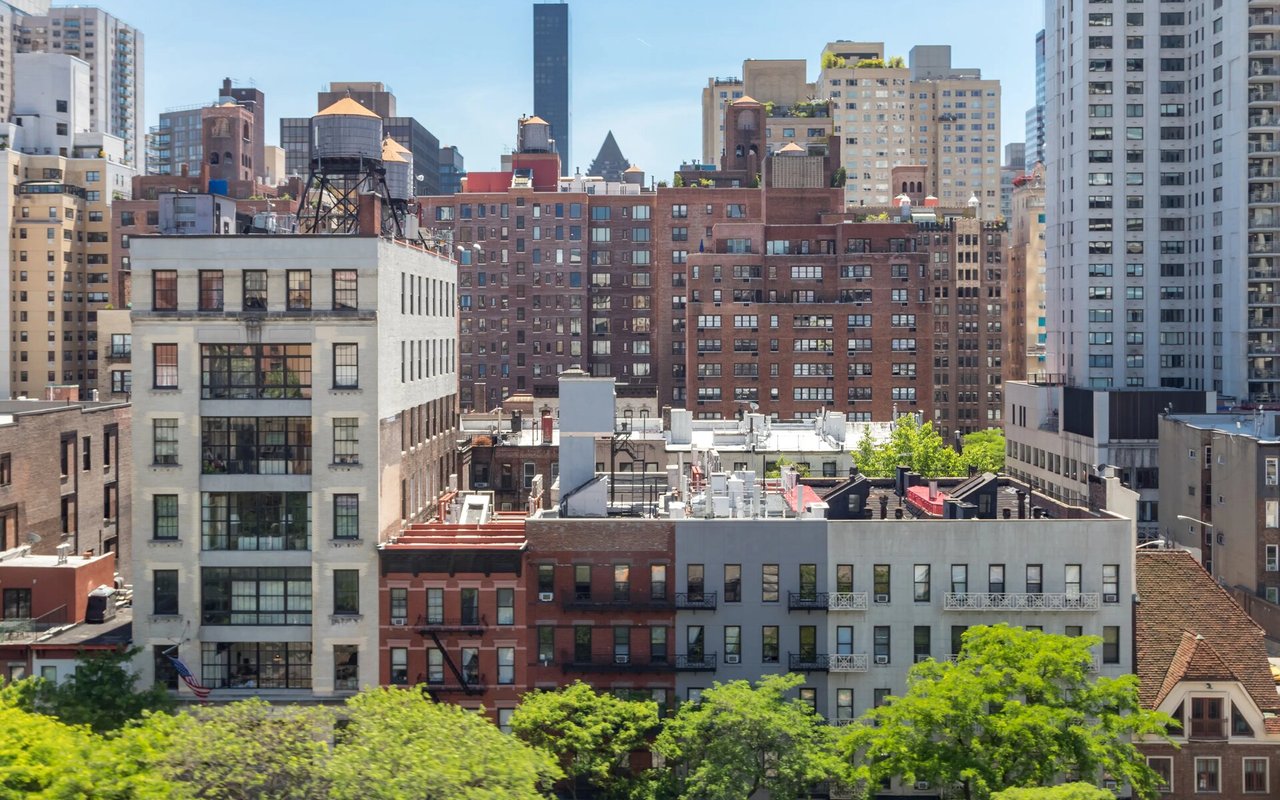
Welcome to
315,772 people live in Midtown Manhattan, where the median age is 41 and the average individual income is $130,495. Data provided by the U.S. Census Bureau.
Total Population
Median Age
Population Density
Average individual Income
Midtown is the part of New York that the rest of the world pictures when it imagines New York: glass towers catching the light off Park Avenue, the marquees of the Theater District, the great rail concourses, and Central Park sitting like a green seal at the top of the grid. But the version locals know is more textured than the postcard. Stretching roughly from 34th Street up to 59th Street and river to river, Midtown is less a single neighborhood than a collection of distinct enclaves stitched together by the most connected transit network on earth.
It tends to attract a specific kind of buyer. On the east side, you'll find diplomats, corporate executives, and longtime New Yorkers who prize the quiet, established feel of the pre-war co-op blocks around Sutton Place and Turtle Bay. Along Central Park South and the Billionaires' Row corridor, it draws global capital chasing trophy condos and unobstructed park views. And on the west side, in Hell's Kitchen, it pulls in a younger, more creative crowd that wants energy, an extraordinary density of restaurants, and a short walk to almost everything. What unites them is a willingness to trade square footage and quiet for being at the absolute center of things.
The Midtown market has matured into a disciplined, supply-constrained environment. After a stretch of price adjustment and buyer hesitation driven by elevated mortgage rates, it has clearly found its footing, and the dominant story now is scarcity rather than weakness.
The defining feature is a severe inventory shortage. Across Manhattan, listings are running meaningfully below historical norms—roughly 8% to 11% lower than prior years—and because very little new ground-up construction is breaking, that pipeline stays bottlenecked. The predictable result is price resilience: even against a noisy macroeconomic backdrop, Midtown's median sale price has held firm and ticked upward, sitting around $1.2M to $1.35M depending on the sub-neighborhood split, a modest year-over-year gain of about 2.6%.
What's most important for buyers to understand is that this is a two-tiered market. Move-in-ready, correctly priced condos trade efficiently and keep the average days on market competitive at around 110 days. Overpriced units, or those needing work without a corresponding discount, sit—which quietly hands leverage to patient buyers in certain segments. Looking ahead, with mortgage rates settling into a 5.5% to 6.3% band, sidelined buyers are accepting that a dramatic rate drop is unlikely, and that pent-up demand is beginning to release against near-record-low inventory. Expect competition to intensify over well-priced resale units. The other trend worth naming is the divergence between condos and co-ops: the stricter board and financing processes of traditional co-ops continue to slow their velocity, while condominiums—luxury units in particular—are capturing the bulk of buyer momentum and driving the gains in price per square foot.
For investor-minded buyers, Midtown is a wealth-preservation play rather than a high-yield speculative one. It remains one of the premier safe havens for global capital, but deployment here rewards precision.
On the income side, the math has shifted in landlords' favor. Manhattan condos historically delivered thin net yields in the low 2% range, but a surge in rental demand and record rents—with Midtown median rents now around $5,200 to $5,300 a month—has compressed cap rates upward, closer to 3% for cash buyers. The driver is structural: elevated mortgage rates have kept would-be homeowners renting longer, pushing Midtown vacancy down to roughly 2.5% and giving owners high-quality tenant profiles with almost no structural vacancy risk.
Appreciation is the longer game. This is not a market of short-term booms; Manhattan real estate has historically appreciated around 6% annually, and paired with institutional leverage that compounds into a formidable, low-risk asset. Because shelter costs make up nearly 40% of the Consumer Price Index, Midtown values also function as a direct hedge against inflation—appreciation here is fed by rising land scarcity, labor, and material costs.
One word of caution: pure fix-and-flip plays are very hard to execute here. High carrying costs (common charges plus real estate taxes), strict building alteration rules, premium contractor pricing, and steep transaction taxes like the Mansion Tax eat margins quickly. The seasoned playbook is "buy, renovate, and hold"—acquire a dated condo at a discount, modernize the finishes to command premium rent, and hold for long-term equity. Below is the investment profile at a glance, where a side-by-side genuinely helps:
Investment Metric | Outlook for Midtown Manhattan |
|---|---|
Average net yield | 2.5% – 3.0% (historically high for this market) |
Vacancy risk | Extremely low (~2.5% market vacancy) |
Primary driver | Long-term capital stability and inflation hedging |
Target asset class | Resale condominiums (avoid co-ops due to sublet restrictions) |
Purchasing in Midtown is a structured, paperwork-heavy process that bears little resemblance to most American real estate markets, and the experience is dictated almost entirely by the building type you choose.
The first real decision is condo versus co-op. Co-ops make up a large share of Midtown's pre-war stock, and when you buy one you aren't acquiring real property—you're buying shares in a corporation that owns the building, which grants you a proprietary lease to your apartment. The catch is the board: a rigorous approval process built around a substantial financial disclosure package and an in-person interview, typically requiring 20% to 25% down, with many buildings demanding up to 24 months of mortgage and maintenance payments held in liquid cash after closing. Condos, by contrast, are real property and dominate the newer glass towers. They're far easier to buy, sublet, and finance, which is why international buyers and investors favor them—and why they command a 20% to 30% per-square-foot premium over comparable co-ops.
Beyond property type, speed is everything. Midtown is disciplined: well-priced, turn-key units move fast while overpriced ones linger. Once an offer is verbally accepted, brokers draft a "Deal Sheet" laying out price, terms, and attorney information—but in New York an accepted offer means nothing until both parties sign a contract. During the one to two weeks attorneys spend reviewing building financials, board minutes, and the contract itself, a seller can still accept a higher bid. A sharp real estate attorney and a buyer ready to move are not luxuries here; they're the difference between winning and losing.
Contingencies also work differently than buyers expect. In competitive situations, sellers strongly favor cash buyers or those willing to waive financing contingencies; if you need a mortgage contingency, the rest of your offer has to be strong enough to compensate the seller for the added risk. Physical home inspections, standard in the suburbs, are rare for high-rise condos and co-ops unless you're buying a penthouse with outdoor space or a townhouse. Instead, buyers rely on due diligence—their attorney scrutinizing the building's structural history, reserve funds, and any litigation.
This decision comes down to flexibility versus long-term wealth preservation, and the cleanest way to frame it is the price-to-rent ratio—median home price divided by median annual rent. With Midtown's median condo/co-op blending around $1,250,000 and median annual rent near $63,000 (about $5,250 a month), the ratio lands at roughly 19.8. As a rule of thumb, a ratio of 1–15 strongly favors buying, 16–20 is the equilibrium zone where either can make sense depending on your time horizon, and 21+ tilts toward renting. At nearly 20, Midtown sits right at the edge of favoring renting on pure cash-flow terms—meaning ownership pays off mainly if you plan to plant roots for the medium to long term.
Here the trade-offs compress neatly into a comparison:
Factor | Renting in Midtown | Buying in Midtown |
|---|---|---|
Upfront capital | Low—typically first month plus one month's security | High—20% down minimum plus 3%–5% in closing costs and mansion tax |
Monthly outgoing | Predictable, but rises at lease renewal | Fixed mortgage, but exposed to rising common charges/maintenance |
Flexibility | High; ideal for stays under 5 years | Low; transaction friction means holding 5–7 years to break even |
Tax implications | None | Potential mortgage interest deductions; appreciation shelter |
The verdict is straightforward. Rent if you value mobility, want to avoid New York's heavy closing costs, or expect to be in the neighborhood fewer than five years. Buy if you treat Manhattan real estate as a stable long-term store of wealth, have the liquidity to clear strict post-closing requirements, and intend to hold for at least five to seven years so appreciation can outrun the friction of buying and selling.
Property taxes here are genuinely opaque, and they trip up out-of-town buyers more than almost any other line item—because in New York the sticker price tells you very little about the ongoing tax burden.
Most Midtown residential property falls into Class 2, which covers condos, co-ops, and buildings with eleven or more units. The quirk is that, by state law, the Department of Finance doesn't value Class 2 condos and co-ops off their actual sale prices. Instead, it values them based on the income-earning potential of comparable rental buildings. The city derives a fictional "rental market value," multiplies it by a 45% assessment ratio to reach the assessed value, then applies the Class 2 rate of about 12.439%. Because of this rental-parity formula, a Midtown condo selling for $2,000,000 on the open market might carry a city-assessed value of only $400,000—so the effective tax rate across Manhattan generally lands at a surprisingly modest 0.8% to 1.1% of the real purchase price.
Condos and co-ops handle the bill differently. With a condo, you receive an individual property tax bill from the city, paid separately from your common charges. With a co-op, the building gets one bill for the entire structure, pays it, and passes your share down inside your monthly maintenance—which is exactly why co-op maintenance figures on listings always look higher than condo common charges.
Two pitfalls deserve real attention. The first is the state's Pied-à-Terre Tax Surcharge, which targets non-primary NYC residences: for Class 2 condos and co-ops that aren't your primary home, a market value of $1,000,000 or more triggers an annual surcharge starting at 4.0% and graduating to 6.5% above $5,000,000. If you're buying a Midtown apartment as a second home, that single line will reshape your monthly carry. The second is 421-a abatement expirations. Many modern high-rises were built with this incentive, which pushed taxes near zero for up to two decades, and a wave of those abatements is now phasing out. On a newer building, have your attorney confirm the abatement status—a unit paying $200 a month in taxes today can jump to $2,500 once it terminates.
Moving to Midtown means embedding yourself in the epicenter of global finance, culture, and dense urban living—soaring glass, historic architecture, and a level of convenience that's hard to find anywhere else. The first thing to understand is that "Midtown" is not monolithic. It's a patchwork of distinct enclaves running from 34th Street up to Central Park South at 59th.
Midtown East, which includes Turtle Bay, Murray Hill, and Sutton Place, scales down as you move toward the river—from commercial towers to tree-lined residential blocks of elegant pre-war co-ops and townhouses. It reads quieter and more neighborhood-centric, long favored by diplomats and corporate executives. Midtown West and Hell's Kitchen, running from 8th Avenue to the Hudson, carry a grittier, artistic heritage rooted in the Theater District: low-rise brick walk-ups, an extraordinary concentration of dining along 9th Avenue, and modern luxury towers rising near the waterfront. The Midtown Core and Central Park South—5th, 6th, and 7th Avenues—is the postcard version: ultra-luxury Billionaires' Row towers, elite shopping, and direct Central Park views, high-energy and tourist-heavy, commanding the city's highest price per square foot.
Practically speaking, Midtown is the most hyper-connected transit hub on the planet. Grand Central Terminal anchors the east side with Metro-North to Connecticut and Westchester plus the LIRR, while Penn Station anchors the west with Amtrak, NJ Transit, and the LIRR. Nearly every major subway line passes through—the N/Q/R/W and B/D/F/M run vertically through the center, the 1/2/3 and A/C/E flank the sides, and the 7 cuts east-west across 42nd Street.
On daily logistics, the most common worry from newcomers is groceries. Bodegas and convenience stores are everywhere, but full-scale grocery shopping takes a bit of intent. The neighborhood is well served by Whole Foods (Bryant Park and Columbus Circle) and Trader Joe's (Court Square and Midtown East). And while concrete dominates, residents have immediate access to two world-class escapes: Central Park forms the northern border with 843 acres of green, and Bryant Park sits behind the New York Public Library on 42nd Street as a manicured, European-style town square.
Few places on earth make a personal car feel more like a liability than Midtown. The neighborhood is structurally engineered for pedestrians and consistently posts a near-perfect Walk Score of 99 to 100—daily errands, medical care, dining, and theater all sit within a few comfortable blocks. The grid, laid out under the Commissioners' Plan, is predictable and easy to read, with traffic-calmed plazas around Times Square and Herald Square and wide sidewalks, though those sidewalks do get congested during morning rush and peak tourist season.
Cycling is a real option here. Citi Bike docks sit on nearly every block, and protected north-south lanes run down 6th, 8th, and 9th Avenues and up 1st, 2nd, and 11th, with crosstown lanes on streets like 38th and 39th. Riders also get seamless connections to the Hudson River Greenway on the far west side and the East River Esplanade on the east—though shared cross-borough routes still mean negotiating delivery trucks and yellow cabs.
As for jobs, Midtown isn't merely close to employment centers; it is the largest central business district in the world. Tech firms, elite law practices, hedge funds, and media companies fill the towers of Park and Madison Avenues and the modernized Hudson Yards on the western edge. For residents, the commute to these office sectors ranges from a five-minute walk to a fifteen-minute subway ride—a dramatic time savings over anyone commuting in from the outer boroughs or the suburbs.
For family buyers, the educational picture in Midtown runs on three distinct mechanics: zoning, choice lotteries, and private alternatives. Midtown is primarily part of NYC Geographic District 2, historically one of the highest-performing and best-resourced public districts in the city. For elementary grades (K–5), children are guaranteed a seat at a specific zoned school based on their exact street address—which is why buying inside the catchment of a top elementary directly lifts demand and stabilizes resale value. Middle and high schools work differently, running largely on choice-based lotteries and admissions, so students aren't locked into a single neighborhood school and can apply across District 2 or district-wide on the strength of portfolios, interviews, or testing.
Among the notable options, P.S. 212 Midtown West in Hell's Kitchen is well regarded for a progressive, project-based curriculum and strong parent involvement; P.S. 59 Beekman Hill International in Midtown East draws local families and diplomats with a globally minded student body and strong proficiency scores; and Success Academy Charter – Hell's Kitchen earns an A+ rating from Niche for its rigorous, high-expectation model. For older students, Midtown sits exceptionally close to the city's exam-based Specialized High Schools—Stuyvesant in Battery Park City and Bronx Science are both reachable by direct subway lines, admission requiring the SHSAT.
Given how competitive public admissions can be, many Midtown families opt for independent schools. The elite uptown names like Trinity, Dalton, and Brearley sit slightly north, but Midtown hosts strong options of its own: Avenues The World School, on the Chelsea/Hudson Yards border, is an ultra-modern K–12 with Spanish and Mandarin dual-language immersion built for the children of international executives, and The IDEAL School of Manhattan is a K–12 known for very small student-to-teacher ratios and a core focus on inclusion and diverse learning styles.
Midtown is the concrete heart of the city, but it's anchored by some of the most famous green space anywhere—and for buyers, proximity to it translates directly into property premium and quality of life. Central Park defines the northern edge at 59th Street, functioning as a true backyard for Central Park South and the upper corridors: 843 acres of running loops, the Ramble, and athletic fields. Bryant Park, behind the New York Public Library at 42nd Street, is a masterclass in urban green design, with seasonal kiosks, open lawns, free summer programming, and the Winter Village ice rink—effectively an outdoor living room for the Core. And the river frontages round it out: the Hudson River Park and Greenway offer miles of car-free path for running and cycling on the far west side, while quieter east-side pockets like Sutton Place Park give residents calm overlooks above the East River.
Midtown's food and nightlife scene has moved well past its old reputation for corporate steakhouses and tourist traps; today it works as a genuine lifestyle signal, pairing legendary institutions with experimental, modern concepts. At the top end, the neighborhood still anchors the city's fine-dining reputation with Michelin-starred rooms like Le Bernardin and The Modern inside MoMA. The newer wave is more experiential—destination food halls bringing curated, global chef-kiosks into the core, alongside a thriving culture of intimate omakase counters and transparent chef's tables throughout Midtown East.
After dark, the mood is sophisticated and notably vertical. There's a real revival of classic New York glamour underway, with historic hotel bars and leather-booth lounges driving a "martini culture" of tableside-poured cocktails over chaotic club scenes. Midtown also has the city's highest concentration of rooftop nightlife, trading on its architecture for dramatic, skyscraper-framed views. And living here means the global epicenter of theater, music, and media—Broadway, Carnegie Hall, MoMA—is simply your neighborhood backdrop, the kind of Tuesday-night lifestyle other people plan vacations around.
Retail is one of Midtown's defining features, spanning everyday convenience and global flagship luxury—often the place where retail concepts are beta-tested before rolling out worldwide. The luxury core along Fifth Avenue and 57th Street remains the historic heart of haute couture, anchoring institutional flags like Tiffany & Co., Chanel, and Saks; even as more experimental fashion has drifted downtown, Fifth Avenue is enjoying a renaissance built on brand heritage, immersive store design, and high-jewelry concepts. To the south, the 34th Street and Herald Square corridor centers on high-volume, value-and-discovery retail, anchored by the Macy's flagship and the large Primark outpost. For climate-controlled, consolidated shopping, the Shops at Columbus Circle and nearby Hudson Yards offer upscale vertical malls with luxury fitness, wellness, and contemporary labels. For residents, though, the real story is daily efficiency: a dense fabric of pharmacies, wellness and beauty outposts, and specialty boutiques means you rarely walk more than two blocks for home essentials.
The personality of Midtown is hyper-urban, high-octane, and layered. By day the vibe is intensely kinetic—rushing professionals, executives, and travelers navigating the grid against a backdrop of soaring vertical architecture. It rewards a tolerance for crowds and a fast walking pace. Yet beneath the corporate footprint runs a deeply artistic current: the Theater District, the stage of Carnegie Hall, the modernist halls of MoMA. That juxtaposition—finance in a suit brushing past a Broadway performer—is much of what gives Midtown its character.
The culture also shifts noticeably as you move off the central avenues. The east side around Sutton Place and Turtle Bay feels quiet, orderly, and almost institutional, with an established diplomat's reserve. The west side in Hell's Kitchen keeps a grittier, fiercely independent, community-centric spirit, full of low-rise brownstones, LGBTQ+ nightlife, and pocket parks. And the Core in between is pure, unfiltered New York energy—dramatic, glass-framed, and beautifully chaotic.
Midtown rewards local knowledge more than almost any market in the country—the difference between a co-op board you'll clear and one you won't, an abatement that's about to expire, or a turn-key condo worth moving fast on versus an overpriced unit that will sit. That's where having the right people in your corner matters.
The James Weiss Team is a full-service real estate family office built for exactly this kind of complexity. With more than $500 million in completed transactions—a significant share of them off-market—the team approaches every deal with individualized care, connecting the details and the people that make a New York transaction come together smoothly. Whether you're weighing a first Midtown purchase, building an investment position, or deciding between renting and buying, they're glad to be a resource and a sounding board, with no pressure attached.
You can reach the James Weiss Team at (201) 956-8739 or [email protected], or visit the office at 590 Madison Avenue, 8th Floor, New York, NY 10022. When you're ready to talk through what Midtown looks like for your specific goals, they're here to help.
There's plenty to do around Midtown Manhattan, including shopping, dining, nightlife, parks, and more. Data provided by Walk Score and Yelp.
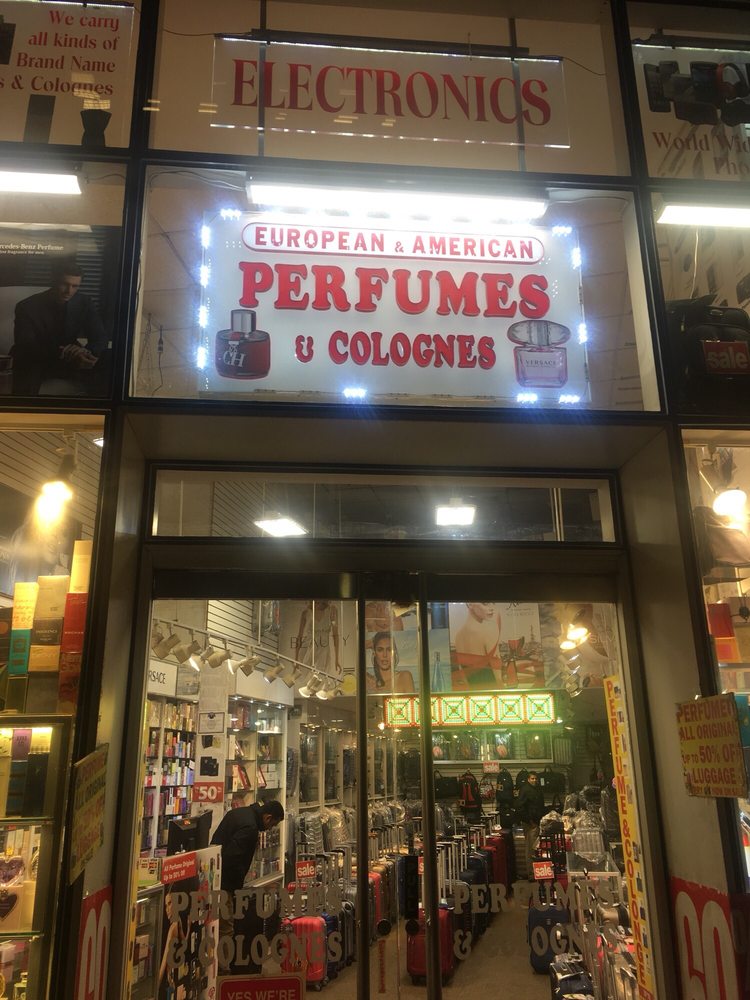
Explore popular things to do in the area, including Maxim's Perfection In Fashion, N Y P, and Leigh Michael of New York.
| Name | Category | Distance | Reviews |
Ratings by
Yelp
|
|---|---|---|---|---|
| Shopping | 0.09 miles | 0 reviews | 0/5 stars | |
| Shopping | 0.1 miles | 0 reviews | 0/5 stars | |
| Shopping | 0.1 miles | 0 reviews | 0/5 stars | |
| Shopping | 0.12 miles | 0 reviews | 0/5 stars | |
| Shopping | 0.12 miles | 0 reviews | 0/5 stars | |
| Shopping | 0.12 miles | 1 review | 1/5 stars | |
| Shopping | 0.12 miles | 0 reviews | 0/5 stars | |
| Shopping | 0.13 miles | 0 reviews | 0/5 stars | |
| Shopping | 0.14 miles | 0 reviews | 0/5 stars | |
| Shopping | 0.15 miles | 0 reviews | 0/5 stars | |
| Shopping | 0.16 miles | 0 reviews | 0/5 stars | |
| Shopping | 0.16 miles | 1 review | 4/5 stars | |
| Shopping | 0.16 miles | 0 reviews | 0/5 stars | |
| Shopping | 0.17 miles | 0 reviews | 0/5 stars | |
| Shopping | 0.19 miles | 0 reviews | 0/5 stars | |
| Shopping | 0.2 miles | 0 reviews | 0/5 stars | |
| Shopping | 0.21 miles | 1 review | 3/5 stars | |
| Active | 0.11 miles | 6 reviews | 5/5 stars | |
| Active | 0.12 miles | 0 reviews | 0/5 stars | |
| Beauty | 0.07 miles | 0 reviews | 0/5 stars | |
| Beauty | 0.07 miles | 0 reviews | 0/5 stars | |
| Beauty | 0.07 miles | 0 reviews | 0/5 stars | |
| Beauty | 0.1 miles | 0 reviews | 0/5 stars | |
|
|
||||
|
|
||||
|
|
||||
|
|
||||
|
|
||||
|
|
Midtown Manhattan has 177,439 households, with an average household size of 2. Data provided by the U.S. Census Bureau. Here’s what the people living in Midtown Manhattan do for work — and how long it takes them to get there. Data provided by the U.S. Census Bureau. 315,772 people call Midtown Manhattan home. The population density is 101,992 and the largest age group is Data provided by the U.S. Census Bureau.
Total Population
Population Density Population Density This is the number of people per square mile in a neighborhood.
Median Age
Men vs Women
Population by Age Group
0-9 Years
10-17 Years
18-24 Years
25-64 Years
65-74 Years
75+ Years
Education Level
Total Households
Average Household Size
Average individual Income
Households with Children
With Children:
Without Children:
Blue vs White Collar Workers
Blue Collar:
White Collar:
Explore Other Neighborhoods
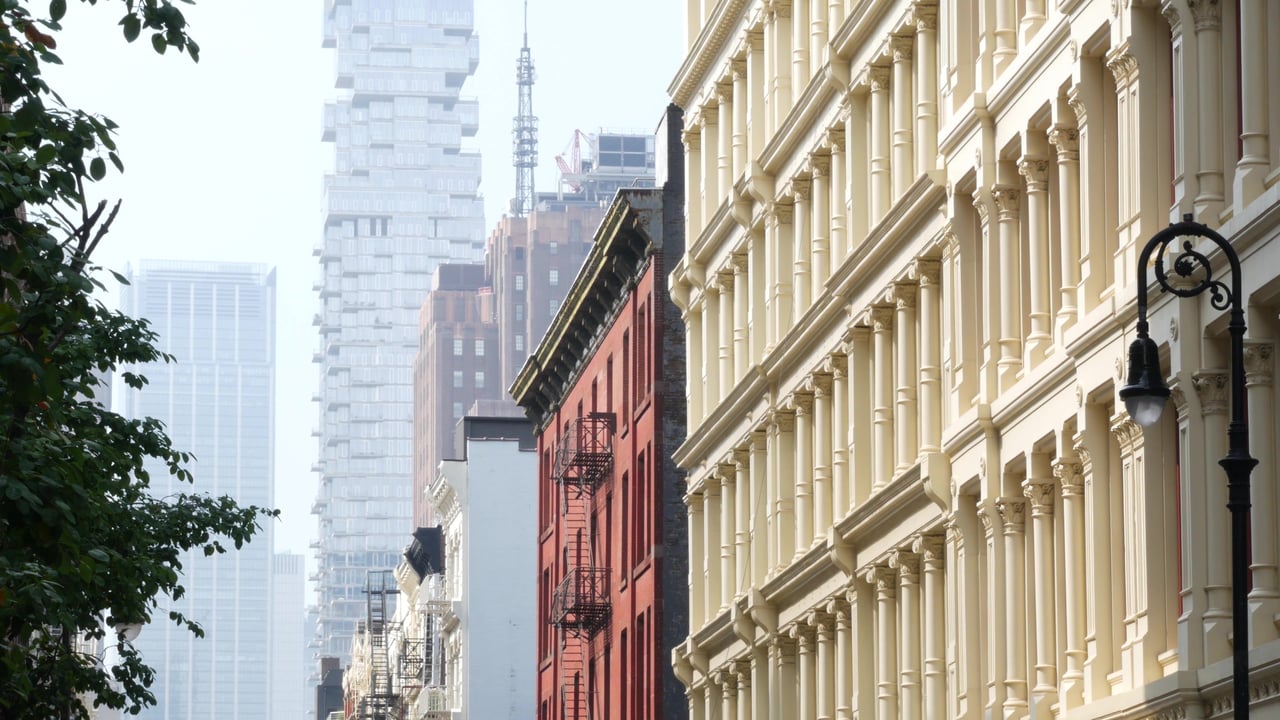
590 Madison Ave 8th Flr New York, NY 10022
590 Madison Ave 8th Flr New York, NY 10022