Welcome to
19,698 people live in Tribeca, where the median age is 41 and the average individual income is $216,472. Data provided by the U.S. Census Bureau.
Total Population
Median Age
Population Density
Average individual Income
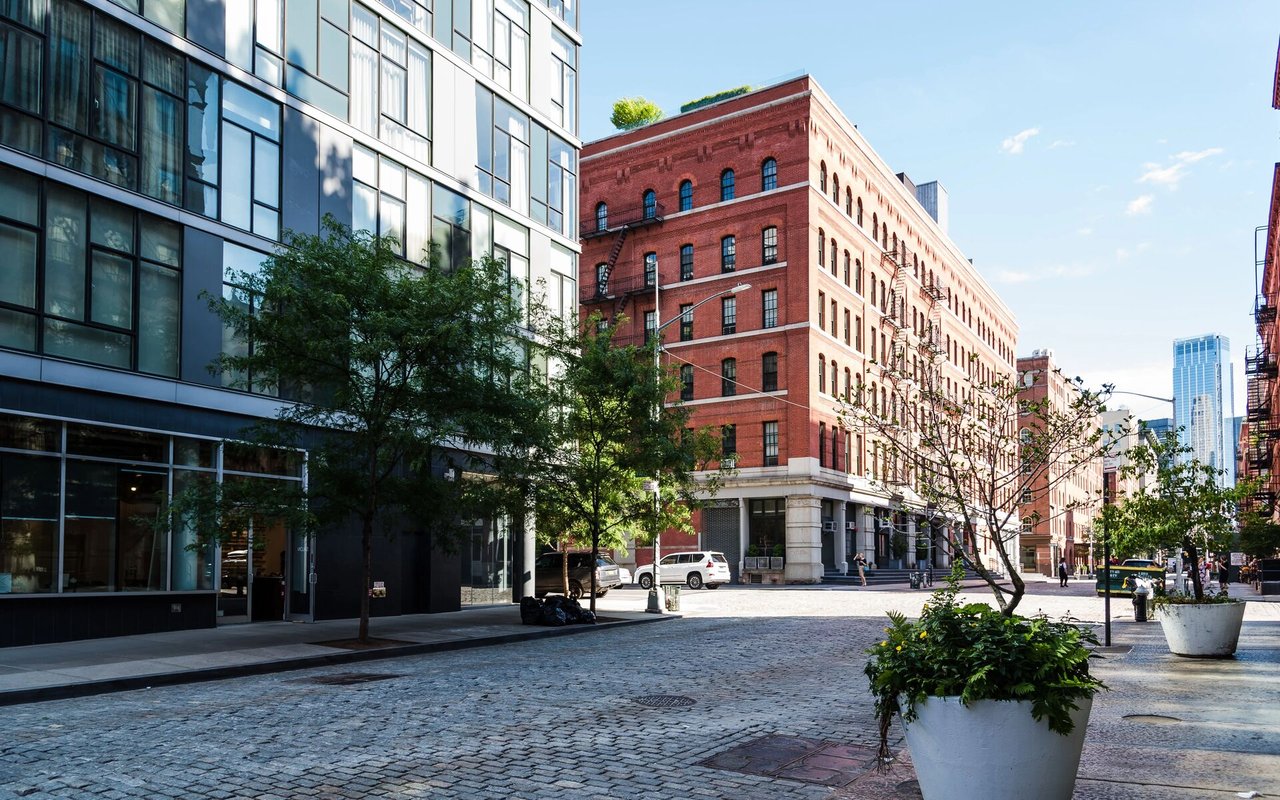
Tribeca, short for "Triangle Below Canal," is the rare Manhattan neighborhood that manages to feel simultaneously like the center of the world and a quiet, sheltered enclave. Tucked into the southwestern corner of Lower Manhattan and bordered by the Hudson River to the west, Canal Street to the north, Broadway to the east, and Chambers Street to the south, it carries the patina of its 19th-century industrial past on every block—cobblestone streets, cast-iron storefronts, and brick warehouses that once moved textiles, produce, and goods through the port of New York.
Today, that gritty backbone has been transformed into one of the most coveted residential addresses in the United States. Tribeca attracts a discerning, established crowd: hedge fund principals, creative directors, tech founders, A-list entertainers, and multigenerational families who value privacy above all else. Unlike SoHo's bustling retail energy or the Financial District's corporate intensity, Tribeca operates on a different frequency—quieter, more deliberate, and unmistakably refined. People don't move here to be seen; they move here because they've already arrived.
The Tribeca market in 2026 is defined by one immovable reality: there is far more demand than there is inventory, and there always will be. The neighborhood's historic district designations cap supply permanently, and the result is a market that trades less on volume and more on patience and precision.
Median listing prices currently sit between $4.4 million and $4.5 million, while median closing prices land in the $3.4 million to $3.7 million range. Price per square foot averages between $1,780 and $2,300, with significant variance depending on whether you're looking at a historic loft conversion or a brand-new luxury condominium. Properties typically spend 60 to 90 days on the market—a pace that reflects deliberate, well-capitalized buyers conducting thorough due diligence rather than racing to outbid one another. While Manhattan's broader luxury segment has shown notable resilience above the $3 million mark, Tribeca buyers still hold meaningful pricing discipline, with sales closing on average 3% to 4.5% below the original ask. Bidding wars happen, but they are reserved for trophy properties; everything else trades on negotiation, fit, and timing.
Tribeca has completed its transition out of post-pandemic volatility and into a phase of mature, predictable stability. While broader Manhattan home values flattened through portions of 2025, Tribeca quietly logged roughly 5.4% in annual appreciation—a direct consequence of its supply ceiling. There is simply no room to build large new towers within the historic districts, which insulates property values from the corrections that hit higher-volume neighborhoods.
The character of demand is also shifting. The era of glass-tower mega-amenity buildings is giving way to what insiders are calling "invisible luxury"—boutique conversions, full-floor lofts, and architecturally sensitive landmark restorations. Today's high-end Tribeca buyer values private elevator entries, in-suite wellness rooms, and discreet outdoor terraces over crowded shared lounges or oversized pools. Lower mortgage rates, hovering in the low 6% range, have meaningfully revitalized the $3 million to $5 million bracket, and signed condominium contracts in that tier have surged year over year. Looking forward, expect sustained, moderate growth of 2% to 4% annually, driven by the neighborhood's enduring prestige and its fundamental scarcity.
In Tribeca, luxury isn't a marketing label—it's the baseline. The "luxury" tier in this neighborhood officially begins around $4 million to $5 million, while the ultra-luxury or trophy tier starts at $10 million and climbs without a meaningful ceiling. On coveted corridors like Greenwich, Franklin, and Vestry Streets, prime condominiums and historic loft conversions routinely trade between $3,000 and $4,500+ per square foot.
What's particularly notable is the velocity of the trophy segment. While entry-level co-ops and condos across Manhattan have seen muted activity, Tribeca's ultra-luxury tier is experiencing genuine momentum. Wealthy buyers are treating these properties as safe-haven assets—rare, irreplaceable, and largely insulated from broader market cycles. When a meticulously curated full-floor loft or a pre-war boutique penthouse hits the market, competition is immediate and fierce because the inventory simply cannot be replicated.
Modern Tribeca luxury is defined less by amenity sprawl and more by architectural pedigree and privacy. The most sought-after features include private keyed elevators opening directly into residences, custom in-suite fitness and spa spaces, advanced smart-home integrations, and outdoor terraces with unobstructed Hudson River views. Buildings like 56 Leonard, 70 Vestry, and 443 Greenwich have become benchmarks, but the most discerning buyers are increasingly drawn to one-off boutique conversions where uniqueness, not amenity count, defines the value.
Tribeca is not a cash-flow market—it is a wealth-preservation market, and investors who succeed here understand the distinction. Cap rates and net rental yields typically sit between 2.5% and 3.5%, which on paper looks modest. But the calculation changes once you factor in what the neighborhood commands in rents and what it delivers in long-term equity growth.
High-end doorman buildings and boutique lofts command institutional rents averaging $90 to $95+ per square foot. One-bedroom layouts routinely lease for $4,500 to $9,000 per month, and two-bedroom units regularly clear $9,000 to $18,000+. Occupancy rates routinely exceed 98% to 99%, with tenants drawn from the corporate, financial, and creative elite—a demographic that pays on time, treats properties well, and tends to renew. Long-term appreciation reinforces the case: Manhattan property values have appreciated at roughly 6% annually over the past several decades, and Tribeca consistently anchors or exceeds that average.
Traditional fix-and-flip strategies rarely work here. The high cost of entry, combined with substantial carrying costs from taxes and common charges, makes rapid resale risky. Where investors find real value-add is in older artist lofts—raw, unrenovated spaces held by the same owners for decades, ripe for retrofitting with high-end finishes and modernized layouts. But the dominant and most successful strategy in Tribeca remains a disciplined buy-and-hold, leveraging premium tenant income to carry debt while compounding equity over time. This is generational wealth real estate, not quick-turn real estate.
Purchasing in Tribeca is less about navigating bidding chaos and more about clearing a series of distinct financial and structural hurdles. The most common property types fall into three categories: historic loft conversions (the quintessential Tribeca residence, with cast-iron pillars, exposed brick, and soaring ceilings carved out of 19th-century warehouses), ultra-luxury new construction condominiums in full-service buildings, and traditional co-operatives, which are less common here than uptown but still represent a significant slice of the classic loft stock.
All-cash offers are extraordinarily common—frequently representing more than half of luxury transactions in the neighborhood. If you're financing, your offer needs to look structurally airtight to compete. Sellers in the upper tier routinely reject financing contingencies outright, and even when accepted, they're often capped with tight "funding" or "drop-dead" clauses requiring firm commitment letters within 20 to 30 days. Inspection contingencies, on the other hand, are heavily utilized—particularly for historic loft conversions, where structural columns, vintage plumbing, and independent HVAC systems require careful evaluation. The pace is measured, but the standards are exacting. Coming in unprepared is the fastest way to lose to a buyer who isn't.
Tribeca rewards buyers who do their homework and humbles those who don't. Four specific considerations deserve careful attention before signing any contract.
Co-op board scrutiny is severe. If you fall for an authentic historic loft, there's a meaningful chance it's a co-op, and Tribeca boards are among the most rigorous in the city. Expect debt-to-income ratio requirements below 25% and—most critically—post-closing liquidity demands of 24 to 36 months of mortgage and maintenance costs sitting in liquid accounts after your down payment and closing costs are paid. Retirement accounts generally don't count. This is the single most common reason qualified buyers get rejected.
Flood zones are a real factor. Significant portions of western and lower Tribeca, particularly west of Hudson Street, sit within FEMA's High-Risk Flood Zones (Zone AE). Financing in these areas requires mandatory flood insurance, and you should ask specifically about post-Hurricane Sandy retrofits—well-managed buildings have moved electrical and mechanical systems to upper floors and installed marine-grade flood gates.
Landmark preservation adds time to renovations. Most of the neighborhood lies within designated Tribeca Historic Districts, meaning any exterior alterations require approval from the NYC Landmarks Preservation Commission. Renovation timelines can easily extend by six months to a year. Additionally, some older lofts are still legally zoned as Joint Living-Work Quarters for Artists (JLWQA), which technically requires an occupant certified by the NYC Department of Cultural Affairs—a detail your attorney must vet carefully.
Carrying costs are high and rising. Many new construction condos benefited from 421-a tax abatements that have now expired or are phasing out, causing monthly carrying costs to jump dramatically. Always request the past three to five years of tax bills to identify abatements that may disappear the moment ownership transfers.
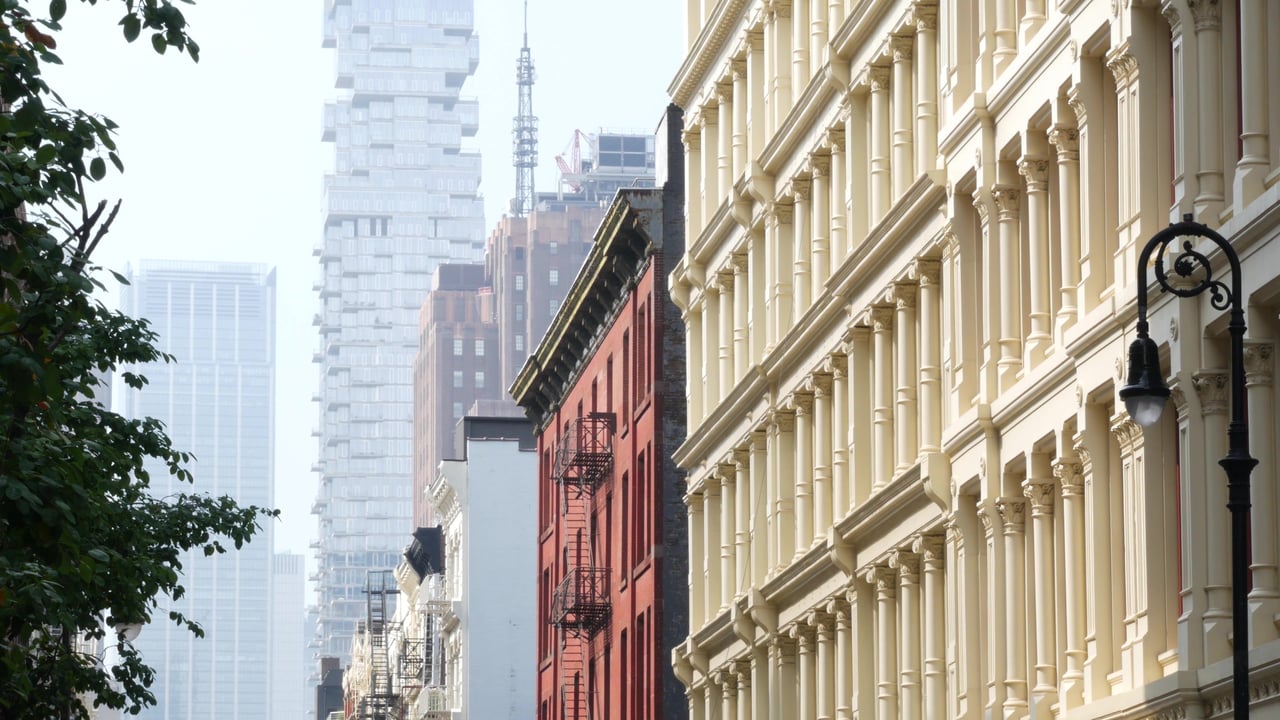
Tribeca's architectural identity is rooted in industrial history and elevated through adaptive reuse. The defining home style is the 19th-century loft—expansive, open-concept spaces carved out of warehouses originally built between the 1860s and 1920s for shipping, textile, and printing industries. These buildings showcase Romanesque Revival and Neo-Grec brick facades, towering arched windows, exposed timber support beams, structural cast-iron Corinthian pillars, and weathered interior brick. Original loading docks and wrought-iron fire escapes still frame the cobblestone streets, lending a cinematic quality that no other Manhattan neighborhood quite replicates.
Along Broadway and Hudson Street, you'll find Neo-Renaissance and Beaux-Arts commercial palaces—grandiose turn-of-the-century office buildings converted into premium residences, distinguished by limestone detailing, dramatic cornices, and ornate lobbies. Juxtaposed against all this red brick are some of the world's most celebrated modern architectural icons. Herzog & de Meuron's 56 Leonard, often called the "Jenga Tower," redefined the skyline with its pixelated, cantilevered glass volumes. Pritzker Prize-winning architects including Shigeru Ban and Winka Dubbeldam have slipped striking modern glass-and-zinc buildings between historic structures, creating a streetscape where 150-year-old cast iron sits comfortably alongside contemporary masterpieces.
Tribeca achieves something rare in Manhattan: it functions as a fully integrated urban hub while feeling genuinely sheltered from the chaos of Midtown. The neighborhood earns a Walk Score of 99 out of 100—officially a "Walker's Paradise." Daily life, from groceries at Whole Foods to dining at world-class restaurants to dropping kids at elite schools, happens almost entirely on foot. Sidewalks are wide and exceptionally clean, though the historic cobblestones do require a bit of practice in heels or with a stroller.
For commuters, transit access is unmatched. The 1, 2, and 3 trains run right down the center of the neighborhood at Franklin and Chambers Streets, offering rapid express service to Midtown. The A, C, and E lines run along the western edge, and the N, Q, R, and W lines are easily accessible at Canal Street. Reaching the Financial District takes a 10-to-15-minute walk or a single subway stop, while Midtown destinations like Hudson Yards, Times Square, and Grand Central are 12 to 20 minutes away by express train. The World Trade Center PATH station provides direct service to New Jersey just south of the neighborhood. With a Bike Score of 80 and direct access to the Hudson River Park greenway—an uninterrupted, car-free cycling corridor running the entire western edge of Manhattan—Tribeca is also one of the most bikeable neighborhoods in the city.
For family buyers, Tribeca's education landscape is a significant driver of long-term property demand. The neighborhood sits within NYC Community School District 2, one of the highest-rated and most competitive public school districts in the entire city, and zoned address premiums are real and measurable.
P.S. 234 (The Independence School), located on Greenwich Street, is Tribeca's flagship elementary school and consistently ranks among the top public elementary schools in NYC. Its progressive, inquiry-based curriculum and tight community involvement make it a magnet for families—and homes within its zone command a clear market premium. P.S. 150 (Tribeca Learning Center) offers an intimate alternative with historically low student-to-teacher ratios, while I.S. 289 (Hudson River Middle School) serves local middle schoolers with a curriculum emphasizing environmental science and technology, taking full advantage of its waterfront location.
At the high school level, Tribeca is home to Stuyvesant High School, one of the crown jewels of the NYC specialized school system. Admission is determined strictly by the SHSAT exam, drawing top students from all five boroughs. On the private side, The Spruce Street School (K-8) is well-regarded, with Avenues The World School and Trinity School accessible via short commute. One critical tip: NYC public school zones shift periodically based on density and enrollment. Always cross-reference the exact building address with the NYC Department of Education's MySchools portal rather than relying on listing descriptions or assumptions.
For all its dense brick-and-cobblestone character, Tribeca offers some of the most dynamic waterfront green space in North America. Hudson River Park spans the entire western border of the neighborhood and effectively functions as a communal backyard. Pier 25 is the recreational anchor, with a professional beach volleyball court, an 18-hole mini-golf course, a street-style skatepark, a children's playground with water features, and a micro-marina. Pier 26, an award-winning ecological park, features an elevated boardwalk, sunning lawns, and the innovative Tide Deck—a cultivated salt marsh used for river education—along with the Downtown Boathouse, which offers free public kayaking in season.
Tucked into the heart of the neighborhood on Chambers Street, Washington Market Park serves as the social anchor for Tribeca families. It features an updated playground, a sprawling community garden, a gazebo, and manicured lawns where neighbors gather year-round. For adults, the park infrastructure hosts standout seasonal venues like City Vineyard at Pier 26 and Grand Banks—a historic wooden oyster schooner docked at Pier 25 that doubles as one of Manhattan's most popular open-air dining experiences.
Tribeca dining isn't about chasing what's trending—it's about anchoring oneself in culinary excellence with staying power. The neighborhood is a stronghold for institutional Manhattan dining, home to two-star Michelin Atera, the refined modern Korean technique of Jungsik, and the meticulously crafted French plates at L'Abeille. Local residents rely on neighborhood staples with their own quiet authority: the effortless Parisian energy of Frenchette, the rustic elegance of Robert De Niro's Locanda Verde, and the modern American polish of Chambers.
Nightlife here intentionally rejects the velvet ropes and booming bass of the Meatpacking District. Instead, you'll find sleek subterranean lounges, hidden jazz bars, and upscale cocktail rooms tucked into historic basements. The crowd is composed of creatives, executives, and high-profile residents who value being left alone—and venues are designed with that expectation in mind. It is, in essence, the most adult nightlife scene in Manhattan.
Retail in Tribeca mirrors the neighborhood's loft culture: curated, architecturally striking, and unhurried. Unlike SoHo just to the north, Tribeca isn't built around foot traffic—it's built around personal, quiet luxury. Concept stores like La Garçonne occupy loft-like spaces that feel more like private galleries, specializing in minimalist global designers. 180 the Store blends premium apparel with rotating art installations, turning shopping into something closer to an experience.
The neighborhood has also organically evolved into a world-class hub for interior design and furniture. Cast-iron storefronts house premium design houses, contemporary galleries, and bespoke lighting studios, while experiential concepts like Quarters stage a multi-room 19th-century loft as a fully functional residence—visitors can browse, lounge, and purchase everything from hand-blown lighting to vintage furniture, often with a cocktail in hand. For everyday needs, a pristine Whole Foods Market anchors the neighborhood on Greenwich Street, supported by high-end artisanal bakeries, organic wellness markets, and specialty grocers like Rigor Hill Market.
Tribeca's cultural scene operates on a more intimate, sophisticated frequency than the commercial spectacle of Midtown or Broadway. The neighborhood's signature event, the Tribeca Festival, was founded by Robert De Niro and Jane Rosenthal to revitalize Lower Manhattan after 9/11 and has since become one of the world's premier film and storytelling festivals. Every spring, the neighborhood transforms into a global media capital with indie premieres, panel discussions, and immersive installations.
Year-round, the performing arts scene is anchored by the BMCC Tribeca Performing Arts Center, which hosts live theater, modern dance, and world-class jazz, and The Flea Theater, a crucial incubator for off-off-Broadway productions and avant-garde playwrights. Intimate jazz and listening rooms tucked into hotel bars and basement venues provide a speakeasy-style alternative for live music. On the fine art side, while Chelsea remains the home of large-scale commercial galleries, Tribeca has quietly become Manhattan's most interesting gallery district, with contemporary spaces like Bortolami, Alexander and Bonin, and James Cohan occupying grand, high-ceilinged cast-iron storefronts. Walking the Tribeca gallery trail offers an uncrowded, intellectually serious alternative to the chaos uptown.
Property taxes in Tribeca are more complex than the surface numbers suggest, and understanding them is essential to calculating true affordability. NYC divides real estate into four classes, and Tribeca properties typically fall into one of two:
Property Type | Base Tax Rate | Key Consideration |
|---|---|---|
Class 1 (1- to 3-family townhouses) | ~19.8% | Subject to strict caps on annual assessed-value increases |
Class 2 (Condos & Co-ops) | ~12.4% | Phased in over 5 years if values rise; heavily influenced by building-wide valuations |
The 12.4% rate looks alarming until you understand the math behind it. Taxes are not levied on your purchase price (market value). Instead, the NYC Department of Finance applies an Assessment Ratio—typically 45% for Class 2 properties—to a formula-derived "Assessed Value" heavily influenced by the building's rental income potential rather than its individual resale value. The result is that the effective tax burden often lands well below what the headline rate suggests.
A few critical nuances: condos generally carry significantly higher property taxes than co-ops in Tribeca, because co-ops receive a unified tax bill for the entire corporation that blends individual burdens, while condos are taxed as independent parcels. Many luxury towers built in the late 2000s and early 2010s benefited from 421-a tax abatements that have largely expired, causing monthly carrying costs to rise dramatically. Always have your real estate attorney request the past three to five years of tax bills, and look closely at whether the current owner is using a personal primary residence abatement (like the Co-op/Condo Abatement) that will disappear and reset your bill higher the moment ownership transfers to you.
Tribeca is not a market you navigate from the outside. Between the co-op boards, the historic district regulations, the off-market inventory, and the unspoken rules of the upper tier, success here depends on having someone who actually knows how the neighborhood operates.
That's where the James Weiss Team comes in. Operating as a full-service real estate family office under Corcoran, the team has completed over $500 million in transactions, a significant portion of them off-market—a reflection of the discretion and deep relationships that define how the highest-end Tribeca deals actually get done. Whether you're buying a historic loft, selling a trophy condominium, evaluating an investment, or simply trying to understand what your home is worth in today's market, the team brings the precision, judgment, and global reach that this neighborhood demands. To start a conversation, call (201) 956-8739, email [email protected], or visit the team at 590 Madison Avenue, 8th Floor, New York, NY 10022. The first conversation is always a consultation, never a pitch.
There's plenty to do around Tribeca, including shopping, dining, nightlife, parks, and more. Data provided by Walk Score and Yelp.
Explore popular things to do in the area, including Juicyorange, Food Freak, and Downtown Newsstand.
| Name | Category | Distance | Reviews |
Ratings by
Yelp
|
|---|---|---|---|---|
| Dining | 0.18 miles | 0 reviews | 0/5 stars | |
| Dining | 0.5 miles | 0 reviews | 0/5 stars | |
| Shopping | 0.34 miles | 0 reviews | 0/5 stars | |
| Shopping | 0.35 miles | 0 reviews | 0/5 stars | |
| Active | 0.18 miles | 0 reviews | 0/5 stars | |
| Active | 0.24 miles | 0 reviews | 0/5 stars | |
| Beauty | 0.33 miles | 2 reviews | 3.5/5 stars | |
| Beauty | 0.39 miles | 1 review | 4/5 stars | |
| Beauty | 0.5 miles | 1 review | 5/5 stars | |
|
|
||||
|
|
||||
|
|
||||
|
|
||||
|
|
||||
|
|
Tribeca has 8,819 households, with an average household size of 2. Data provided by the U.S. Census Bureau. Here’s what the people living in Tribeca do for work — and how long it takes them to get there. Data provided by the U.S. Census Bureau. 19,698 people call Tribeca home. The population density is 64,728 and the largest age group is Data provided by the U.S. Census Bureau.
Total Population
Population Density Population Density This is the number of people per square mile in a neighborhood.
Median Age
Men vs Women
Population by Age Group
0-9 Years
10-17 Years
18-24 Years
25-64 Years
65-74 Years
75+ Years
Education Level
Total Households
Average Household Size
Average individual Income
Households with Children
With Children:
Without Children:
Blue vs White Collar Workers
Blue Collar:
White Collar:
Explore Other Neighborhoods
590 Madison Ave 8th Flr New York, NY 10022
590 Madison Ave 8th Flr New York, NY 10022