Welcome to
205,232 people live in Upper East Side, where the median age is 44 and the average individual income is $147,442. Data provided by the U.S. Census Bureau.
Total Population
Median Age
Population Density
Average individual Income
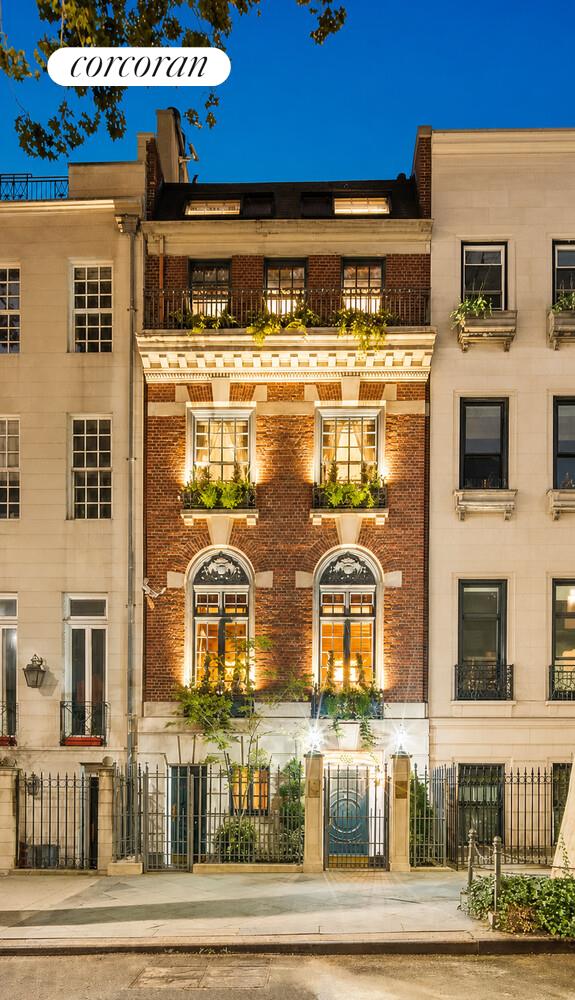
If Manhattan were a house, the Upper East Side would be its grand library — sophisticated, well-maintained, and layered with history. Stretching from the eastern edge of Central Park to the East River, roughly between 59th and 96th Streets, the UES is one of New York City's most architecturally distinguished and enduringly sought-after neighborhoods.
What sets the Upper East Side apart from every other high-end enclave in the city is its sense of permanence. In a borough that reinvents itself block by block, the UES offers stability — in its limestone facades, its tree-lined side streets, its cultural institutions, and its real estate values. Buyers here are not chasing a trend. They are planting a flag in one of the world's most reliably prestigious addresses.
The neighborhood divides naturally by avenue. Fifth to Park Avenue — known as the Gold Coast — is the domain of white-glove doormen buildings, landmarked townhouses, and Museum Mile. Lexington to Third Avenue pulses with boutiques, fitness studios, and the kind of commercial density that makes daily life genuinely walkable. East of Third, through Yorkville toward the river, the neighborhood becomes more contemporary and residential, with Carl Schurz Park as its anchor and a dining scene that has quietly become one of the city's most interesting.
The Upper East Side has long carried the shorthand of "old money Manhattan," and while that legacy is real, the neighborhood's actual population in 2026 is considerably more layered.
Multi-generational families and civic figures remain the backbone of the western blocks, drawn to the pre-war co-ops on Park and Fifth Avenues, the private clubs, and a pace of life that prizes discretion. These are residents who measure tenure in decades, not lease cycles.
Since the Second Avenue Subway opened, a significant wave of young professionals — many working in finance, law, and healthcare given the concentration of major hospitals in the 60s and 70s — have moved into Yorkville and the newer condo buildings along Second Avenue. They come for the transit access, the amenities, and the value relative to what the same dollar buys in Tribeca or the West Village.
Families are perhaps the neighborhood's most visible demographic. The UES is the most family-dense neighborhood in Manhattan, and the reason is straightforward: the combination of Central Park, elite private schools, top-rated public zoned schools, and the ability to combine apartments into four- and five-bedroom homes creates conditions that are nearly impossible to replicate elsewhere in the city.
Finally, the UES attracts retirees at a rate that reflects what the neighborhood genuinely offers later in life — world-class medical care at Mount Sinai and Weill Cornell, cultural richness within walking distance, and the kind of neighborhood fabric where people know your name at the corner bistro.
For a neighborhood that sits on the eastern edge of Manhattan, the UES is remarkably well-connected — and it has only become more so over the last decade.
The 4, 5, and 6 trains running under Lexington Avenue remain the primary subway spine, providing fast access to Grand Central, Union Square, and the Financial District. The Q train along Second Avenue has been transformative. The 72nd, 86th, and 96th Street stations offer a cleaner, less crowded commute to Midtown West, the West Village, and Brooklyn — and they have directly driven the appreciation of real estate on the eastern side of the neighborhood.
Crosstown movement is handled primarily by the M86 and M79 buses through Central Park, and the M15 Select Bus Service on First and Second Avenues is one of the most efficient north-south surface routes in the city.
For drivers, the FDR Drive is accessible at several points along the eastern edge of the neighborhood and offers a direct route to both airports and Westchester. The trade-off is parking: street parking is subject to strict alternate-side rules and genuinely difficult to find, and monthly garage rates typically run $600 to $1,000 depending on proximity to Fifth Avenue.
Cyclists have dedicated protected lanes along First and Second Avenues, and Citi Bike docks are abundant throughout the neighborhood. The East River Esplanade offers a scenic, car-free route that doubles as both a commute path and a daily recreational route.
As of early 2026, the Upper East Side operates at a measured, deliberate pace that reflects the character of the neighborhood itself. This is not a market where properties trade in bidding wars overnight — but it is also not a market that sits still for long when the right product comes to market.
Pace: The average days on market runs between 85 and 110 days across the neighborhood. Properties in the $1M to $3M range, particularly those with updated interiors, move fastest. Anything marketed as "turn-key" attracts serious attention quickly.
Competition: Multiple-offer scenarios are most common for renovated apartments with Central Park views or immediate access to the Second Avenue Subway. Buyers have shown increasing resistance to fixer-uppers given the current cost of labor and materials, which continues to compress demand for unrenovated inventory.
Price Ranges (2026):
Property Type | Price Range |
|---|---|
Studio / 1-Bedroom | $550,000 – $1.2M |
2-Bedroom | $1.5M – $3.5M |
Family-Sized (3+ Bedrooms) | $3.5M – $15M+ |
Ultra-Luxury / Townhomes | $20M – $60M+ |
All-cash offers account for nearly 50% of transactions at the luxury tier. Buyers should come prepared for that reality, particularly when competing for well-positioned co-ops west of Lexington Avenue.
The UES market is currently in what could accurately be described as a re-aging period — legacy assets being repositioned to meet a new generation of buyers while the neighborhood's underlying fundamentals remain as strong as ever.
The Co-op vs. Condo Shift: The Upper East Side was historically co-op country. That is still true in terms of inventory volume, but buyer preference has shifted. Younger purchasers and international investors strongly favor the flexibility of condominiums, and the price-per-square-foot premium for condos over comparable co-ops has widened noticeably. Condop conversions have accelerated to meet this demand.
The Second Avenue Effect: East of Lexington, particularly in Yorkville and Lenox Hill, has seen sustained appreciation driven by Q train access and a wave of boutique luxury developments offering amenities — rooftop terraces, private gyms, concierge services — that were once the exclusive domain of Midtown high-rises. What was once considered "too far east" is now among the most active submarkets in the neighborhood.
Wellness as a Value Driver: Post-2024, buildings with advanced air filtration, private outdoor space, and dedicated work-from-home amenities are commanding measurable premiums. This is no longer a differentiator — it is increasingly a baseline expectation for serious buyers.
Looking Ahead: The outlook through the remainder of 2026 is cautiously optimistic. Interest rates have stabilized relative to the volatility of 2023–2024, and the UES continues to function as a safe-haven asset class. Price appreciation in the range of 3% to 5% annually is a reasonable expectation, supported by constrained new inventory and persistent demand from buyers tied to the neighborhood's school network and cultural infrastructure.
One nuance worth noting: the market is currently bifurcated. Yorkville carries higher inventory and gives buyers more negotiating room, while the historic districts west of Lexington remain supply-constrained and seller-favorable.
The purchase process on the Upper East Side is unlike almost anywhere else in the country, and that is not hyperbole. The neighborhood is the co-op capital of New York City, which means buying here involves layers of scrutiny that have no equivalent in a standard real estate transaction.
Common Property Types:
The Board Package: For co-op purchases, budget two to four months for closing. You will be required to submit a comprehensive board package disclosing tax returns, financial statements, employment history, and personal references. A face-to-face interview with the Board of Directors is standard. The board has broad discretion to approve or reject — and they exercise it.
Contingencies and Competition: In today's market, mortgage contingencies are increasingly rare on competitive UES listings. Many buyers waive them entirely to compete with all-cash offers. If you are financing, work with your lender to get fully underwritten pre-approval before you begin touring seriously.
Showings: Formal private showings are the norm in the premier buildings west of Lexington. Large open houses are uncommon in those corridors — they are simply not how business is done here.
The Upper East Side has its own set of financial and regulatory nuances that can materially affect your bottom line and your day-to-day life as an owner. Understanding these before you make an offer is not optional.
Post-Closing Liquidity Requirements: Many co-op boards require buyers to demonstrate that they have 24 to 36 months of combined maintenance and mortgage payments in liquid assets after the purchase closes. Meeting the purchase price is not sufficient on its own.
Maintenance vs. Common Charges: In a co-op, your monthly maintenance fee includes property taxes and the building's underlying mortgage — a portion of which is typically tax-deductible. In a condo, common charges do not include property taxes; those arrive as a separate bill. The distinction has real implications for how you evaluate monthly carrying costs.
Landmark Restrictions: Large portions of the UES fall within Historic Districts designated by the Landmarks Preservation Commission. If you purchase a townhouse or brownstone, any exterior changes — windows, facade paint, ironwork — require LPC approval. Internal renovations are also subject to "wet over dry" rules, meaning you cannot relocate a bathroom above a neighbor's bedroom without significant structural review.
Mansion Tax and Flip Taxes: The New York City mansion tax applies to any residential purchase over $1M on a sliding scale, starting at 1% and reaching close to 4% at the ultra-luxury end. Many UES co-ops also impose a flip tax — typically 1% to 3% of the sale price — paid at closing. This is usually the seller's obligation, though in a softer market it can become a point of negotiation.
Flood Zone Awareness: Most of the Upper East Side sits on elevated ground and is not a flood concern. Properties on the extreme eastern edge near the FDR Drive and the East River are a different story. Post-Hurricane Sandy, many Yorkville buildings have invested in flood mitigation infrastructure. During due diligence, always request the building's flood zone designation and resiliency plan.
The rent-vs.-buy calculation on the Upper East Side is not straightforward, and the answer depends heavily on your timeline, your tolerance for the co-op process, and what you actually want out of New York.
The case for renting is real. You can move into a luxury rental in Yorkville within ten days. Buying a co-op takes three to six months from accepted offer to closing. If you are new to the city, renting for a year first is genuinely smart — the UES has distinct sub-neighborhoods with meaningfully different characters, and the difference between a quiet Carnegie Hill block and the energy of the upper 70s is something you want to experience before committing to a multi-million dollar purchase. The flip taxes common in UES buildings (often 2% to 3% of the sale price) also make buying an inefficient choice for anyone with a horizon shorter than five to seven years.
The case for buying is equally compelling over the long term. Monthly carrying costs in an established co-op are frequently lower than the rent for a comparable apartment, particularly once you account for the tax deductibility of the building's underlying mortgage and property taxes. The neighborhood's track record of price resilience is documented — during downturns, the UES consistently holds value better than trendier markets. And the inventory that defines the neighborhood — sprawling pre-war layouts with wood-burning fireplaces, herringbone floors, and formal dining rooms — is almost exclusively available for purchase, not rent.
The practical verdict: If your timeline is seven or more years and you have the financial profile to satisfy a co-op board, buying on the Upper East Side is one of the most defensible real estate decisions in New York. If you are navigating a transition, testing the city, or operating on a shorter horizon, rent first and buy when you are certain of your block.
For buyers moving from outside New York, the Upper East Side is one of the most orienting neighborhoods in the city to land in. It is self-contained, walkable, and legible in a way that many Manhattan neighborhoods are not.
The Three Mini-Neighborhoods: The UES is not monolithic. Lenox Hill (the 60s and 70s) is high-energy and hospital-adjacent, with Madison Avenue shopping, grand townhouses, and some of the city's best dining. Yorkville (the 80s and 90s east of Third Avenue) is more residential and family-oriented, with Carl Schurz Park, a strong culinary scene along Second Avenue, and the Q train as its central artery. Carnegie Hill (the 80s and 90s west of Lexington) is the quietest and most village-like of the three, anchored by Museum Mile and among the most coveted addresses for families focused on school zoning.
Transportation from Day One: The 4, 5, and 6 trains on Lexington and the Q train on Second Avenue handle the vast majority of daily commuting needs. The FDR Drive gives you highway access to both airports — LaGuardia is roughly 20 minutes in light traffic, JFK is 30 to 40. If you are coming from a car-dependent city, you will likely find that a car is more burden than convenience here.
Stocking the Neighborhood: The UES operates on a micro-commerce model that still functions as a true neighborhood. Whole Foods at 87th Street handles the staples; Fairway at 86th Street is the go-to for volume shopping; Citarella and Eli's serve the premium end. The Saturday Greenmarket at 82nd Street is an institution. For healthcare, Mount Sinai and Weill Cornell represent two of the country's leading academic medical centers within walking distance.
A Note on Pace: The Upper East Side is a neighborhood of routines and regulars. Residents have their dry cleaner, their corner café, their weekend walk through the park. Newcomers who engage with local businesses directly — rather than defaulting exclusively to apps — tend to feel at home considerably faster.
One logistical note for move-in day: if you are entering a co-op or condo building, you must schedule your move-in with the building manager weeks in advance. Moving on weekends or holidays is typically prohibited.
Education is the single most powerful driver of real estate demand on the Upper East Side, and for good reason. The neighborhood offers a combination of elite private institutions and high-performing public zoned schools that is essentially unmatched anywhere in the United States.
Public Schools: The UES falls within Manhattan Community School District 2, which maintains consistently high academic standards. PS 6 (Lillie Devereaux Blake) on Madison Avenue is frequently cited as one of the top public elementary schools in the country and exerts a measurable premium on surrounding real estate. PS 290 (Manhattan New School) in Yorkville is highly sought after for its progressive, arts-integrated program. PS 158 (Bayard Taylor) serves the far east side with strong results. Public school zoning is strictly boundary-enforced — a building across the street from PS 6 is not necessarily within its zone. Always verify the specific zoned school for any address before making a purchase decision.
Private Schools: The UES is the center of New York's private school universe. Among the all-girls schools: Chapin, Brearley, Spence, and Nightingale-Bamford. The all-boys circuit includes Buckley, Browning, and St. Bernard's. Dalton and Trevor Day operate as well-regarded co-ed alternatives. Ramaz is a prominent Jewish day school. These institutions draw families from across the city and, in some cases, internationally — and their presence directly supports neighborhood property values and low inventory turnover.
Specialized Options: Hunter College High School, the publicly funded school for academically gifted students located at 94th Street, admits through a competitive entrance exam. The Lycée Français de New York on York Avenue serves a substantial population of French-speaking and international families.
The PS 6 zone effect is worth naming explicitly: comparable apartments within the PS 6 catchment area consistently trade at a 10% to 15% premium over similar units just outside the boundary. For families who would otherwise pay private school tuition, that premium is often viewed as pre-paid education costs.
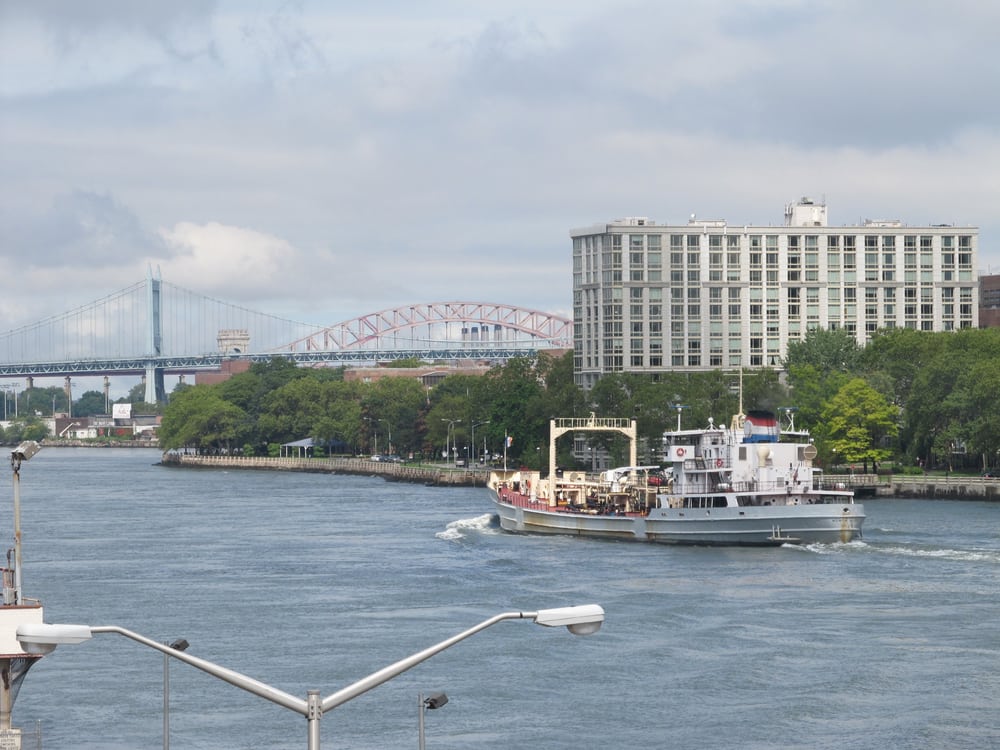
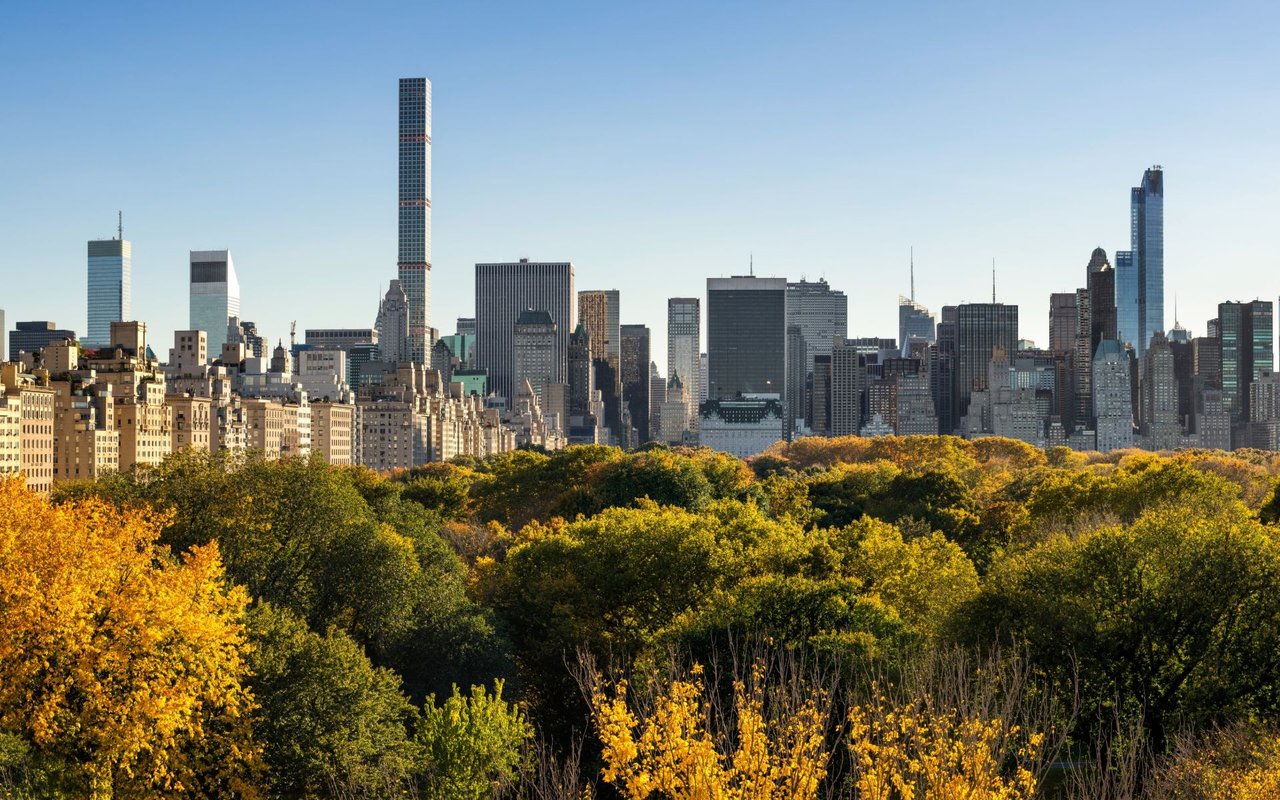
Outdoor life on the Upper East Side is bookended by two extraordinary assets: Central Park to the west and the East River to the east. Between them, the neighborhood offers a depth of green space that most Manhattan residents would not associate with the area until they live here.
Central Park is the neighborhood's de facto front yard. UES residents have direct access to the Reservoir's 1.58-mile running loop, the Great Lawn, the North Woods, and the celebrated Conservatory Garden. For families, the playgrounds along Fifth Avenue are among the most well-maintained in the city.
Carl Schurz Park at 86th Street and the East River remains one of Manhattan's genuinely underappreciated spaces. Built around Gracie Mansion, it features a river promenade, two off-leash dog runs, and a sense of calm that feels genuinely removed from the city. On a weekend morning, it runs at a fraction of the density of Central Park.
The East River Esplanade, currently undergoing a multi-year revitalization, offers expanded cycling infrastructure and waterfront access. Asphalt Green, a 5.5-acre non-profit recreation center, provides an Olympic-sized pool and an outdoor turf field that anchors youth sports for much of the neighborhood.
The Upper East Side's dining scene quietly shed its stuffy reputation over the last several years, and what has replaced it is something more interesting — a mix of legendary institutions, destination-worthy newcomers, and a daily rhythm of café culture and neighborhood restaurants that reflects how people actually live here.
Bemelmans Bar at the Carlyle and The Polo Bar represent a specific strain of Manhattan glamour that remains entirely authentic on the UES — live jazz, tuxedoed service, martinis, and a clientele that has been coming for decades. These are not tourist attractions. They are neighborhood institutions.
The Second Avenue corridor and Yorkville have driven most of the recent energy. Noz, a celebrated sushi omakase, anchors a stretch that now includes destination Italian trattorias, French bistros, and wine bars that draw a younger crowd from across the city. The Madison Avenue lunch scene in the 60s and 70s — chic outdoor cafes, a reliable sighting of the neighborhood's power tier between museum visits — operates as its own distinct social ecosystem.
Nightlife here is not late-night in the downtown sense. The UES functions on what regulars call the Second Avenue Crawl — a dense stretch of gastropubs, wine bars, and upscale lounges that are social and lively without reaching the decibel levels of the East Village or Hell's Kitchen. This is a neighborhood that prioritizes quality over volume, and its dining and nightlife reflect that consistently.
Navigating the Upper East Side market — with its co-op board requirements, landmark considerations, school zone nuances, and layered pricing dynamics — requires an advisor who has seen these deals from every angle.
The James Weiss Team NYC brings deep expertise in the Upper East Side market and a genuine understanding of what makes this neighborhood work for buyers, sellers, and families alike. Whether you are evaluating a pre-war co-op on Park Avenue, weighing condos in Yorkville, or simply trying to understand where the market stands before making a move, they are the team to call.
Reach out to the James Weiss Team NYC to start the conversation. No pressure, no pitch — just a knowledgeable guide who knows this neighborhood and will help you make the right decision for your situation.
There's plenty to do around Upper East Side, including shopping, dining, nightlife, parks, and more. Data provided by Walk Score and Yelp.
Explore popular things to do in the area, including Buru Boutique, Helen Marx Books, and Dolce & Gabbana.
| Name | Category | Distance | Reviews |
Ratings by
Yelp
|
|---|---|---|---|---|
| Shopping | 0.26 miles | 1 review | 5/5 stars | |
| Shopping | 0.57 miles | 0 reviews | 0/5 stars | |
| Shopping | 0.59 miles | 0 reviews | 0/5 stars | |
| Shopping | 0.64 miles | 1 review | 2/5 stars | |
| Active | 0.22 miles | 1 review | 5/5 stars | |
| Active | 0.23 miles | 1 review | 4/5 stars | |
| Active | 0.4 miles | 0 reviews | 0/5 stars | |
| Active | 0.51 miles | 0 reviews | 0/5 stars | |
| Active | 0.52 miles | 0 reviews | 0/5 stars | |
| Active | 0.54 miles | 0 reviews | 0/5 stars | |
| Active | 0.66 miles | 1 review | 5/5 stars | |
| Active | 0.71 miles | 0 reviews | 0/5 stars | |
| Active | 0.73 miles | 0 reviews | 0/5 stars | |
| Beauty | 0.22 miles | 1 review | 1/5 stars | |
| Beauty | 0.27 miles | 0 reviews | 0/5 stars | |
| Beauty | 0.34 miles | 0 reviews | 0/5 stars | |
| Beauty | 0.35 miles | 4 reviews | 3/5 stars | |
| Beauty | 0.61 miles | 15 reviews | 1.6/5 stars | |
| Beauty | 0.75 miles | 0 reviews | 0/5 stars | |
| Beauty | 0.77 miles | 0 reviews | 0/5 stars | |
| Beauty | 0.91 miles | 1 review | 5/5 stars | |
| Beauty | 0.96 miles | 0 reviews | 0/5 stars | |
|
|
||||
|
|
||||
|
|
||||
|
|
||||
|
|
||||
|
|
Upper East Side has 108,027 households, with an average household size of 2. Data provided by the U.S. Census Bureau. Here’s what the people living in Upper East Side do for work — and how long it takes them to get there. Data provided by the U.S. Census Bureau. 205,232 people call Upper East Side home. The population density is 142,265 and the largest age group is Data provided by the U.S. Census Bureau.
Total Population
Population Density Population Density This is the number of people per square mile in a neighborhood.
Median Age
Men vs Women
Population by Age Group
0-9 Years
10-17 Years
18-24 Years
25-64 Years
65-74 Years
75+ Years
Education Level
Total Households
Average Household Size
Average individual Income
Households with Children
With Children:
Without Children:
Blue vs White Collar Workers
Blue Collar:
White Collar:
Explore Other Neighborhoods
590 Madison Ave 8th Flr New York, NY 10022
590 Madison Ave 8th Flr New York, NY 10022