Welcome to
158,363 people live in Upper West Side, where the median age is 46 and the average individual income is $122,222. Data provided by the U.S. Census Bureau.
Total Population
Median Age
Population Density
Average individual Income
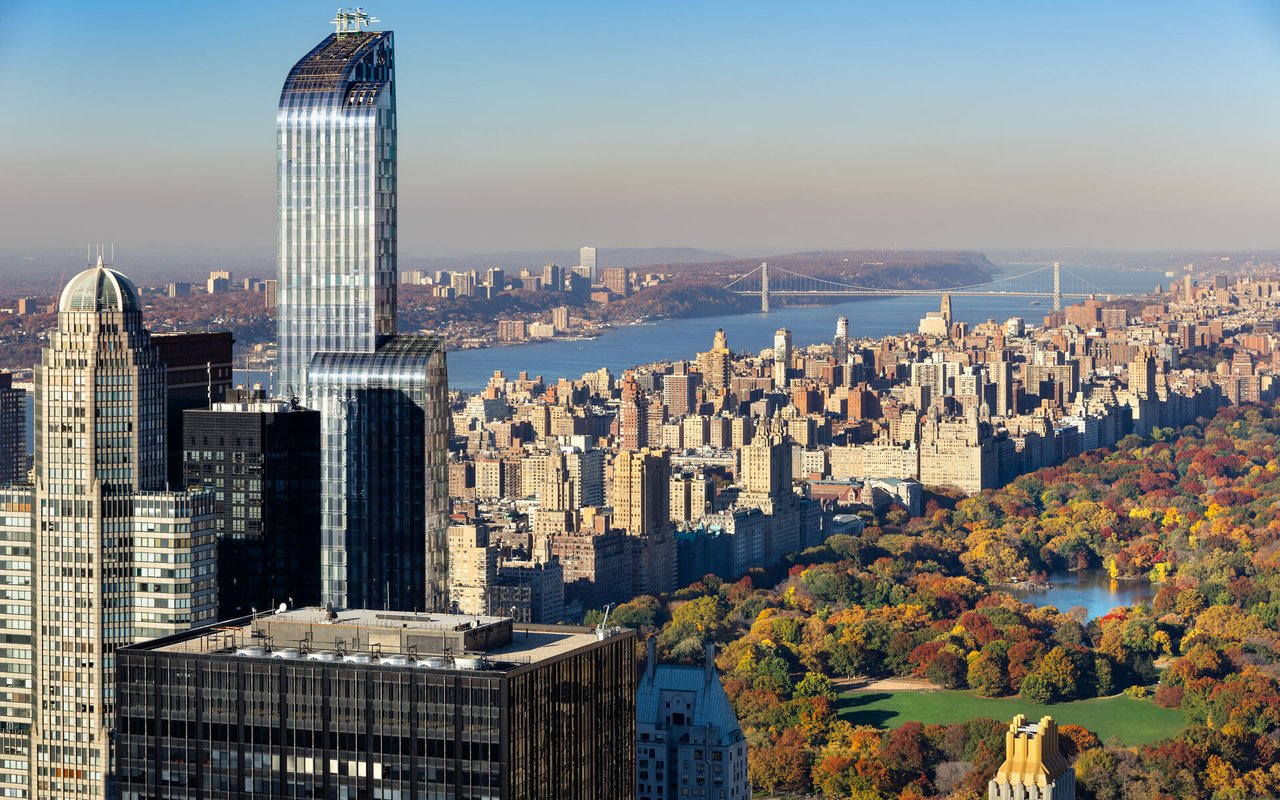
The Upper West Side is one of Manhattan's most enduring residential strongholds — a neighborhood where prewar elegance, cultural prestige, and family-oriented stability converge between two of the city's greatest parks. Whether you're considering a classic Central Park West co-op, a brownstone on a tree-lined side street, or a modern condo near Lincoln Square, this guide gives you the depth and on-the-ground perspective you need to navigate one of New York's most nuanced markets.
The Upper West Side market today sits in a balanced-to-slightly-buyer-friendly position, shaped largely by the dominance of co-ops, which account for roughly 54% of active inventory. Co-ops carry stricter financial scrutiny and longer board approval timelines than condos, which slows the entire transaction rhythm of the neighborhood and gives buyers more breathing room than they'd find downtown.
Homes here are moving at a steady but measured pace, with a median of about 55 days on the market. Active inventory generally hovers between 600 and 1,200 units depending on how strictly the Lincoln Square boundary is drawn, giving serious buyers a wide field to browse without the pressure to make rushed offers. That said, the market is far from passive — the UWS continues to post some of the highest transaction volumes in New York City, with over 1,282 trades recorded in a single recent year according to PropertyShark.
What's notable is how selective today's buyers have become. Listings that are overpriced, poorly staged, or saddled with inefficient layouts are sitting, and nearly 30% of active listings end up taking a price cut before they sell. On the flip side, move-in-ready apartments and rare trophy prewar units near Central Park still attract swift, competitive bidding.
The median asking price across the neighborhood sits between $1.70 million and $1.75 million (roughly $1,500 to $1,740 per square foot), but that headline number masks a sharp divide: the median co-op trades closer to $1.19 million, while the median condo jumps to $2.69 million. Sale-to-list ratios are landing in the 98% to 99% range, meaning there's real, but not dramatic, room to negotiate.
The UWS has shifted firmly out of its post-pandemic frenzy phase and into a more practical, financially literate era. The single biggest behavioral change in this market is how seriously buyers now scrutinize carrying costs — monthly maintenance and common charges have become as important as the purchase price itself. Rising insurance premiums, labor costs, and capital improvement mandates tied to aging prewar buildings have compressed prices in buildings with weak reserves or looming assessments, while buildings with strong financials and disciplined boards are noticeably outperforming.
There's also been a quiet pivot back toward older, resale inventory. As ultra-luxury new development has cooled, buyers are showing renewed willingness to take on classic prewar co-ops that need cosmetic updates — refreshed kitchens, new bathrooms — because the price-per-square-foot gap between renovation-ready resales and pristine new condos has become impossible to ignore.
Pricing has been choppy but resilient. Median sale prices were essentially flat to slightly down a year ago, but recent months have shown a rebound of roughly 1.4% to 3% on a month-over-month basis. The clear signal: buyers will always want to live on the Upper West Side, but they refuse to overpay for it.
Looking ahead, the neighborhood is poised to remain one of Manhattan's most stable long-term plays. Because so much of the UWS is locked into historic districts, there's almost no risk of sudden inventory dilution from a wave of new glass towers. Expect a slow, steady upward trajectory as mortgage rates stabilize, with the $2 million to $5 million family-sized prewar apartment segment continuing to serve as the financial and emotional backbone of the neighborhood.
The luxury tier on the Upper West Side operates on its own logic, largely insulated from the mortgage-rate pressures shaping the broader market. This segment is driven primarily by all-cash transactions and a severe, structural scarcity of true trophy properties — and right now, that combination is producing an intense surge in dollar volume as affluent buyers, bolstered by strong equity market returns, aggressively pursue high-end inventory.
In Manhattan, the luxury threshold officially begins at $4 million, but on the UWS this band quickly splits into two distinct sub-markets. Ultra-luxury condos — concentrated in modern towers like 15 Central Park West, 220 Central Park South, and the newer Lincoln Square developments — routinely trade between $3,000 and over $4,000 per square foot, with a citywide median luxury condo price near $10.1 million. The classic counterpoint is the prewar luxury co-op and the historic townhouse. Landmark buildings along Central Park West — The Dakota, The San Remo, The Beresford — offer enormous footprints but trade at a meaningful per-square-foot discount to new condos. Median luxury co-op pricing sits closer to $4.2 million, driven by buyers who value historical pedigree, architectural scale, and privacy over modern amenity decks.
The defining dynamic at this level is supply. True trophy assets — Central Park-facing prewar penthouses, intact single-family brownstones — cannot be replicated. You can build another glass tower; you cannot build another Dakota. That scarcity is what keeps the top of this market moving regardless of broader conditions.
Buying on the Upper West Side is less about high-velocity bidding wars and more about clearing intense financial and procedural hurdles. The dominant property type is the co-op (54% of inventory), where you're not buying real property but rather shares in a corporation along with a proprietary lease. Condos account for roughly 41% of inventory — newer, more expensive, far easier to buy, finance, rent, and resell. The remainder consists of coveted townhouses and brownstones tucked onto the side streets between Central Park West and Riverside Drive.
In today's market, buyers have meaningful leverage in the non-luxury tier. Listings average 55 to 60 days on market, giving you time to revisit a property, do real due diligence, and avoid emotional decisions. Negotiations typically land at 98% to 99% of asking price, and nearly 30% of listings undergo a price reduction before going into contract.
The contract phase, however, is only half the battle when you're buying a co-op. Co-op boards function as strict gatekeepers, and the financial requirements they impose go well beyond what a bank would ask of you. Many UWS boards require 20% to 30% down at minimum, and some of the stricter prewar buildings require 50% down or insist on 100% cash deals with no financing permitted. Even more challenging is the post-closing liquidity requirement — boards want to see 12 to 24 months of mortgage and maintenance payments left in liquid assets after you've covered your down payment and closing costs. This is where most otherwise-qualified buyers get tripped up.
Then there's the board package itself: tax returns, bank statements, personal and professional references, and ultimately an in-person interview. From accepted offer to closing, a UWS co-op typically takes 3 to 5 months. A condo, by comparison, can close in 4 to 6 weeks.
There are four specific realities every UWS buyer needs to understand before signing anything.
The first is landmark status. A substantial portion of the neighborhood falls within designated historic districts, most notably the Upper West Side/Central Park West Historic District. If you're buying a townhouse, brownstone, or even a street-facing co-op apartment in one of these zones, the Landmarks Preservation Commission must approve any exterior alteration. Replacing windows, changing a front door, installing a through-the-wall air conditioner — all of these can become multi-month bureaucratic processes requiring historically appropriate (and expensive) materials.
The second is the debt-to-income and liquidity trap that catches even high-net-worth buyers off guard. Most UWS co-op boards cap debt-to-income ratios at 25% to 30%, meaning your monthly housing costs plus recurring debt cannot exceed roughly 30% of your gross monthly income. Compounding this, the 12-to-24-month post-closing liquidity requirement specifically excludes most retirement accounts and crypto holdings because of liquidation penalties and volatility. Buyers with substantial 401(k)s or IRAs but limited brokerage holdings can be cash-rich on paper and still rejected by a board.
The third is Local Law 97, NYC's carbon emissions mandate. The Upper West Side is full of beautiful, aging prewar buildings that rely on traditional heating systems and face significant fines if they don't undergo green retrofits. When you're reviewing a building's financials, look hard at their Local Law 97 compliance status. A building that hasn't begun planning its retrofit is a building that's likely to hit you with a major special assessment or a permanent maintenance hike to fund the work.
The fourth is flood risk, which is mostly favorable here. The neighborhood sits on Manhattan schist — a high, rocky plateau — so coastal flood exposure is far lower than in downtown or coastal Brooklyn. The hyper-local exception is Riverside Drive and the low-lying blocks closest to the Hudson, which can experience localized flash flooding or stormwater backup during severe rain events. Central Park West and the spine of the neighborhood face no meaningful flood risk.
The single most important decision you'll make is who represents you. Generic agents who primarily work with downtown glass condos do not know how to package a buyer for a Beresford or San Remo board, and that gap will cost you. You want a broker who has personally walked buyers through strict UWS boards and who knows the managing agents by name. The best UWS brokers know precisely what a given building looks for — some boards focus on pet policies, others care obsessively about how your liquid assets are presented — and they'll structure your financial package accordingly.
Before you tour a single apartment, have your broker walk you through a REBNY Financial Statement. This is the standardized document co-op boards review, and it strips away assumptions about your buying power. Plenty of UWS buyers discover at this stage that despite a strong net worth, too much of their wealth is locked in real estate equity or retirement accounts — meaning they're effectively un-buyable in certain buildings. It's far better to learn that before you've fallen in love with an apartment.
If your finances are complex — self-employment, international income, insufficient liquid reserves — target sponsor units. These are co-op apartments still owned by the original developer or converter, and buying one bypasses the board approval process entirely. You'll typically pay a slight premium, but you skip the interviews, the liquidity minimums, and months of stress. For the right buyer, it's the difference between getting into a great prewar building or being shut out.
Have your real estate attorney examine the building's underlying mortgage and, critically, when it matures. Co-op buildings carry a mortgage on the entire structure, and shareholders pay a pro-rata piece of it through maintenance. If the underlying mortgage matures soon and rates are higher at refinancing, your maintenance will jump — sometimes substantially — within a year or two of closing.
Finally, if you make it to a board interview, the rule is simple: be boring. Don't brag about your career or wealth, don't telegraph any plans for major renovation work (boards hate noise), and don't oversell. Confirm that you understand the house rules, answer their questions directly, and let them lead. They're not looking for an interesting neighbor. They're looking for a quiet, financially stable, predictable one.
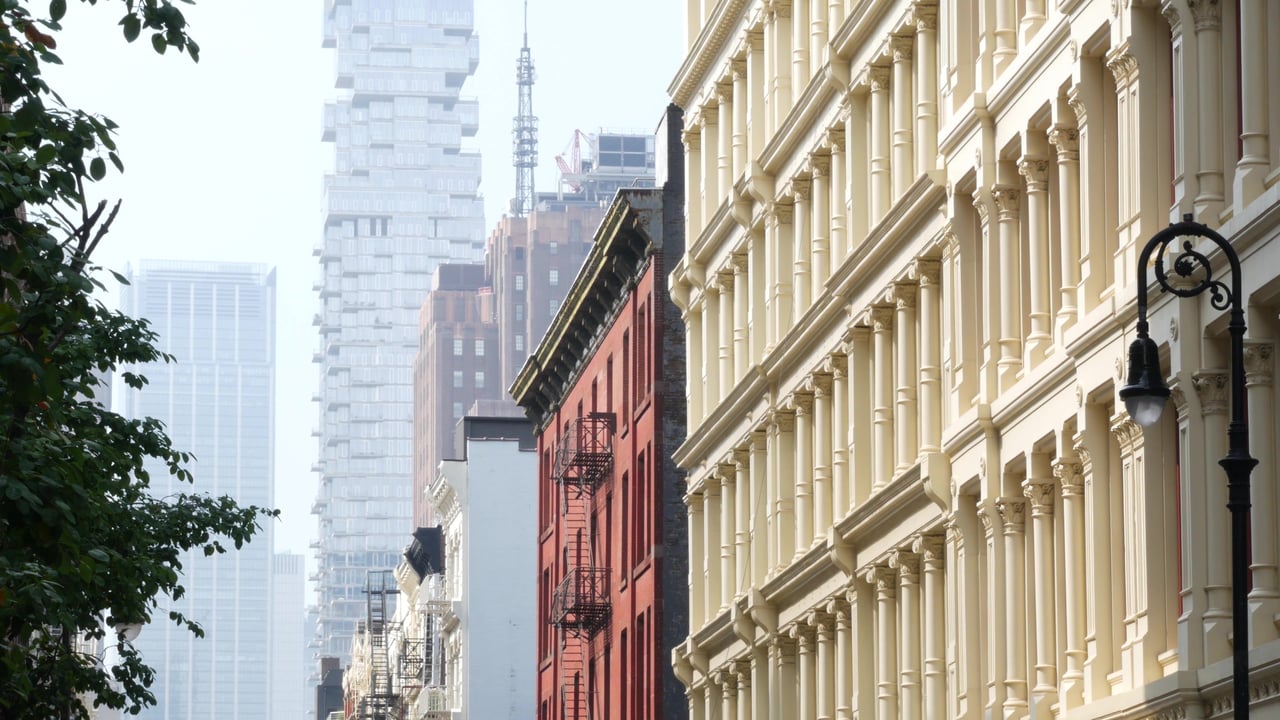
The Upper West Side has one of the most cohesive and historically protected architectural landscapes in New York. Built primarily between 1900 and 1939, the neighborhood is defined by its grand prewar apartment buildings — the work of legendary architects like Emery Roth and Rosario Candela, who shaped the skyline with Beaux-Arts, Neo-Renaissance, and Art Deco structures designed to evoke European grand hotels. Buildings like The San Remo, with its twin towers, and the gothic Dakota set the architectural standard for the neighborhood and remain among the most desirable addresses in the city.
Inside these prewar units, the appeal is immediate: 9- to 11-foot ceilings, plaster crown moldings, solid oak floors laid in herringbone patterns, thick sound-buffering walls, and grand gallery foyers. The trade-off is layout — these apartments were designed for a different era of living, with formal, compartmentalized rooms and kitchens treated as utilitarian back-of-house spaces. Unless a previous owner has already opened things up, you'll often find a kitchen separated from the living areas in classic UWS style.
The neighborhood's other architectural identity lives on the side streets between Central Park West, Columbus, Amsterdam, and Riverside Drive: late-19th-century brownstones and row houses. These properties feature high stoops, L-shaped stone staircases, and façades that range from classic brownstone to Romanesque Revival brick and limestone. Interiors offer floor-through layouts, original wood-burning fireplaces, carved mahogany banisters, and stained-glass transoms. Many have been carved up into multi-unit co-ops or rentals over the decades, and most lack elevators and full-time doorman services.
Modern luxury exists too, concentrated around Lincoln Square and the southern edge near 59th Street, where towers like the Time Warner Center and 15 Central Park West offer open-concept floor plans, floor-to-ceiling Hudson and Central Park views, in-unit laundry, and full amenity packages. 15 Central Park West is particularly interesting architecturally because it deliberately bridges the old and new, using classic limestone to echo the prewar buildings around it.
With a Walk Score of 98, the Upper West Side is a true walker's paradise — daily errands genuinely do not require a car. The neighborhood's geography helps: it's sandwiched between Central Park to the east and Riverside Park to the west, with three commercial avenues (Broadway, Amsterdam, and Columbus) running the length of it and quiet, strictly residential side streets in between.
Transit is unusually strong here. Two major subway corridors flank the neighborhood. The Broadway line — the 1, 2, and 3 trains — runs down the spine of Broadway, with the 2 and 3 functioning as express trains that can get you from 72nd Street to Times Square or the Financial District in a remarkably short time. The local 1 stops more frequently and is perfect for short hops. On the eastern edge, the A, B, C, and D trains run along Central Park West, with the A and D expresses connecting through the major hub at 59th Street/Columbus Circle. Because Central Park cuts the UWS off from the Upper East Side, residents rely heavily on the crosstown buses — the M79-SBS, M86-SBS, and M96 — to move east-west through the park transverses.
For cyclists, protected bike lanes run north-south along Columbus and Amsterdam, and the Hudson River Greenway through Riverside Park provides a continuous, traffic-free path that runs all the way down the West Side of Manhattan.
In practical commute terms, Times Square and Midtown West are about 7 to 10 minutes by express train. Grand Central and Midtown East run about 15 to 20 minutes including a transfer. The Financial District is roughly 20 to 25 minutes on a single 2 or 3 express ride, no transfers required.
Long before it became a cultural anchor of Manhattan, the Upper West Side was farmland. Dutch settlers in the 17th and 18th centuries called the area Bloemendael — "Valley of Flowers" — later anglicized to "Bloomingdale." Broadway itself began life as the Bloomingdale Road, built in 1703 to connect lower Manhattan to the country estates of New York's wealthiest families.
The construction of Central Park in the 1850s reshaped everything. Squatters displaced by the park's development moved westward, dotting the rugged landscape with shacks alongside taverns and boarding houses, and for decades the area felt distinctly removed from the rest of the city. The real catalyst for what we now recognize as the modern UWS was transit. The Ninth Avenue Elevated Railway arrived in the 1880s, and the city's first subway line opened in 1904 — together they sparked a development boom that produced the European-style apartment buildings that still define the neighborhood today. The Dakota, completed in 1884, was named precisely because the area felt so remote it might as well have been in the Dakota Territory.
By the mid-20th century, with Columbia University to the north and the opening of Lincoln Center in the 1960s, the neighborhood had become a haven for academics, writers, artists, and musicians. That bohemian, intellectually-grounded character is still legible in the UWS today — it explains why the neighborhood feels less commercial and more community-rooted than much of the rest of Manhattan.
The UWS sits within Manhattan's School District 3, one of the more competitive and highly regarded public districts in the city, and the school options here are a major reason families consistently target the neighborhood.
On the public elementary side, P.S. 199 (Jessie Isador Straus) in the southern part of the neighborhood has long been one of the most sought-after elementary schools in the city, known for academic rigor and an extremely active PTA. P.S. 87 (William Sherman) on West 78th Street is celebrated for its progressive, community-driven approach and engaged parent network. P.S. 166 (The Richard Rodgers School of the Arts & Science) in the mid-80s offers an arts-integrated curriculum housed in a landmarked gothic building. The Anderson School (P.S. 334) on West 77th Street is a highly competitive citywide Gifted & Talented K-8 program — admission requires a rigorous testing and application process, and it's considered one of the top public options in the entire state. P.S. 333 (Manhattan School for Children) offers a popular alternative with a progressive, inquiry-based K-8 model.
For high school, Fiorello H. LaGuardia High School next to Lincoln Center is the city's premier specialized public school for music, art, and the performing arts — admission is by audition and portfolio review.
On the private side, the UWS hosts some of the most prestigious schools in the country. Trinity School, founded in 1709, is a co-educational Ivy League-preparatory institution consistently ranked among the top private schools in the United States. The Collegiate School, founded by the Dutch in 1628, is the oldest independent school in America, offering an elite all-boys K-12 program. The Calhoun School and Ethical Culture Fieldston School are excellent options for families seeking progressive, co-educational models.
Almost no residential address on the Upper West Side is more than three blocks from a major park, which is a genuinely rare quality in Manhattan. The neighborhood is bookended by Central Park to the east and Riverside Park to the west, and that geographic accident defines a huge part of daily life here.
Central Park, running the full length of the neighborhood along Central Park West, functions as a backyard for UWS residents — Sheep Meadow, the Jacqueline Kennedy Onassis Reservoir running track, and Strawberry Fields are all within an easy walk. Proximity to the park carries a steep and well-documented pricing premium. Riverside Park, designed by Frederick Law Olmsted, runs four miles along the Hudson from 72nd to 158th Street and is heavily used by locals for active recreation — tennis courts, community gardens, skate parks, and playgrounds. Connected to it, the Hudson River Greenway gives runners and cyclists a continuous, traffic-free path all the way down to Lower Manhattan.
The UWS food and entertainment scene reflects the neighborhood's identity: sophisticated, established, and family-oriented, with a strong preference for institutions over trends. This is a market where longevity wins. Zabar's and Barney Greengrass — the "Sturgeon King" — have anchored the culinary culture for nearly a century, and they coexist comfortably with newer upscale spots like Maison Pickle and critically acclaimed destinations like Kwame Onwuachi's Tatiana at Lincoln Center.
Day-to-day dining culture revolves around sidewalk cafés and neighborhood French and Mediterranean bistros lining Columbus and Amsterdam. Long weekend brunches, afternoon espressos, and early-evening wine bars are the rhythm here — eateries function as extensions of residents' living rooms rather than scene-driven destinations.
True nightlife on the UWS centers on high culture rather than clubs. Lincoln Center for the Performing Arts is the global home of the New York Philharmonic, the Metropolitan Opera, and the New York City Ballet, and a typical UWS evening is more likely to involve the symphony and a pre-show dinner than a late-night cocktail scene. There are excellent cozy lounges and pubs along Amsterdam Avenue, but the neighborhood winds down earlier than downtown by design.
If you're considering a move to the Upper West Side — whether you're hunting for value in a classic prewar co-op, targeting a trophy condo near Central Park, or selling a home and wanting it priced and positioned with precision — the James Weiss Team is here to guide you through every step. We're a full-service real estate family office with deep expertise in the nuances of UWS co-op boards, condo transactions, and off-market opportunities. With over $500 million in completed transactions, a significant portion of which has been handled off-market, we've built our practice on discretion, individualized service, and the kind of relationships that actually move deals across the finish line in this neighborhood.
Reach out to start the conversation: call us at (201) 956-8739, email [email protected], or visit our office at 590 Madison Ave, 8th Floor, New York, NY 10022. We look forward to working with you.
There's plenty to do around Upper West Side, including shopping, dining, nightlife, parks, and more. Data provided by Walk Score and Yelp.
Explore popular things to do in the area, including Pho Hanoi Corner, Watson Ellis, and Leo Results Fitness.
| Name | Category | Distance | Reviews |
Ratings by
Yelp
|
|---|---|---|---|---|
| Dining | 4.21 miles | 8 reviews | 5/5 stars | |
| Shopping | 3.85 miles | 8 reviews | 5/5 stars | |
| Active | 3.7 miles | 30 reviews | 5/5 stars | |
| Active | 1.56 miles | 7 reviews | 5/5 stars | |
| Active | 2.17 miles | 5 reviews | 5/5 stars | |
| Active | 0.36 miles | 5 reviews | 5/5 stars | |
| Beauty | 2.42 miles | 6 reviews | 5/5 stars | |
| Beauty | 3.08 miles | 8 reviews | 5/5 stars | |
| Beauty | 2.51 miles | 5 reviews | 5/5 stars | |
| Beauty | 4.66 miles | 12 reviews | 5/5 stars | |
| Beauty | 3.33 miles | 7 reviews | 5/5 stars | |
| Beauty | 1.76 miles | 5 reviews | 5/5 stars | |
| Beauty | 3.46 miles | 7 reviews | 5/5 stars | |
| Beauty | 3.46 miles | 6 reviews | 5/5 stars | |
| Beauty | 1.79 miles | 8 reviews | 5/5 stars | |
| Beauty | 4.97 miles | 8 reviews | 5/5 stars | |
| Beauty | 3.63 miles | 6 reviews | 5/5 stars | |
| Beauty | 3.79 miles | 26 reviews | 5/5 stars | |
| Beauty | 2.7 miles | 5 reviews | 5/5 stars | |
| Beauty | 2.72 miles | 22 reviews | 5/5 stars | |
| Beauty | 1.99 miles | 6 reviews | 5/5 stars | |
|
|
||||
|
|
||||
|
|
||||
|
|
||||
|
|
||||
|
|
Upper West Side has 75,648 households, with an average household size of 2. Data provided by the U.S. Census Bureau. Here’s what the people living in Upper West Side do for work — and how long it takes them to get there. Data provided by the U.S. Census Bureau. 158,363 people call Upper West Side home. The population density is 133,011.948 and the largest age group is Data provided by the U.S. Census Bureau.
Total Population
Population Density Population Density This is the number of people per square mile in a neighborhood.
Median Age
Men vs Women
Population by Age Group
0-9 Years
10-17 Years
18-24 Years
25-64 Years
65-74 Years
75+ Years
Education Level
Total Households
Average Household Size
Average individual Income
Households with Children
With Children:
Without Children:
Blue vs White Collar Workers
Blue Collar:
White Collar:
Explore Other Neighborhoods
590 Madison Ave 8th Flr New York, NY 10022
590 Madison Ave 8th Flr New York, NY 10022