32,518 people live in West Village, where the median age is 42 and the average individual income is $164,566. Data provided by the U.S. Census Bureau.
Total Population
Median Age
Population Density
Average individual Income
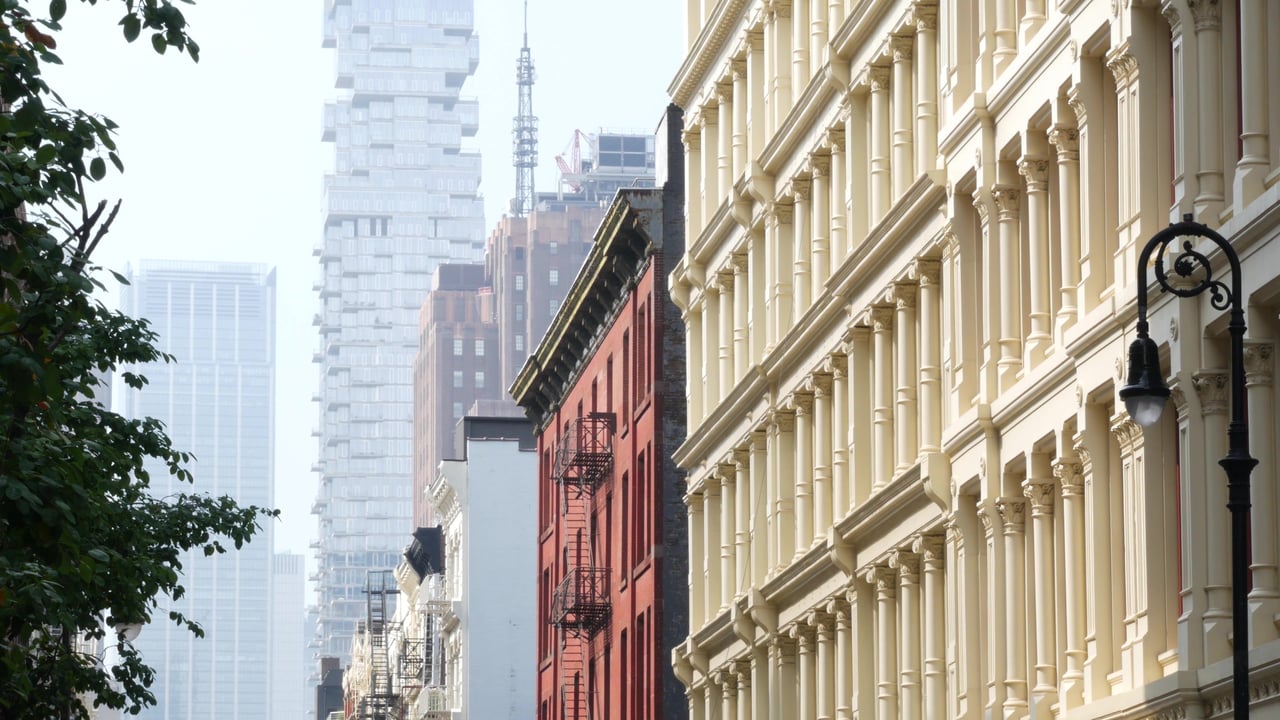
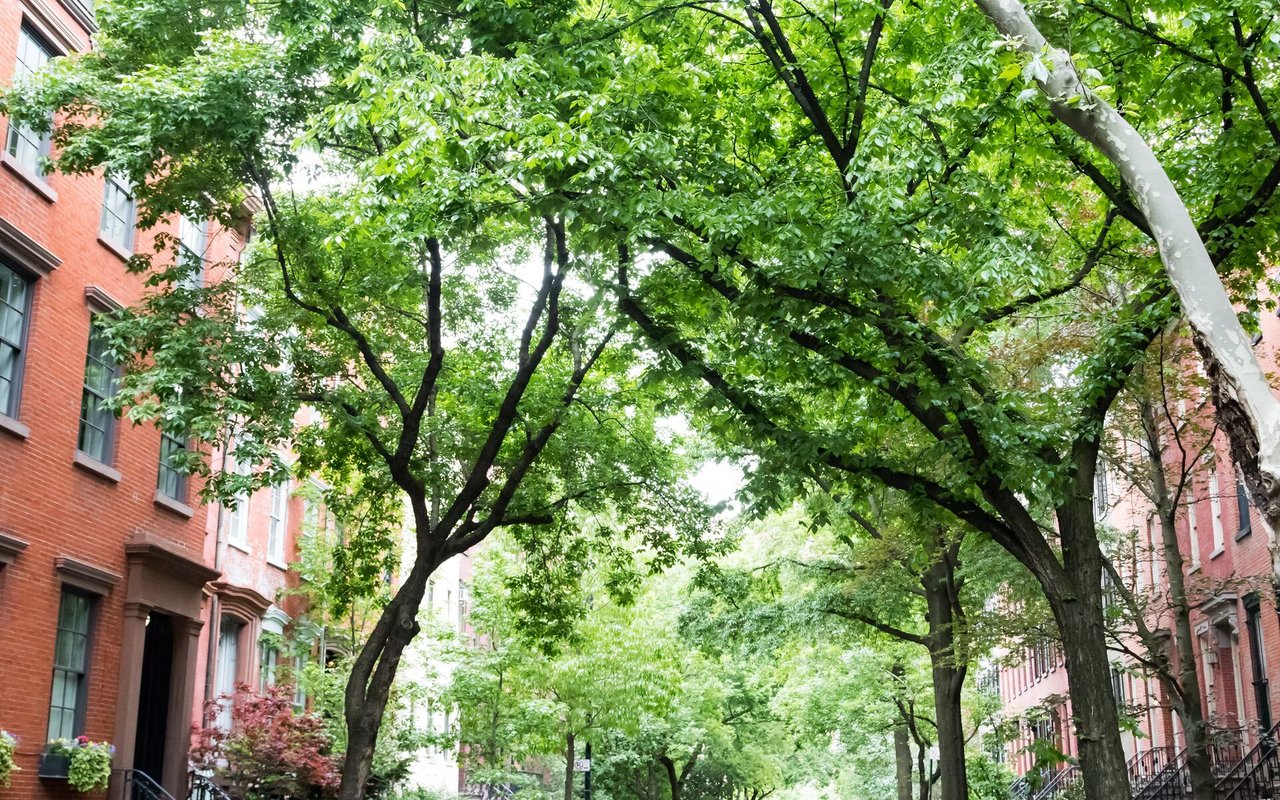
The West Village is Manhattan's rebel pocket — the one part of the grid that refuses to behave like a grid. Where Waverly Place crosses itself and West 4th Street somehow intersects West 10th, you get a neighborhood that feels less like New York and more like a European village that happened to land below 14th Street. Low-rise brownstones, leafy cobblestone lanes, and a fiercely protective community define the day-to-day experience here.
It tends to attract a specific kind of buyer: high-earning creatives, tech and finance executives, and discreet, high-profile figures who want proximity to everything without the noise and spectacle of Midtown. This is a neighborhood for people who value architectural history, prefer to move through life on foot, and are willing to trade square footage for one of the most charming and permanently protected streetscapes in the country. If you want a glass tower with a gym and a valet, this isn't your neighborhood. If you want a tree-lined block where the storefronts can never be replaced by a bank branch, it's one of the best addresses in the world.
The single most important thing to understand about this market is structural scarcity. Because the majority of the neighborhood sits within the Greenwich Village Historic District, developers cannot build high-rise towers and existing walk-ups and townhouses generally cannot be demolished. The supply is effectively capped forever, which changes how nearly every standard metric behaves.
That scarcity translates into premium pricing and unusual resilience. The median listing price hovers around $2.0M, with a striking price per square foot in the range of $2,545 to $2,614. When broader Manhattan wobbles under shifting mortgage rates, the West Village tends to act as a hyper-insulated safe haven rather than a market that follows the crowd down.
Underneath the headline numbers, this is really a tale of two markets. Luxury condos and move-in-ready townhouses trade fast, often near or right at ask with brief days on market. Co-ops — which make up a huge share of the historic building stock — have cooled somewhat in transaction volume, largely because sellers are choosing to hold rather than discount. That reluctance keeps overall inventory tight.
The clear directional trend is the widening gap between turnkey and outdated properties. Buyers increasingly want fully renovated units with modern systems and private outdoor space, and they'll pay a premium to avoid a project. Sellers of pristine, correctly priced homes hold real leverage; dated properties sit until the asking price meets reality.
Investing here requires a mental shift. This is not a cash-flow neighborhood — it's a capital preservation and long-term appreciation play. If you're chasing high immediate yield, you'll be disappointed; if you're preserving and compounding wealth over a decade or more, few places in the country are safer.
On rental yield, a condo purchase typically produces a gross yield in the 2.0% to 3.0% range. The upside is relentless demand — near-zero vacancy, a tenant pool of high earners, and median rents around $6,250/month with strong double-digit year-over-year growth. The downside is simple math: high purchase prices compress net cap rates, so you won't see big monthly cash flow if you're carrying a heavy mortgage. What you get instead is stability and remarkably low downside risk.
Appreciation is where the neighborhood truly earns its reputation. Manhattan real estate has historically averaged roughly 6% annual appreciation over multi-decade stretches, and because West Village supply is permanently capped by zoning, demand consistently outpaces it. That structural imbalance tends to push local appreciation ahead of less-constrained Manhattan neighborhoods.
Fix-and-flip (or fix-and-hold) is difficult but lucrative for those who understand the regulatory terrain. The trap is co-ops: they carry strict flip taxes (often 1–3% of sale price), rigorous renovation approvals, and subletting restrictions that make them poor vehicles for rental or fast-turnaround strategies. The real value-add opportunity lies in unrenovated condos and single-family townhouses. Discerning luxury buyers pay an enormous premium to avoid contractors and the Landmarks Preservation Commission (LPC), so if you have the capital and patience to buy a dated townhouse, navigate LPC facade approvals, and modernize the interior, the renovation premium on exit is among the highest anywhere.
The investor takeaway is blunt: if your goal is to rent, avoid co-ops. Target boutique condos or value-add townhouses where you can manufacture equity through high-end renovation and sell into a buyer pool that demands perfection and pays for it.
Buying here is rarely casual. Perpetually limited inventory rewards decisive buyers who arrive financially ready, and understanding the property types is the first step because they behave very differently.
Property Type | What You're Buying | Financing & Flexibility | Price Position |
|---|---|---|---|
Co-op | Shares in a corporation that owns the building | Large down payments (often 20–30%, sometimes up to 50%); intense board approval | Lowest entry point; majority of historic stock |
Condo | Real property | Easier to finance, subletting permitted, rarely a board interview | Commands a 20–30% premium over comparable co-ops due to scarcity |
Townhouse | Single- or multi-family real property | Most flexible financially; LPC review for exterior changes | Pinnacle of the market, highly coveted |
The pace is steady and warm rather than frantic — median time on market runs roughly 51 to 62 days. You won't see suburban-style bidding wars, but well-priced turnkey homes sell close to or at ask, with a sale-to-list ratio around 98%.
Contingencies work differently here too. Financing contingencies are frequently dropped in competitive brackets and to satisfy strict co-op boards, so if you need a mortgage you should be fully pre-approved, ideally with a debt-to-income ratio below 25% to appease boards. Inspection contingencies are standard for townhouses but often skipped for apartments unless the building shows structural warning signs. And if you buy a co-op, the entire deal is legally contingent on board approval — a process that lays bare your full financial history, asset portfolio, and tax returns, followed by a formal interview.
The rent-versus-buy decision here comes down to the price-to-rent ratio and how long you plan to stay. The ratio takes the median home price divided by annual median rent:
As a general rule, a ratio above 21 favors renting from a pure monthly cash-flow standpoint. At nearly 27, buying will almost always cost significantly more per month than renting a comparable space — especially once you factor in Manhattan mortgage rates around 6.2%, property taxes, and co-op maintenance or condo common charges.
So when does buying still make sense? A few clear cases:
Ownership becomes compelling over a long holding period (7+ years). With rents surging over 10% year-over-year, renting leaves you fully exposed to compounding increases, while buying locks in your housing cost. Across a 7-to-10-year horizon, equity paydown plus historic appreciation helps cross the financial breakeven point. Buying is also a wealth preservation play — the strict zoning that caps supply makes values unusually resilient in downturns, so the neighborhood behaves a bit like a high-yield, low-risk bond. And if you're determined to buy but want friendlier math, a co-op offers a meaningfully lower entry price, pulling your effective ratio closer to break-even.
New York City's property tax system is famously opaque, and in the West Village the sticker shock arrives in unexpected places. What you pay depends almost entirely on property type.
The good news is for townhouses, which the city treats as Class 1 (one- to three-family homes). While the nominal rate sits near 19.8–20%, the city assesses these at only 6% of statutory market value, producing an effective rate of roughly 0.8% to 0.9% of true market value. State law also caps how fast a Class 1 assessment can rise (6% per year or 20% over five years). A $5M townhouse might carry an annual bill of "only" $40,000–$45,000 — remarkably low versus suburbs like Westchester.
The hidden trap is condos and co-ops, taxed as Class 2. By law, NYC values these as if they were income-producing rentals rather than at actual sale price, then assesses them at 45% of that imputed value at a rate around 12.4%. How that feels depends on structure: in a condo you receive the bill directly, and because there's no state cap on how fast Class 2 assessments rise, a luxury unit can face steep, volatile adjustments. In a co-op, the building pays one master bill and your share is folded into monthly maintenance — meaning roughly 30% to 50% of your maintenance is actually property tax (and is tax-deductible).
One critical warning for part-time buyers: the city enforces a progressive annual surcharge on non-primary residences (pied-à-terres). If you buy a condo or co-op with an imputed value of $1M+ (or a townhouse at $5M+) and don't declare it your primary residence, you can face an annual surcharge of 4% to 6.5% of assessed value. Build this into any vacation-home model before you fall in love with a unit.
Moving here from out of town means trading vast square footage for unparalleled geographic charm. The neighborhood throws out Manhattan's rulebook — streets run at diagonals, the blocks are low-rise, and the whole area feels more like a quiet European village than a metropolis. You'll swap skyscrapers for leafy canopies, cobblestones, and rows of 19th-century Greek Revival and Italianate brownstones. It's noticeably quieter than neighboring Chelsea or SoHo, with commercial activity concentrated on corridors like Bleecker and Hudson Streets, leaving residential blocks genuinely peaceful.
A few logistical realities are worth internalizing before you arrive:
Sell your car. Street parking is a grueling game of alternate-side rules, and garages run $700 to $1,000+ per month. Transit more than compensates — the neighborhood is anchored by the Christopher St–Sheridan Sq station (1 train) and the W 4th St–Washington Sq hub (A, C, E, B, D, F, M), plus PATH access to New Jersey.
Rethink groceries. There are no suburban-style supermarkets. Daily life runs on bodegas, gourmet grocers like Citarella and D'Agostino, and the Union Square Greenmarket a short walk east.
Plan the move itself carefully. Many historic walk-ups lack elevators, so you'll want specialized local movers who can handle tight, winding stairwells. Co-op boards typically require proof of mover insurance (a COI) weeks ahead and ban weekend move-ins.
On community, the western edge opens directly onto Hudson River Park for waterfront running paths and lawns, while Washington Square Park anchors the east. The dining scene favors intimate, world-class bistros — Via Carota, legacy corner spots, and historic taverns — over corporate restaurants. It's a neighborhood that rewards people who slow down and prefer to explore life on foot.
This is one of the most pedestrian-friendly pockets in the country, routinely earning a perfect Walk Score of 100 and Transit Score of 100. You get the calm of a low-rise enclave without sacrificing fast connections to Manhattan's commercial cores.
The neighborhood is bracketed by major transit points that give residents flexible routing. The West 4th Street–Washington Square hub on the eastern edge connects the A, C, E and B, D, F, M lines, offering single-seat rides north to Bryant Park and Rockefeller Center or south into the Financial District and Brooklyn. Centrally located Christopher Street–Sheridan Square serves the 1 train up the west side through Chelsea, Flatiron, and Lincoln Center. And the PATH stations at Christopher and 9th Streets run directly to Jersey City and Hoboken — a real draw for anyone splitting time across the Hudson.
Typical commute times run about 10–15 minutes to the Financial District (A, C, or 1), 12–18 minutes to Midtown (1/2/3 or B/D/F/M), and 15–20 minutes to Hudson Yards. For cyclists, the Bike Score of 90 reflects easy access to the Hudson River Greenway — a fully protected, two-way corridor letting you ride separated from traffic up to Midtown or down to the World Trade Center in minutes.
For family buyers, schools are often the deciding factor, and the West Village sits within NYC Geographic School District 2, one of the highest-performing and best-resourced public districts in the city.
Early education here is localized and community-driven. P.S. 41 (The Greenwich Village School) is a perennially high-ranking K–5 serving many West Village families, known for academic rigor and deep parental involvement. P.S. 3 (The John Melser Charrette School), right in the heart of the neighborhood, offers a more progressive, arts-integrated approach for families who want a creative rather than rigid environment. For older children, M.S. 297 (75 Morton) is a modern 6–8 middle school built to keep families in the neighborhood, with science labs, dedicated music spaces, and an inclusive curriculum.
High school works differently in New York — public high schools generally aren't zoned by neighborhood. Students across District 2 apply into competitive and specialized schools, and West Village middle schoolers regularly move on to elite options like Stuyvesant High School and Eleanor Roosevelt High School, both with strong college placement.
Private options are a major selling point given the neighborhood's affluent buyer base. Standouts nearby include Village Community School (VCS), a well-regarded co-ed Pre-K–8 in the neighborhood; Little Red School House & Elisabeth Irwin High School (LREI), a historic progressive Pre-K–12 pipeline on the Greenwich Village border; and Grace Church School, a rigorous co-ed independent (JK–12).
One practical note for family buyers: if you're purchasing specifically to enroll a child in a zoned school like P.S. 41 or P.S. 3, cross-reference the exact building address against the NYC Department of Education's boundary maps before signing. Zone lines can cut directly down the middle of a single block.
Green space here works as an extension of your living room. You won't get Central Park's sprawl, but you get something arguably better for daily life: immediate waterfront access and intimate pocket parks.
Hudson River Park runs the entire western edge and is the premier outdoor asset for local owners, with Pier 45 (the Christopher Street Pier) and Pier 46 offering lawns plus separated running and biking paths. Washington Square Park anchors the eastern border as the cultural heart of the area, iconic for its fountain and arch. Threaded through the interior are protected pocket parks like Abingdon Square Park and Christopher Park — small landscaped squares that put a quiet bench and a flower garden right outside your door.
The scene here is a lifestyle signal in itself. It deliberately avoids the cavernous, corporate venues of Midtown or Meatpacking in favor of intimate, historic, fiercely residential spaces. The culinary identity is built on cozy, world-class corner bistros with sidewalk seating — Via Carota, I Sodi, and Buvette set the standard for the neighborhood's understated luxury, and landing a table is a local art form.
Nightlife leans sophisticated rather than raucous: cocktail dens, jazz clubs, and historic pubs like the Village Vanguard (hosting jazz since 1935), Employees Only, and the White Horse Tavern. Mornings revolve around premium coffee culture, with artisanal outposts and historic bakeries where residents genuinely treat the area like a small town. The buyer takeaway is that strict landmark laws permanently protect these storefronts — this micro-culture cannot be replaced by glass-tower retail, which is a large part of what you're paying for.
Shopping here is about curation and discovery rather than errands. There are no department stores or malls — instead you get a walkable, tree-lined, open-air retail experience blending luxury fashion with independent boutiques.
The Bleecker Street corridor is the commercial spine, mixing luxury and contemporary houses like Khaite, Maison Margiela, Rag & Bone, and Anine Bing alongside fragrance outposts like Diptyque, all housed in low-rise storefronts with subtle gold lettering rather than neon. Away from the avenues, the real charm hides on quiet streets like W 4th, W 10th, and Christopher, where residents find homewares, stationery, and vintage. Legacy institutions are protected and beloved — Three Lives & Company (an independent bookstore open since 1978), Greenwich Letterpress, Casa Magazines, and John Derian among them. One convenience note: for big-box needs like electronics or hardware, residents typically walk north into Chelsea or east toward Union Square.
If you distilled the neighborhood into one phrase, it would be "historic urban sanctuary." It pulls off a rare trick — undeniably dense and urban, yet quiet and intimate like an exclusive residential village. The culture is built entirely around moving on foot; because the streets defy the grid, traffic crawls and noise stays low, and the daily rhythm is walking to a café, sitting in Abingdon Square, and running into familiar faces.
Layered over that is a legendary cultural history — the epicenter of 1960s counterculture, the Beat Generation, and the modern LGBTQ+ rights movement anchored by the Stonewall Inn. Those bohemian roots still tint the architecture and the independent theater scene like the Cherry Lane Theatre, but soaring values have shifted the demographic. Today the tone is sophisticated, low-key luxury — high-earning creatives, tech executives, and high-profile residents who value discretion and effortless, high-end basics over flashy status displays. It's an outdoorsy-adjacent neighborhood for city lovers, where your green space is the Hudson River waterfront and your living room spills onto the most beautiful historic cobblestone streets in New York.
The West Village is one of the few Manhattan micro-markets where local knowledge genuinely changes outcomes — where a co-op board's unwritten expectations, an LPC facade approval, or a single block's school-zone line can make or break a deal. That's exactly the terrain The James Weiss Team navigates every day.
Operating as a full-service real estate family office affiliated with Corcoran, the team has completed over $500 million in transactions, a significant share of them off-market — a reflection of the discretion this neighborhood's buyers and sellers tend to value. Their approach is built on connecting the details and people behind every deal rather than treating any transaction as routine, whether you're preserving wealth in a landmark townhouse, weighing a co-op against a condo, or exploring quietly before you're ready to list.
If you'd like a grounded, no-pressure conversation about the West Village — pricing, timing, or simply understanding the market before you make a move — reach out:
The James Weiss Team 590 Madison Avenue, 8th Floor, New York, NY 10022 Phone: (201) 956-8739 Email: [email protected] Web: jamesweissteam.com

There's plenty to do around West Village, including shopping, dining, nightlife, parks, and more. Data provided by Walk Score and Yelp.
Explore popular things to do in the area, including Charles Gourmet Produce, Barrese Newsstand, and Alie Flynt LCSW.
| Name | Category | Distance | Reviews |
Ratings by
Yelp
|
|---|---|---|---|---|
| Dining · $ | 0.07 miles | 2 reviews | 1/5 stars | |
| Shopping | 0.39 miles | 0 reviews | 0/5 stars | |
| Active | 0.25 miles | 0 reviews | 0/5 stars | |
| Beauty | 0.17 miles | 0 reviews | 0/5 stars | |
| Beauty | 0.32 miles | 0 reviews | 0/5 stars | |
| Beauty | 0.44 miles | 0 reviews | 0/5 stars | |
|
|
||||
|
|
||||
|
|
||||
|
|
||||
|
|
||||
|
|
West Village has 18,891 households, with an average household size of 2. Data provided by the U.S. Census Bureau. Here’s what the people living in West Village do for work — and how long it takes them to get there. Data provided by the U.S. Census Bureau. 32,518 people call West Village home. The population density is 83,673 and the largest age group is Data provided by the U.S. Census Bureau.
Total Population
Population Density Population Density This is the number of people per square mile in a neighborhood.
Median Age
Men vs Women
Population by Age Group
0-9 Years
10-17 Years
18-24 Years
25-64 Years
65-74 Years
75+ Years
Education Level
Total Households
Average Household Size
Average individual Income
Households with Children
With Children:
Without Children:
Blue vs White Collar Workers
Blue Collar:
White Collar:
Explore Other Neighborhoods